

1. Introduction
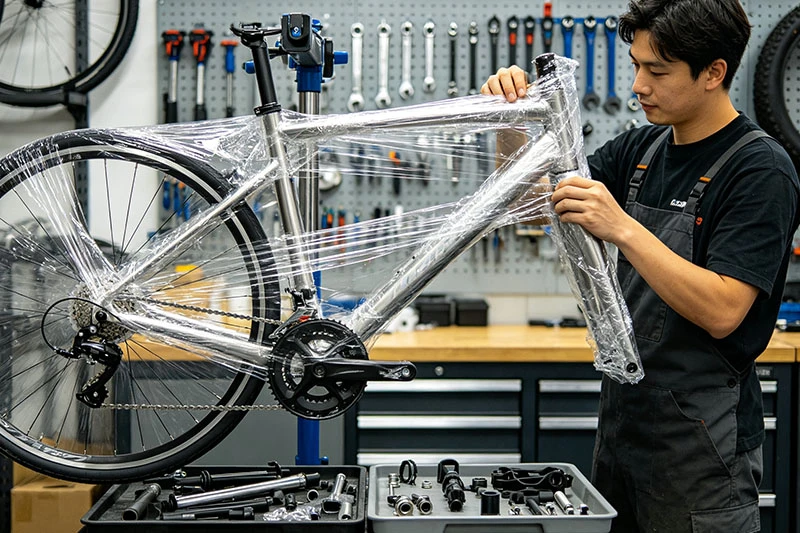
In high-throughput industrial manufacturing and centralized distribution centers, verpakking deurset is 'n kritieke operasionele bottelnek. Terwyl handmatige wikkeling voldoende is vir lae-volume of gedesentraliseerde bedrywighede, scaling up to automated logistics lines requires a transition to automated pallet wrappers utilizing high-performance masjien rek film. Ontwerp vir deurlopende, meganiese toediening onder hoë spanning, masjien rek film is engineered to withstand extreme mechanical forces. This article provides an in-depth analysis of its material chemistry, physical parameters, machinery compatibility, and cost-reduction metrics.
2. Advanced Material Science: Metallocene LLDPE (mLLDPE)
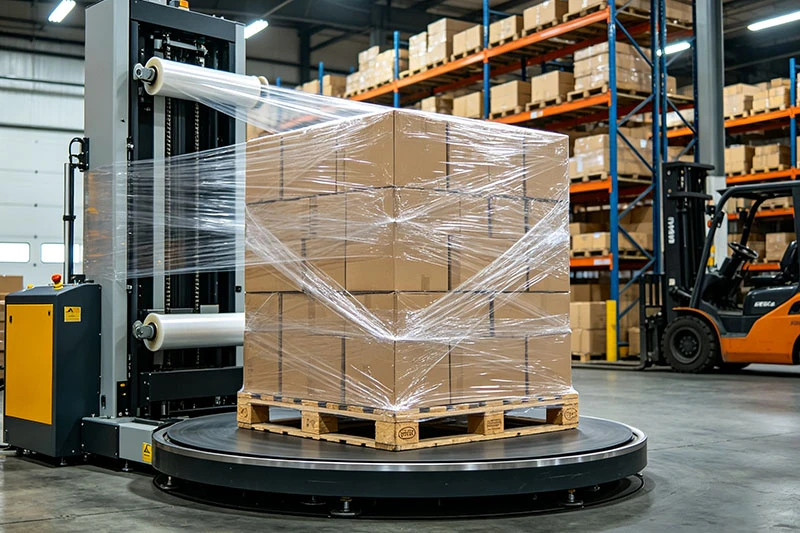
Unlike standard hand rek film, masjien rek film must endure rapid, continuous mechanical elongation without tearing. Om dit te bereik, manufacturers utilize advanced Metallocene Linear Low-Density Polyethylene (mLLDPE) resins, typically processed via multi-layer (up to 5, 7, of 9 layers) co-extrusion cast film lines.
- The Metallocene Advantage: mLLDPE polymers feature a highly uniform molecular weight distribution and consistent short-chain branching. This molecular precision yields a film with exceptional puncture resistance, high clarity, and superior tensile strength.
- Cast vs. Blown Technology: While blown rek film offers superior puncture resistance for highly irregular loads, cast masjien rek film is the dominant industry choice. Cast extrusion yields excellent gauge (thickness) consistency, high optical clarity for barcode scanning, and ultra-quiet unwind characteristics, which are vital for high-speed automated warehouses.
3. Technical Parameters and Mechanical Performance
To prevent line stoppages due to film breaks, masjien rek film must adhere to rigorous technical tolerances:
| Metric | Industry Specification | Practical Operational Impact |
|---|---|---|
| Nominal Thickness | 17μm – 30μm (Standard: 20μm – 23μm) High-performance ultra-thin: 10μm – 12μm | Controls load containment force; thicker gauges are reserved for heavy, non-uniform industrial loads. |
| Pre-Stretch Ratio | 150% to 350%+ (High-Performance: 300%+) | Determines how much 1 meter of raw film is elongated (e.g., 1m of 300% film yields 4m of applied wrap). |
| Standard Roll Weight | 15kg to 18kg | Sized for standard machine carriage mounts, minimizing downtime during roll changeovers. |
| Cling Properties | Single-sided cling (Inside Face) | Ensures layers bond securely to one another while the outer face remains smooth, preventing adjacent pallets from sticking together during transit. |
4. Toerusting Sinergie: Wrapping Machines and Carriage Systems
The performance of masjien rek film is highly dependent on the wrapping equipment’s delivery system. There are three primary machine types and two tensioning methods:
Equipment Categories
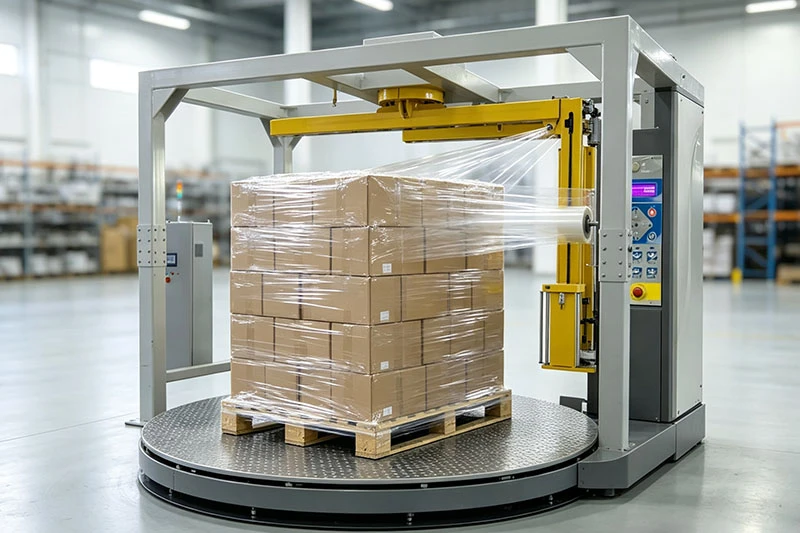
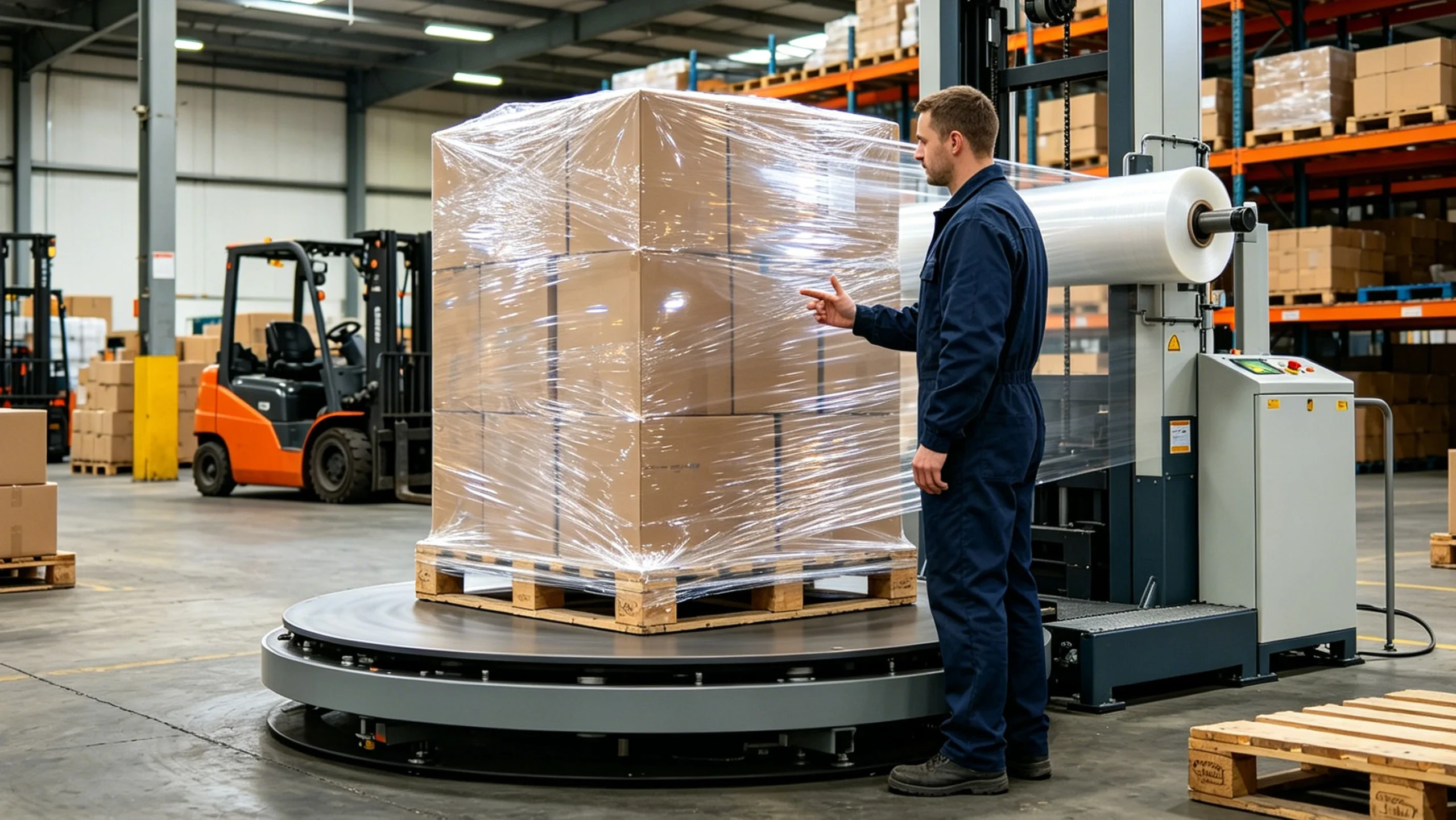
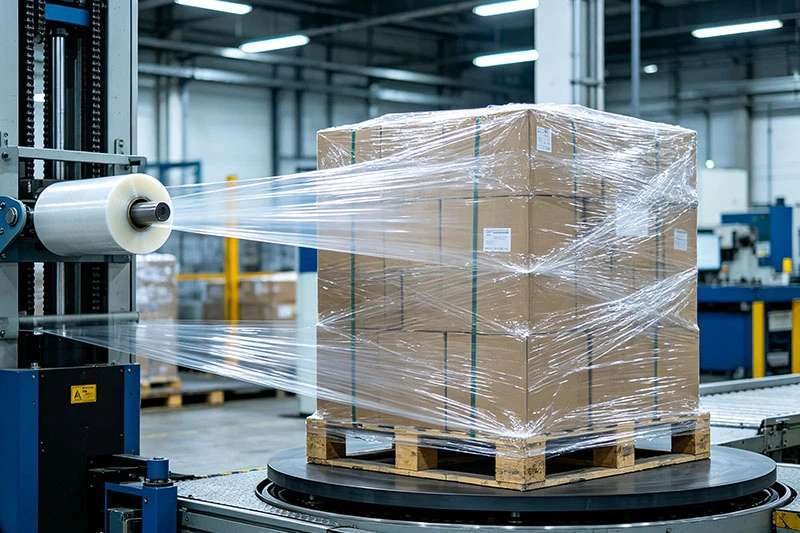
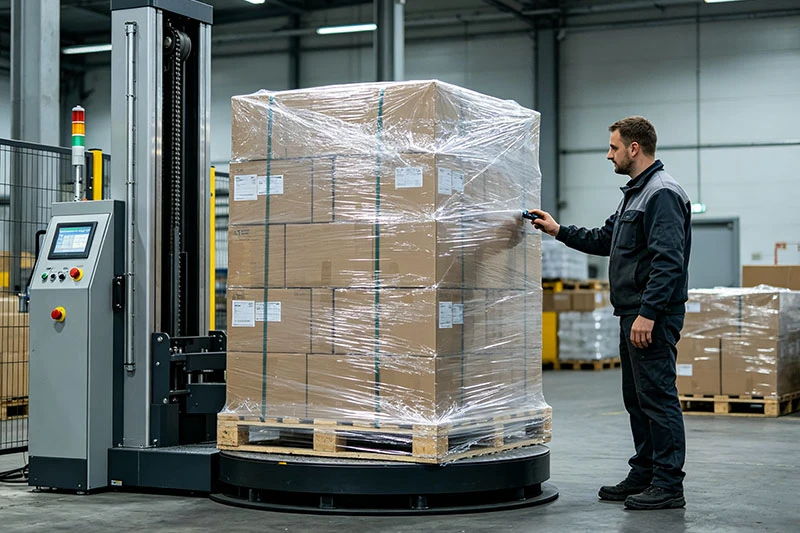
- Turntable Wrappers: The pallet rotates on a motorized platform while the film carriage moves vertically. Best suited for stable, standard loads.
- Rotary Arm Wrappers: The pallet remains stationary while a mechanical arm rotates around it. Critical for extremely heavy, light, or unstable loads that might topple on a turntable.
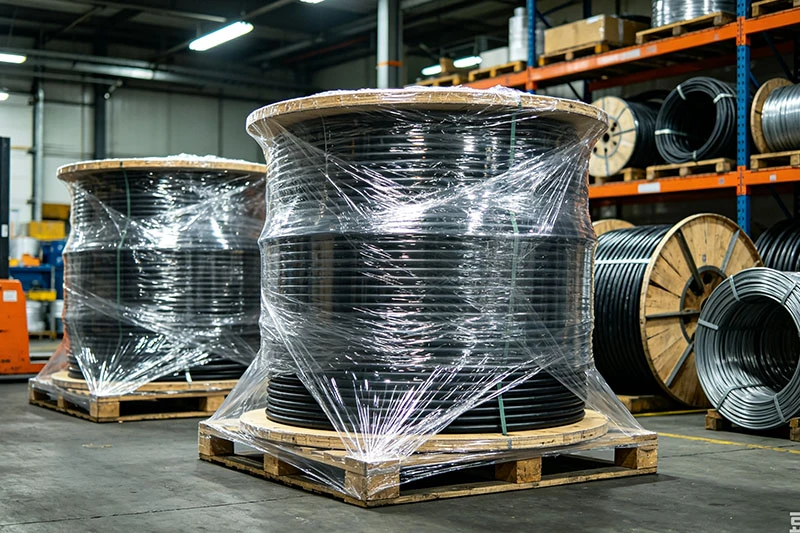
- Orbital Ring Wrappers: Typically used for horizontal, continuous packaging of long-axis goods such as pipes, lumber, or carpet rolls.
Film Delivery Systems
- Mechanical/Friction Brakes: The film is tensioned by dragging it past a passive braking roller. This system rarely exceeds 50%-100% stretch and is highly prone to breaking thin films.
- Motorized Pre-Stretch Carriages: The carriage features two motorized rollers spinning at different speeds. The film is actively stretched before it leaves the carriage and is applied to the pallet. This is the only system capable of unlocking the 250%-350% stretch potential of modern machine rek film, drastically reducing plastic consumption.
5. Cost-Per-Pallet Optimization and TCO
The primary commercial justification for adopting automated wrapping machinery and premium masjien rek film is the dramatic reduction in the Total Cost of Ownership (TCO) per pallet.
┌──────────────────────────────────────────────────────────────────────────┐
│                      TOTAL COST OF OWNERSHIP (TCO)                       │
├─────────────────────────────────────┬────────────────────────────────────┤
│         MANUAL WRAPPING             │         AUTOMATED MACHINE          │
├─────────────────────────────────────┼────────────────────────────────────┤
│ • High Labor Cost per Unit          │ • Minimum Labor Overhead           │
│ • High Film Waste (Unused Stretch)   │ • Maximized Yield (300% Pre-stretch)│
│ • Inconsistent Containment Force   │ • Engineered, Repeatable Tension   │
└─────────────────────────────────────┴────────────────────────────────────┘
- Yield Maximization: A roll of hand rek film is rarely stretched past 50% due to physical human limits. A motorized pre-stretch machine running high-quality masjien rek film at 250% stretch turns a single roll of film into 3.5 times its original length, lowering the actual material weight used per pallet.
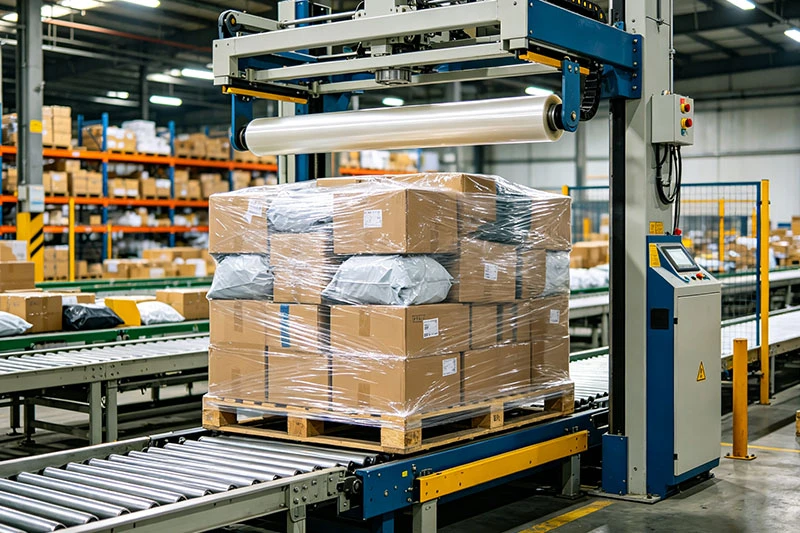
- Labor Cost Mitigation: Automated systems decouple labor from the packaging process. An operator simply drops a pallet with a forklift and pulls a remote start switch, or the process is entirely hands-free on an inline conveyor.
- Damage Claims Reduction: Machines deliver mathematically consistent containment force, wrapping every pallet with identical tension. This drastically reduces in-transit damage claims caused by human shifting or loose wrapping.
6. Common Industrial Failure Modes & Troubleshooting
In automated environments, film failure directly causes downtime. Understanding these failure modes is critical for operations managers:
- Film Snapping (Breakage): Often caused by mechanical nicks on the edge of the roll, a pre-stretch ratio set higher than the film’s rating, or sharp product corners piercing the film during high-speed rotation.
- “Neckdown” (Width Reduction): When rek film is pulled longitudinally, it naturally narrows vertically. Extreme neckdown reduces the vertical coverage per wrap, requiring more machine rotations to cover the pallet.
- Tail-Flagging: The loose end of the film at the end of the wrap cycle unravels during transit. This can be resolved by upgrading to films with higher one-sided cling or utilizing machines with automated heat-seal film cutters.
7. The Sustainable Horizon: Pre-Stretched and PCR Films
As global supply chains face stricter environmental regulations and corporate ESG mandates, the rek film industry is pivoting toward two sustainable innovations:
- Pre-Stretched Machine Films: These films are stretched near their ultimate yield point during manufacturing before being wound onto the roll. They require minimal tension from the wrapping machine to achieve high containment, allowing facilities to use lighter, low-power wrapping machines while achieving incredibly low film weights.
- Post-Consumer Recycled (PCR) Integration: Advanced multi-layer extrusion now allows for the inclusion of up to 30% recycled plastics in the core layer, wrapped by outer layers of virgin LLDPE. This maintains the necessary puncture and cling performance while significantly reducing the carbon footprint of the packaging material.

8. Conclusion
Machine stretch film is a highly engineered, high-yield consumable that serves as the backbone of high-volume industrial logistics. By pairing premium mLLDPE cast films with motorized pre-stretch wrapping machinery, enterprises can achieve unmatched load stability, eliminate transit-related product damage, and drive down their total cost-per-pallet. Understanding the technical synergy between the machinery and the physical properties of the rek film is the key to unlocking maximum efficiency in the modern supply chain.