


Biodegradable & Compostable Pallet Wrap
Biodegradable Stretch Film & Compostable Pallet Wrap Manufacturer
Save. Protect. Preserve. — Then Return to Nature.
PLA, PHA and corn starch based stretch film in 15–30 micron — engineered to match conventional LLDPE load retention, certified to ASTM D6400 and EN 13432. Biodegradable stretch film replaces conventional LLDPE pallet wrap with plant-derived resins that compost under industrial conditions.
Below you will find the four resin systems we produce, the certification each one is tested against, and an honest breakdown of where biodegradable film still falls short of conventional wrap.

The Material Science
What Makes Biodegradable Stretch Film Different
Designed for Two Lives
Conventional LLDPE wrap is designed to last. That is exactly the problem at end of life — a used pallet wrap goes to landfill or incineration and stays there for decades. Biodegradable stretch film inverts the brief: it has to hold a 1,000 kg load through a multi-week transit, then break down once it reaches a managed composting stream.
How It Actually Decomposes
The materials we run are plant-derived polyesters and starch blends. Under industrial composting — sustained temperatures around 58–60 °C with controlled humidity and a microbial population — the polymer chains are consumed by microorganisms and converted to CO₂, water and biomass. Under the ASTM D6400 / EN 13432 test protocol, the pass threshold is 90 % conversion to CO₂ within 180 days.
What This Means for You as a Buyer
First, the film needs a disposal route — it will not meaningfully degrade in a sealed landfill, and that is true of every compostable plastic on the market, not just ours. Second, because the resin is engineered to break down, storage conditions matter more than with standard wrap: keep it under 25 °C, dry, and out of direct UV, and plan to use stock within 12 months of delivery.

Same Containment Force · Plant-Derived Resin
Four Resin Systems
Biodegradable Stretch Film Types We Produce
Four resin systems, four different end-of-life profiles. The table below is the short answer; the cards underneath show each film in detail.
| Type | Base resin | Best for | End-of-life route |
|---|---|---|---|
| PLA | Polylactic acid, plant-derived | General pallet wrapping, retail-ready loads | Industrial composting (ASTM D6400 / EN 13432) |
| PHA | Polyhydroxyalkanoate from plant oils / starches | Loads needing higher elongation | Industrial composting + broader ambient biodegradation |
| Corn starch blend | Biodegradable cornstarch resin, UV stabilised | Outdoor storage, bulky / irregular loads | Industrial composting |
| Cellulose | Regenerated plant cellulose | Furniture, large-format items | Industrial composting |

100% Bio-Based Resin · Compostable Cores Available
PLA Biodegradable Stretch Film
Polylactic acid, plant-derived. General pallet wrapping and retail-ready loads, 25 MPa tensile, 300% elongation. Industrial composting to ASTM D6400 / EN 13432.

PHA Biodegradable Stretch Film
Polyhydroxyalkanoate from plant oils and starches. Higher elongation at 350% for demanding loads. Industrial composting plus broader ambient biodegradation.

Corn Starch Biodegradable Stretch Film
Biodegradable cornstarch resin, UV stabilised for 6 months outdoors. Suited to outdoor storage and bulky or irregular loads. Industrial composting.

Biodegradable Cellulose Stretch Film
Regenerated plant cellulose, 30 MPa tensile — the strongest of the four. For furniture and large-format items. Industrial composting.
About The Factory
Vistech Biodegradable Stretch Film — Factory Profile
Same Lines, Same Tolerances
We have been extruding stretch film in Dongguan for 10 years, and we run biodegradable grades on the same cast lines as our conventional LLDPE wrap — which is why we can hold tolerances on bio-resins that most trading companies cannot.
Test Reports, Not Marketing Claims
Testing is done against ASTM D6400 and EN 13432. Both standards include heavy-metal limits and ecotoxicity screening on the resulting compost, and we can supply the full test report with your quote rather than a marketing claim. Certificates are listed further down this page with certificate numbers you can verify.

Dongguan Factory · 20 Cast Lines
Inside The Plant
Production Workshop
Biodegradable resin runs on the same cast extrusion lines as our standard wrap, at 20 lines with a combined output of 3,000 tons a year. Bio-resins are more temperature-sensitive than LLDPE, so melt temperature and chill-roll settings are logged per batch — that is what keeps gauge tolerance at ±5% across a roll.


Honest Comparison
Biodegradable vs Conventional LLDPE Stretch Film
An honest side-by-side. Biodegradable film wins on end-of-life and loses on a few things in use — here is where each one lands.
| Property | Biodegradable (PLA / PHA) | Conventional LLDPE |
|---|---|---|
| Tensile strength | Comparable, 25 MPa | Higher, 35 MPa |
| Elongation at break | 300% | Up to 300–400% |
| Puncture resistance | Slightly lower — specify one gauge up for sharp-cornered loads | Higher |
| Cling | Consistent, single or double sided | Consistent |
| Clarity | High, slight natural tint | High |
| Shelf life | 12 months, store cool & dry | 24+ months, no special storage |
| Unit cost | Higher — typically 2–3× conventional | Lower |
| End of life | Composts in 180 days under industrial conditions | Landfill / incineration |
Performance Details
Biodegradable Stretch Film Features
A. Compostability with a defined end point
Tested to ASTM D6400 / EN 13432: 90% of the organic carbon converts to CO₂ within 180 days under industrial composting (58–60 °C, controlled humidity). Not a vague “will break down eventually” claim — a measured pass threshold with a test report behind it.
B. Clarity for scanning and inspection
High transparency with a slight natural tint, so barcode scanning and visual load checks at the dock work without unwrapping. 8% haze.
C. Load retention comparable to standard wrap
25 MPa tensile with 300% elongation at break. For sharp-cornered loads we recommend going one gauge up — that is the honest trade-off against conventional LLDPE.
D. Low static and low unwind noise
Low static build-up keeps the film from attracting dust on the line and reduces unwind noise, which matters on high-throughput hand-wrap stations. Hand-tearable — no cutting tool needed at the receiving end.
E. Wide application range
Runs on both hand dispensers and standard machine pre-stretch carriages without recalibration. Used across food and beverage, paper and printing, building materials, chemicals, metals and third-party logistics.
Explore The Range
Other Stretch Film Products
| Product | Best for | Key spec |
|---|---|---|
| Machine Stretch Film | High-volume pallet wrapping on automated lines | 20 micron, up to 250% pre-stretch |
| Hand Stretch Film | Low-volume or irregular loads, manual application | 17 micron, extended core option |
| Color Stretch Film | Load identification, UV-sensitive goods, security | Black / white / blue / red / green |
| Printed Stretch Film | Brand visibility and anti-tamper on transit | Up to 8 colour print |
| Standard LLDPE Stretch Film | Cost-sensitive loads with no composting route | Full gauge range, 24+ month shelf life |
| Stretch Film Jumbo Roll | Converters re-slitting to retail sizes | 1,500 mm, 3,000 m |
One Supplier · Full Stretch Packaging Range
Buyer’s Guide
Biodegradable vs Compostable vs Oxo-Degradable — How to Check a Green Claim
Three terms that get used interchangeably, and should not be.
Biodegradable
Microorganisms will consume the material — eventually. No time limit and no defined environment is implied by the word alone.
Ask for: ASTM D6954 (open environment) or ASTM D5338
Compostable
Breaks down within a fixed period, under defined industrial conditions, leaving no toxic residue. This is the stricter claim.
Ask for: ASTM D6400 · EN 13432 · ISO 17088
Oxo-Degradable
Conventional polyolefin with a pro-oxidant additive that fragments via oxidation first, then biodegrades. Fragments quickly; full biodegradation is slower and condition-dependent. Restricted under the EU Single-Use Plastics Directive.
Ask for: ASTM D6954
Five Red Flags When a Supplier Quotes You “Biodegradable” Wrap
No standard number. “Biodegradable” with no ASTM or EN code behind it means nothing you can verify. Ask which one.
D6400 and D6954 listed together. These are different disposal routes — industrial composting versus open-environment oxidative degradation. A film cannot be optimised for both, and mixing them in one claim is the most common shortcut we see.
“Breaks down in a landfill.” Nothing compostable does. Landfills are anaerobic and that is by design.
“Biodegradable and recyclable.” Compostable resin contaminates a conventional PE recycling stream. Pick one route.
“Certified by ASTM.” ASTM writes standards, it does not certify products. The certificate should name an accredited laboratory and carry a registration number you can check.
Technical Data
Biodegradable Stretch Film Specifications
Specifications above are nominal and confirmed per order. Custom widths, gauges, core sizes and print are available — send your target spec and we will confirm what is achievable on bio-resin before you commit.
| Parameter | PLA grade | PHA grade | Corn starch | Cellulose |
|---|---|---|---|---|
| Thickness | 15–30 micron | 15–30 micron | 20–35 micron | 25–35 micron |
| Width | 300–1000 mm | 300–1000 mm | 300–1000 mm | 300–1000 mm |
| Length per roll | 300–1,500 m | 300–1,500 m | 250–1,200 m | 200–1,000 m |
| Core diameter | 76 mm (3″) / 50 mm (2″) | 76 mm / 50 mm | 76 mm / 50 mm | 76 mm / 50 mm |
| Elongation at break | 300% | 350% | 250% | 200% |
| Tensile strength (MD) | 25 MPa | 22 MPa | 20 MPa | 30 MPa |
| Cling | Single / double sided | Single / double sided | Single sided | Single sided |
| Colour | Clear, natural tint | Clear, natural tint | Clear / green tint | Clear |
| UV stability | 12 months | 12 months | 6 months | 12 months |
| Shelf life | 12 months | 12 months | 9 months | 12 months |
| Storage requirement | Cool, dry, out of direct sunlight. Below 25 °C. | |||
| Composting window | 180 days at 58–60 °C, industrial composting (ASTM D6400) | |||
| MOQ | 500 rolls / 1–2 pallets | |||
| Lead time | 15 days for standard, 25 days for custom | |||
Certified Quality
Global Compliance & Certified Quality Benchmarks
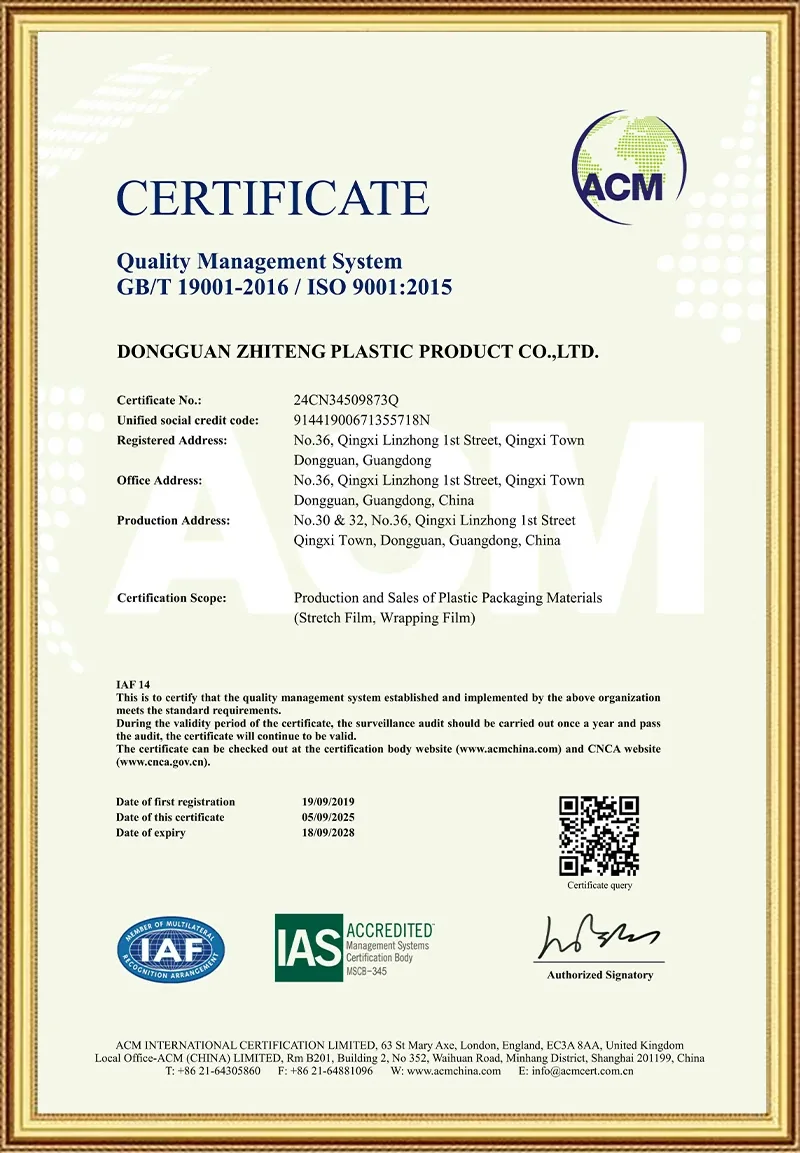
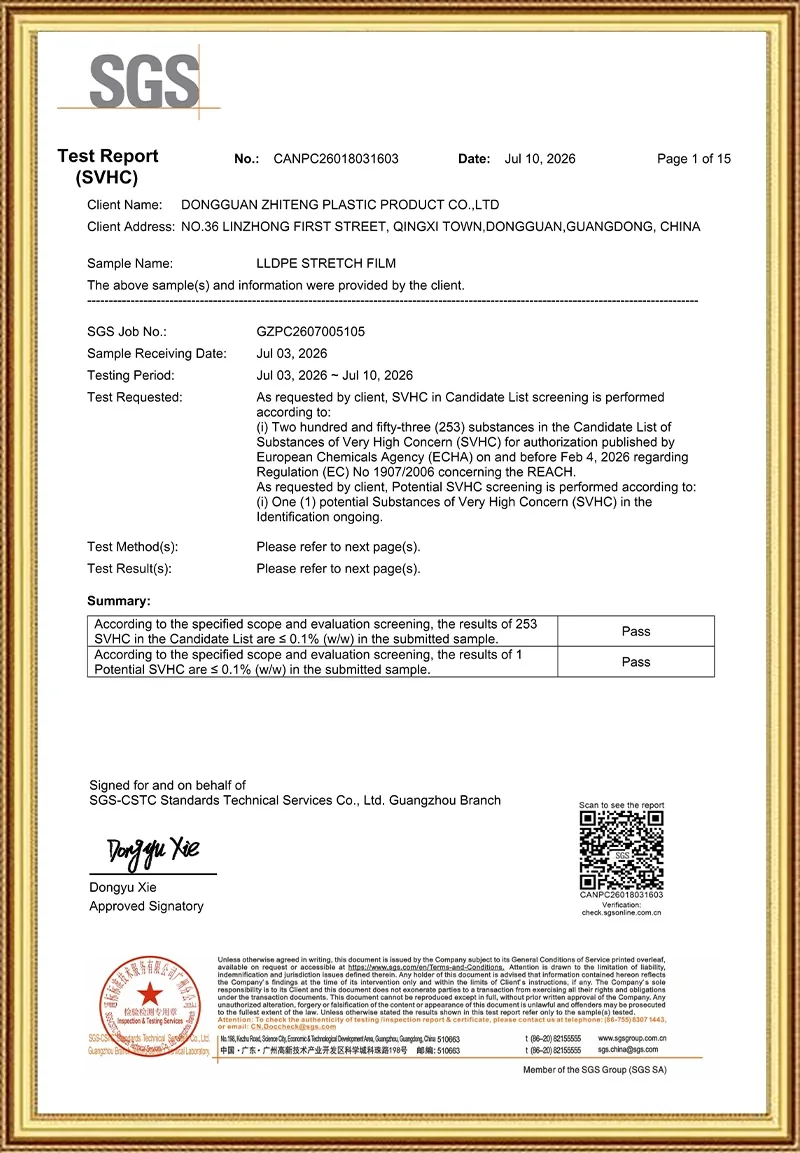
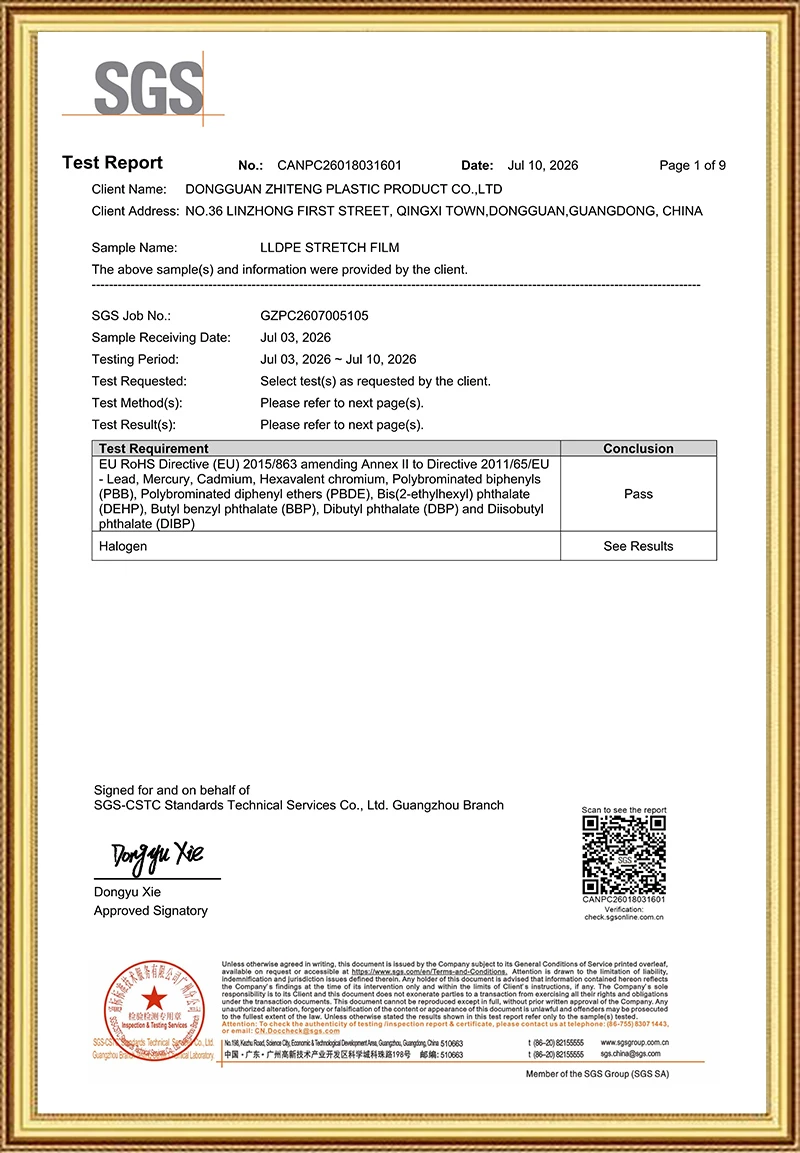
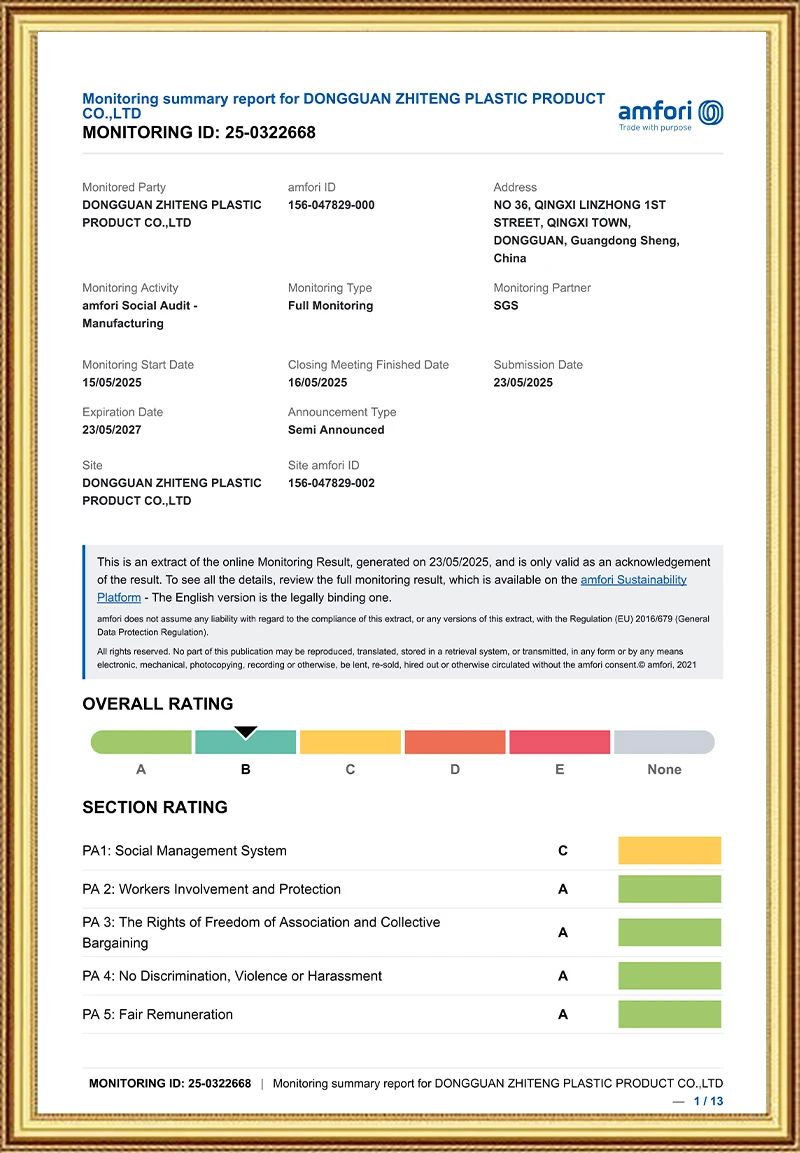
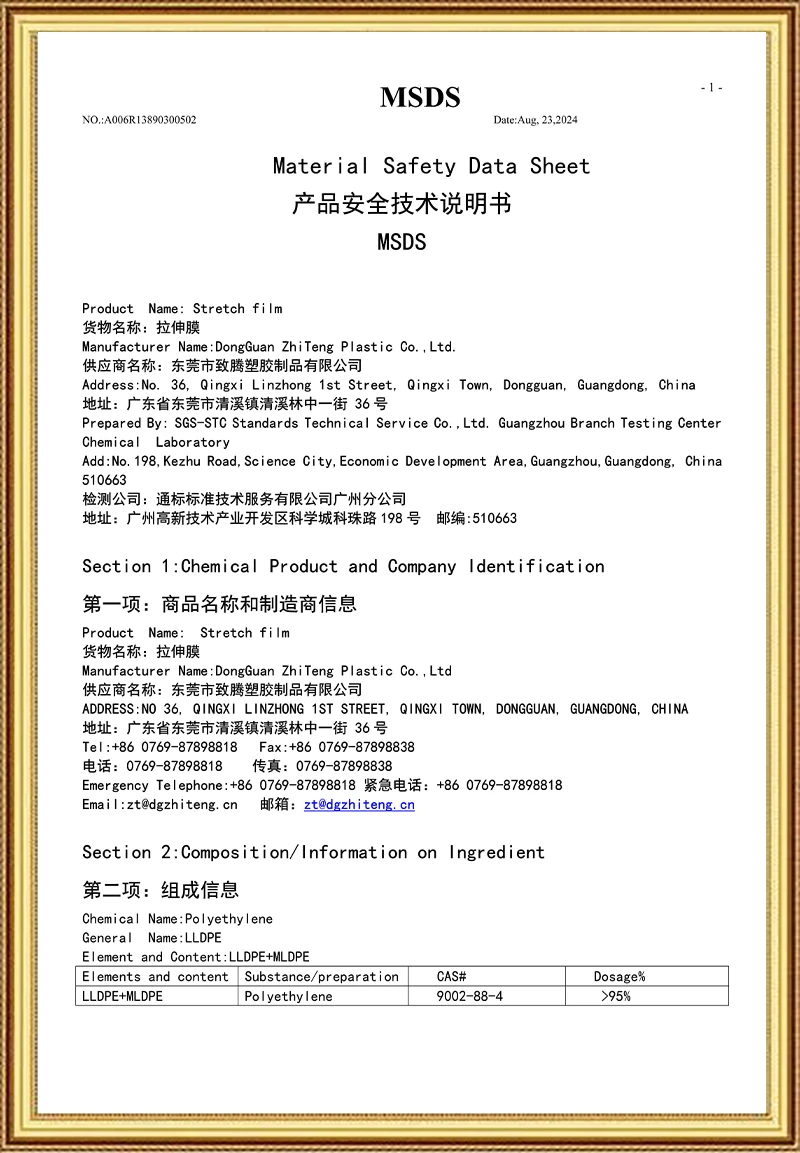
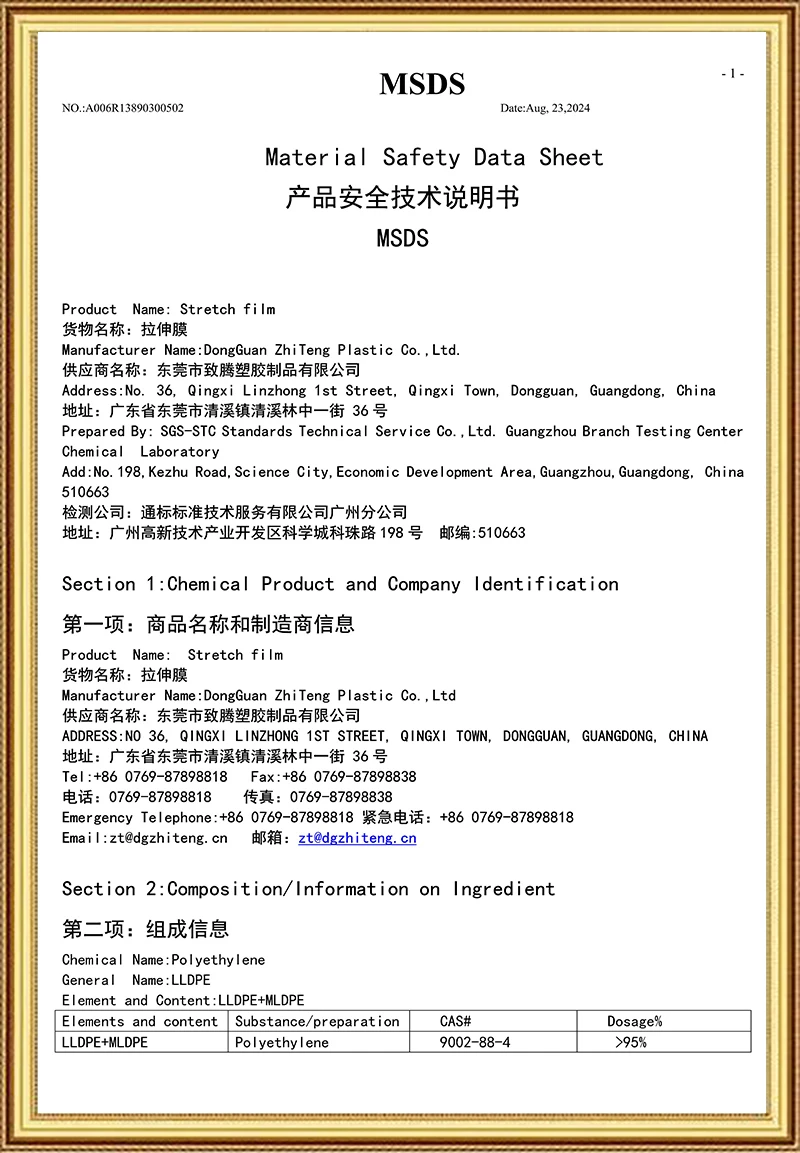
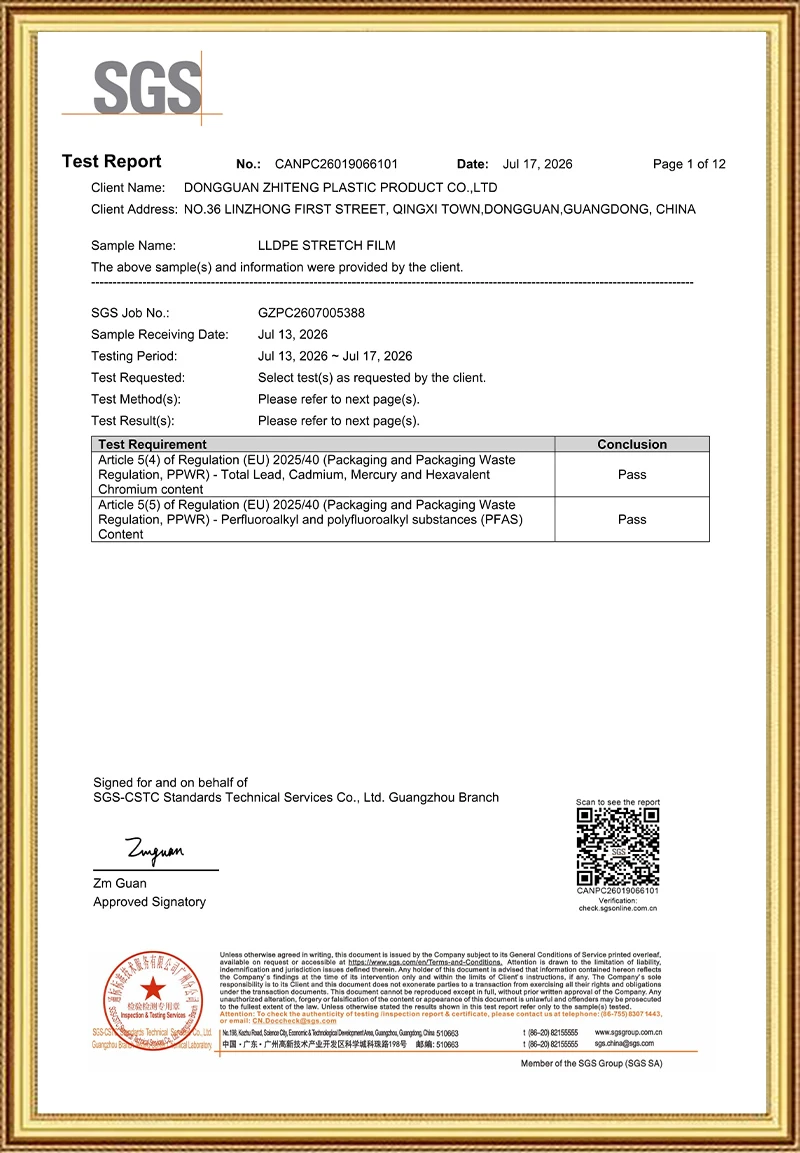
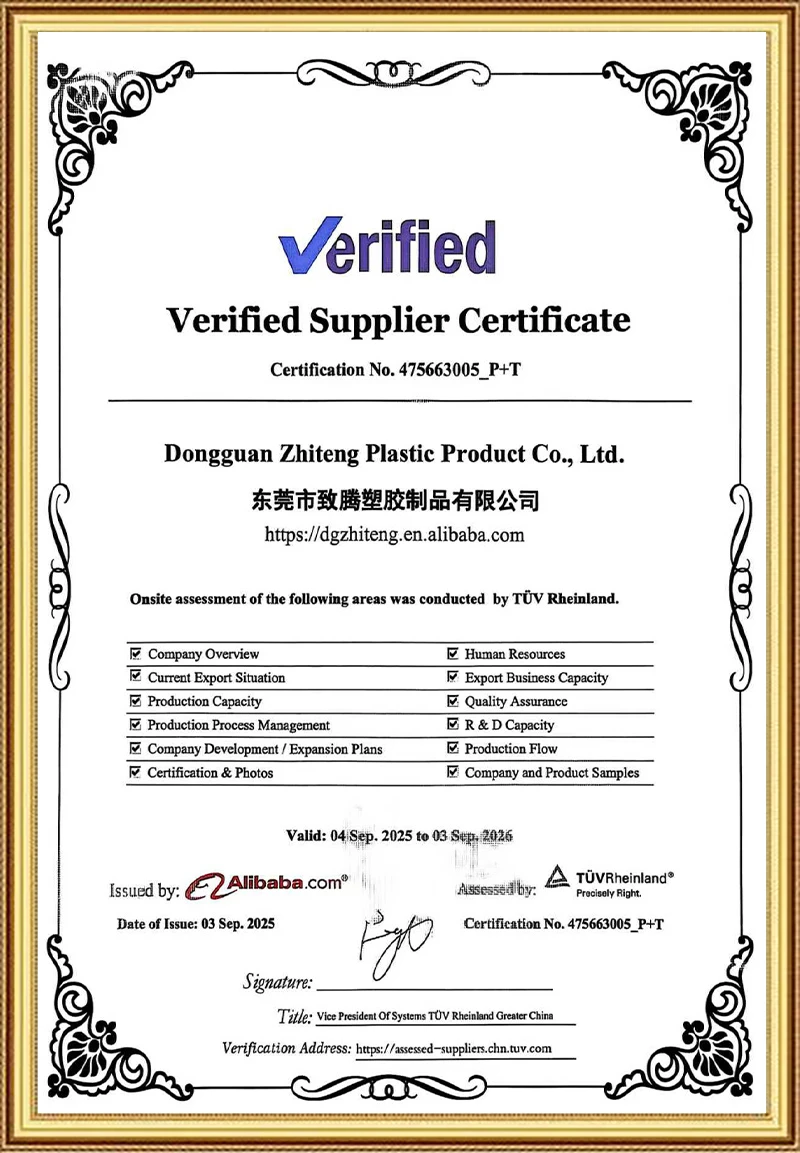
Our commitment to elite performance and sustainability is backed by rigorous international standard testing. Our corporate infrastructure and stretch film production processes are fully certified under ISO 9001 for quality management and ISO 14001 for environmental systems.
FAQ
Frequently Asked Questions About Biodegradable Stretch Film
Under industrial composting conditions — sustained 58–60 °C with controlled humidity and microbial activity — our PLA and PHA grades reach the ASTM D6400 threshold of 90% carbon conversion within 180 days. Outside that environment the timeline changes substantially: in a sealed landfill the film behaves much like conventional plastic. We state this plainly because a number that ignores disposal conditions is not a real number.
No, and any supplier who says otherwise is misrepresenting the material. Landfills are designed to be anaerobic and dry, which is why nothing compostable degrades there. Compostable film needs a managed composting or organic waste stream. If your destination has no such stream, conventional LLDPE is the more honest specification, and we will tell you so.
Close, but not identical. Tensile strength is comparable at 25 MPa; elongation at break and puncture resistance are somewhat lower than LLDPE. In practice this means specifying one gauge thicker for sharp-cornered loads. For standard palletised cartons on a normal transit route, load retention is equivalent.
Typically 2–3 times the price of conventional LLDPE wrap, depending on gauge and resin. The gap has narrowed as bio-resin capacity has expanded, but it has not closed. Whether it is worth it depends on your sustainability commitments and whether your customers will pay for the certification — that is a commercial judgement, not a technical one.
12 months, shorter than conventional wrap — the resin is engineered to break down, so it is less forgiving of heat and humidity in storage. Keep rolls below 25 °C, dry, and out of direct UV. Stock rotation matters: use oldest-first, and do not order a year of bio-film at once.
Yes for most equipment. Our biodegradable grades run on standard hand dispensers and on machine pre-stretch carriages up to 250% pre-stretch without recalibration. If you are running very high pre-stretch ratios, confirm with us first — high pre-stretch on bio-resin can reduce load retention faster than on LLDPE.
Our biodegradable grades are not currently certified for direct food contact. If your application requires it, tell us at the enquiry stage and we can arrange testing against EU 10/2011 and FDA 21 CFR 177, and quote the additional lead time. For indirect contact — wrapping pallets of boxed or already-wrapped food products — the film is suitable as supplied.
500 rolls for stocked grades. Custom widths, gauges, core sizes or print carry a higher MOQ of 1,000 rolls. We also supply free sample rolls; courier cost billed at cost for trial before a full order.
Management system: ISO 9001 and ISO 14001. Product: compostability tested by {第三方检测机构} to ASTM D6400 and EN 13432, with biodegradation rate, disintegration, heavy metal content and compost ecotoxicity in the report. Certificate numbers are listed in the compliance section above and the full report ships with your quotation.
Yes — up to 8 colours. Print inks must also be compostability-compatible, so we specify certified inks for biodegradable runs rather than standard ones.
Knowledge Base
Our Latest News
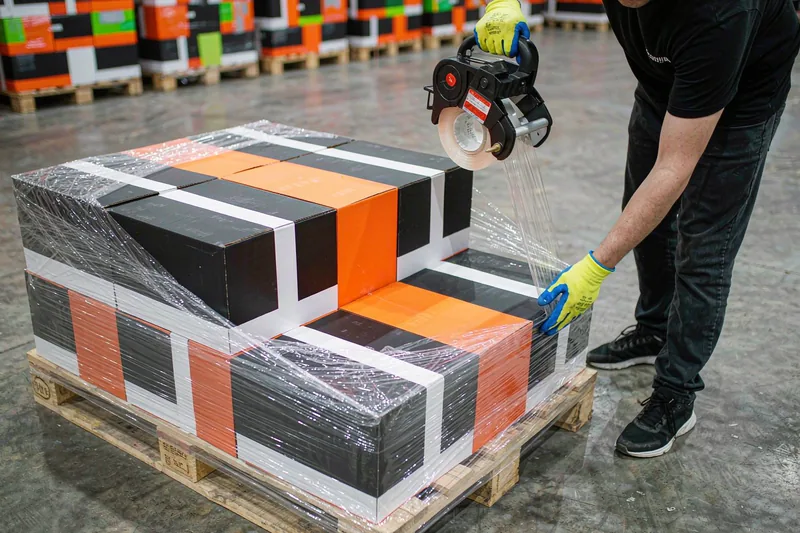
Extended Core vs. Standard Core Hand Stretch Film: Worker Ergonomics Analysis
Extended core vs standard core hand stretch film — which is easier on workers? Compare grip, wrist strain, dispenser needs, and shift-volume fit.

Hand Stretch Film Thickness Guide: Choosing Between 12 to 30 Microns
Choose the right hand stretch film thickness from 12 to 30 microns: match gauge to load weight, edge profile, transit conditions, and cost per wrapped pallet.
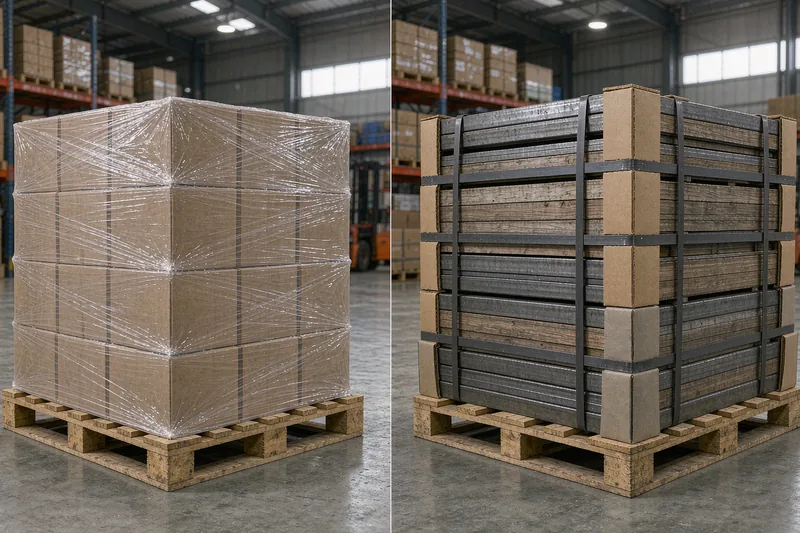
Machine Wrap vs. Strapping: Total Cost of Ownership (TCO) Comparison
Compare machine stretch wrap vs. strapping by total cost of ownership. See what each method really costs per pallet, when strapping wins, and when film does.
100% Safety Guaranteed
We provide very good quality and competitive prices for all our products.