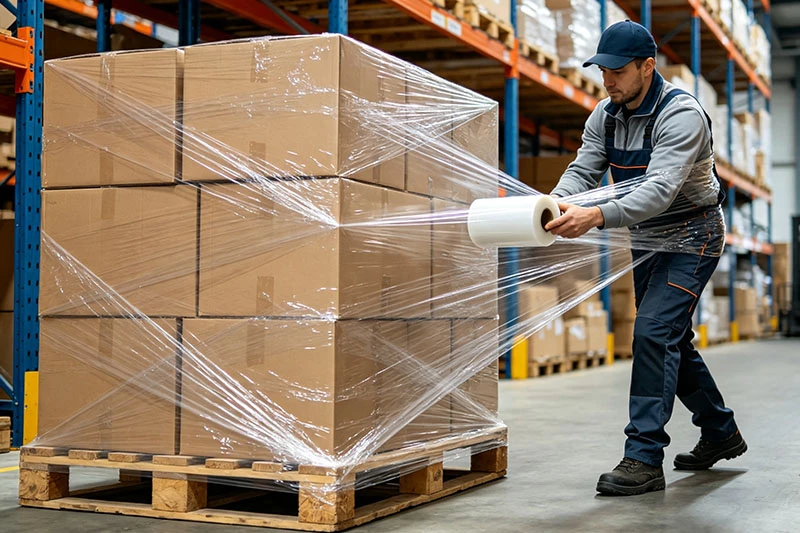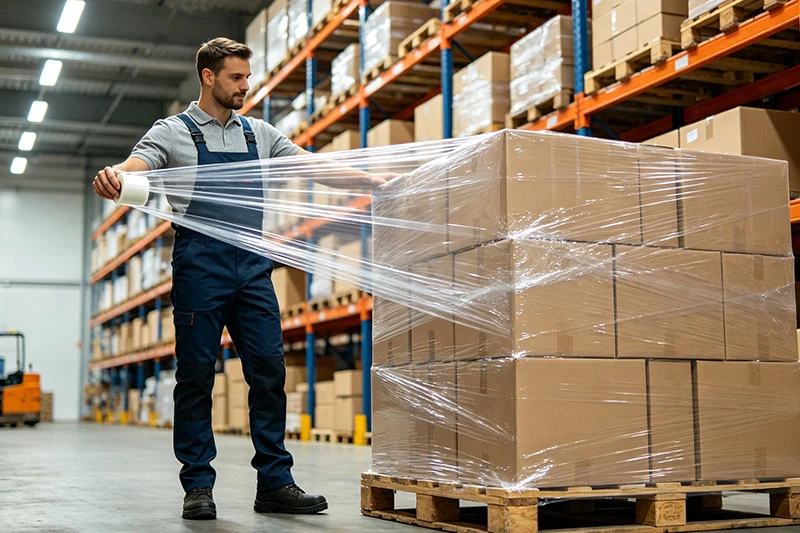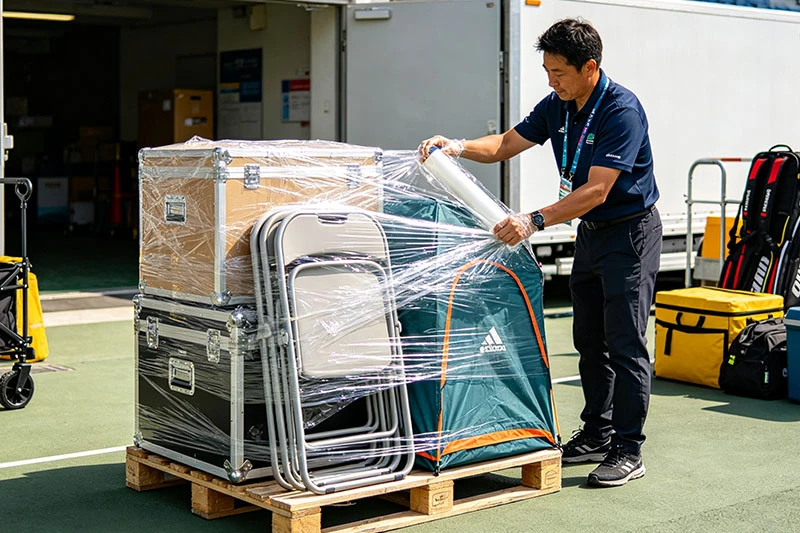


Mae diwydiant ffilm ymestyn LLDPE yn cael ei uwchraddio'n sylweddol yn ddiwydiannol. Fel y dywedasoch yn gywir, mae ysgogwyr craidd y dyfodol yn canolbwyntio'n llawn ar bedwar dimensiwn allweddol: Cynaladwyedd, Ysgafnhau, Swyddogaetholi, a Deallusrwydd.
Dyma ddadansoddiad manwl o'r farchnad a mewnwelediad technegol wedi'u teilwra i'r pedwar tueddiad mawr hyn:
1. Cynaladwyedd: Cydymffurfiad Gwyrdd & Circular Economy
Driven by global plastic bans and carbon neutrality goals, eco-friendly packaging has shifted from an “optional extra” to a strict requirement for international trade and high-end supply chains.
- PCR (Post-Consumer Recycled) Integration
- Core Trend: Incorporating recycled plastic waste back into the production of stretch film at specific ratios (e.g., $30\% – 50\%$).
- Technical Solution: The key lies in overcoming gels, odor, and degradation of tensile strength caused by recycled materials. Multi-layer co-extrusion technology (such as 5-layer or 7-layer structures) encapsulates the PCR in the core layers while using virgin resin for the outer layers. This maintains surface cling and load containment while securing global eco-certifications (like GRS).
- Biodegradable & Bio-based Films
- Core Trend: Developing stretch films based on PLA, PBAT, or incorporating specialized pro-degradant additives to accelerate decomposition under specific composting or natural environments.
- Market Reality: Traditional biodegradable materials struggle to match the “elongation at break” and “holding force” required for heavy industrial packaging. Current R&D focuses on modified bio-plastics that balance environmental compliance with packaging safety.

2. Ysgafnhau: High Stretch Ratios & Cost Optimization
The essence of lightweighting is “down-gauging”—reducing material usage while maintaining or even enhancing load containment force.
- Nano-layer Co-extrusion Technology
- Core Trend: Moving beyond traditional 3-layer or 5-layer structures toward 9-layer, 12-layer, or even more advanced nano-microlayer structures.
- Advantage: By slicing materials into dozens of micro-layers, molecular alignment becomes much tighter. Even when film thickness is reduced from a traditional $20\mu m$ to $12\mu m$ or $9\mu m$, its puncture and tear resistance actually increase significantly.
- High-Ratio Pre-Stretch
- Core Trend: High-performance lightweight films offer extreme pre-stretch rates (up to $250\% – 400\%$).
- Economic Impact: This means 1 meter of raw film can stretch into 3.5 to 5 meters during application. This directly reduces film consumption per pallet by $30\% – 50\%$, drastically slashing integrated packaging costs while complying with overseas regulations for minimized plastic packaging.
3. Swyddogaetholi: Application-Specific & High-Performance Customization
As application scenarios diversify, general-purpose stretch films are being replaced by high-value-added, specialized functional films.
                       ┌──► Anti-Static Film (Electronics & Semiconductors)
                       ├──► Flame Retardant Film (Chemicals & Warehouse Safety)
Functional Customization ├──► VCI Anti-Rust Film (Automotive & Heavy Metal Industries)
                       └──► UV-Resistant Film (Long-term Outdoor Storage Protection)
- Anti-Static Film: Utilizes topically applied or internal anti-static masterbatches to achieve a surface resistivity of $10^9 – 10^{11} \, \Omega$, preventing static buildup that could damage sensitive electronic components.
- Flame Retardant Film: Formulated with highly efficient flame-retardant additives to meet specific fire safety standards, allowing the film to self-extinguish or delay flame spread in hazardous storage zones.
- VCI (Volatile Corrosion Inhibitor) Film: Combines vapor-phase anti-rust technology with stretch film. When wrapping metal goods, the film releases VCI molecules that form a protective layer on metal surfaces to prevent moisture and oxidation.
- UV-Resistant Film: Enhanced with UV stabilizers to ensure the film does not degrade, embrittle, or snap under intense outdoor sunlight, typically offering 6 to 24 months of outdoor weatherability.

4. Intelligentization: Automation Compatibility & Flexible Packaging
As modern logistics and warehousing move toward unmanned, fully automated operations, stretch films must perfectly adapt to high-stress mechanical wrapping.
- Machine Films for High-Speed Automatic Wrappers
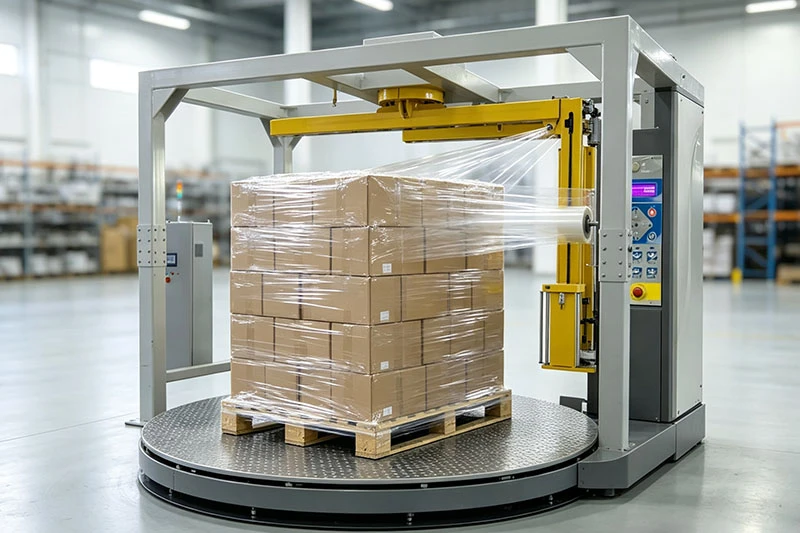
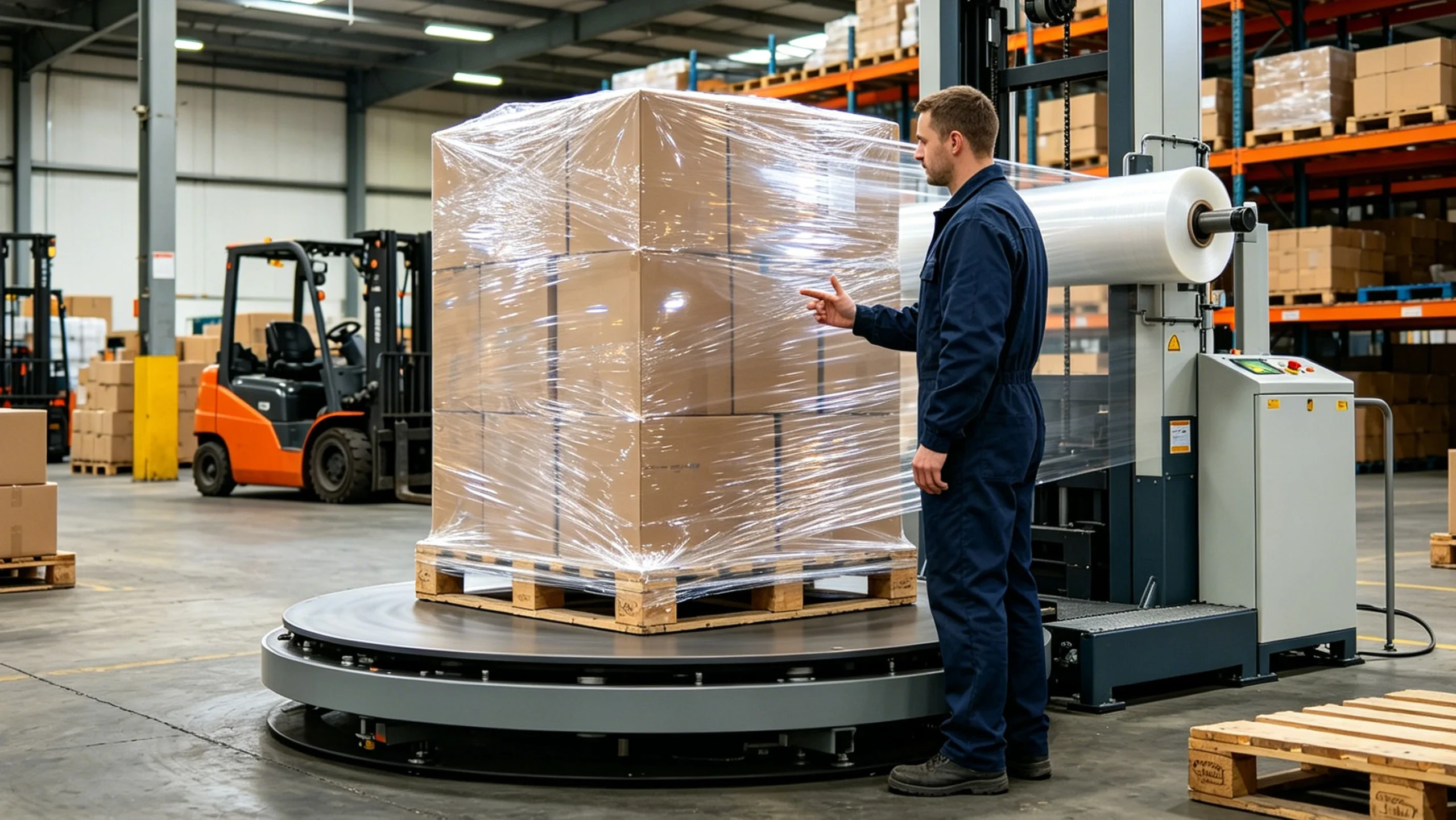
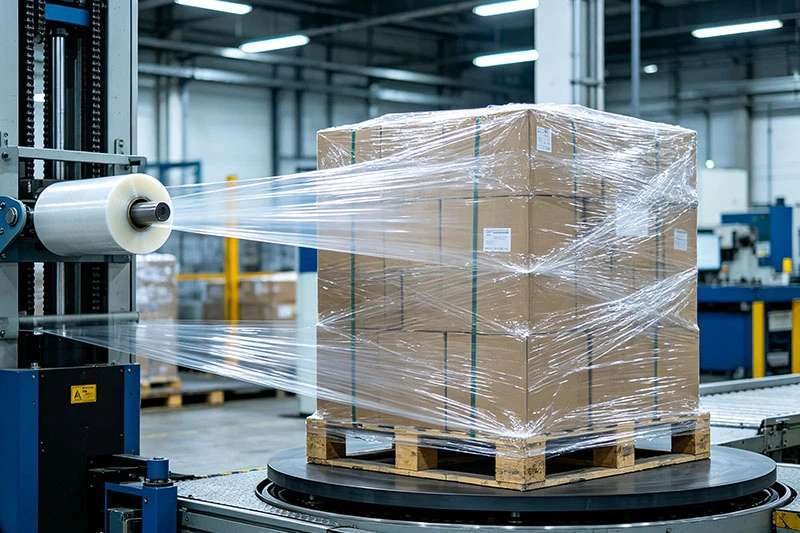
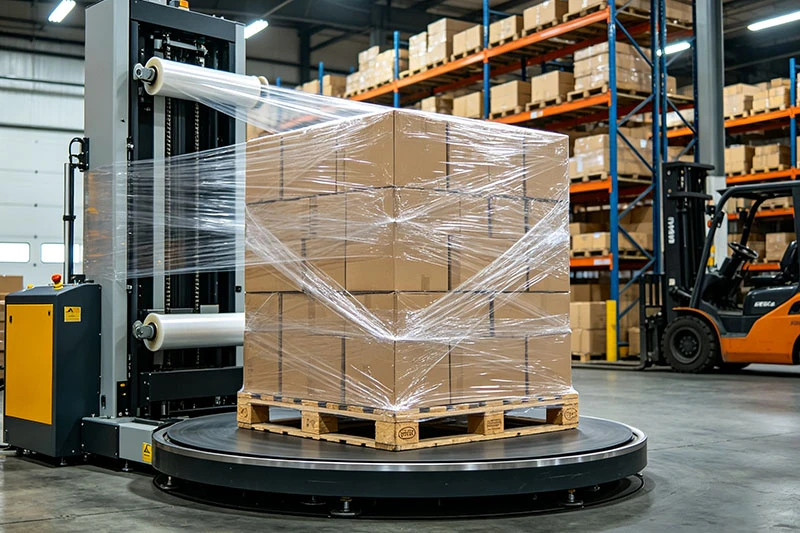
- Core Trend: Automated smart factories utilize high-speed turntable, rotary arm, or orbital wrapping machines. This demands machine stretch films with exceptional ultimate tensile strength and flawless edge quality.
- Pain Point Mitigation: Eliminates the risk of film breaks during high-speed mechanical stretching. A film snap halts the entire automated assembly line, causing costly downtime.
- Smart Parameter Matching & Adaptation
- Future flexible packaging lines will automatically adjust wrapping tension and layer counts based on the load’s weight, geometry, and shipping demands. This requires manufacturers to supply highly standardized, premium-quality films with consistent physical parameters to ensure stable machine output and a “perfect wrap” every time.
Industry Outlook:
The stretch film market is shifting from a low-margin commodity volume game to a high-barrier, systems-based packaging solution market. Manufacturers who take the lead in multi-layer nano-down-gauging and certified PCR integration will command the core pricing power in the global B2B green supply chain.