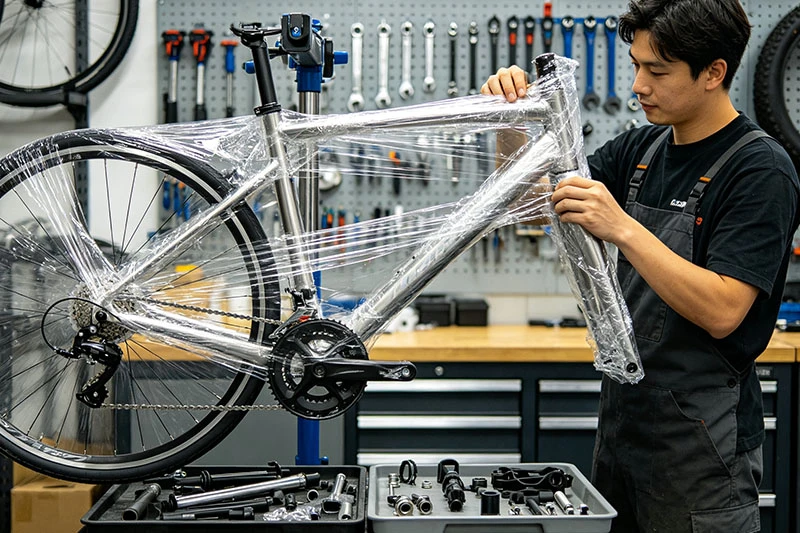


Selecting the optimal packaging material directly impacts load stability, warehouse labor productivity, and overall material expenditure. For operations wrapping up to 30 to 50 pallets per day, utilizing high-quality hand stretch film remains one of the most flexible and cost-effective unitization methods available. Ia, choosing the incorrect film thickness, resin formulation, or manufacturing type leads to film breakage during transit, damaged cargo, and inflated packaging costs.
This guide breaks down the engineering criteria for evaluating manual stretch wrap, comparing blown versus cast manufacturing processes, converting gauge and micron specifications to load profiles, and identifying the exact operational threshold where upgrading to automated packaging solutions becomes necessary.

Evaluating Your Packaging Workflow: Is Hand Stretch Film Right for Your Operations?
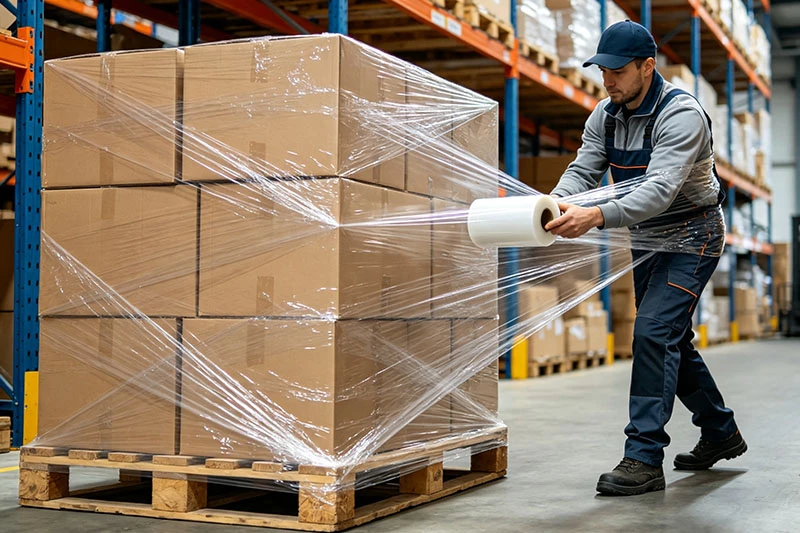
Manual packaging suits operations that demand high flexibility, have limited floor space, or manage decentralized wrapping stations across a facility. Evaluating whether manual wrapping fits your current supply chain depends primarily on your daily shipment volume, pallet uniformity, and budget allocation.
                     +---------------------------------------+
                     | Daily Pallet Wrapping Volume Check    |
                     +---------------------------------------+
                                         |
               +-------------------------+-------------------------+
               |                                                   |
      [ Under 30-50 Pallets/Day ]                         [ Over 50 Pallets/Day ]
               |                                                   |
               v                                                   v
+-----------------------------------+               +-----------------------------------+
|     Hand Stretch Film Optimal     |               |    Consider Automation Pathways    |
| - Maximum flexibility             |               | - Machine Stretch Film            |
| - Zero capital machinery costs    |               | - Stretch Hood Film               |
| - Rapid deployment across bays    |               | - Reduced worker fatigue          |
+-----------------------------------+               +-----------------------------------+
Operational Best-Fit Scenarios
- Low-to-Medium Daily Output: Facilities wrapping fewer than 30 to 50 pallets per shift per wrapping station maintain lower total operational costs using manual film compared to amortizing expensive automated machinery.
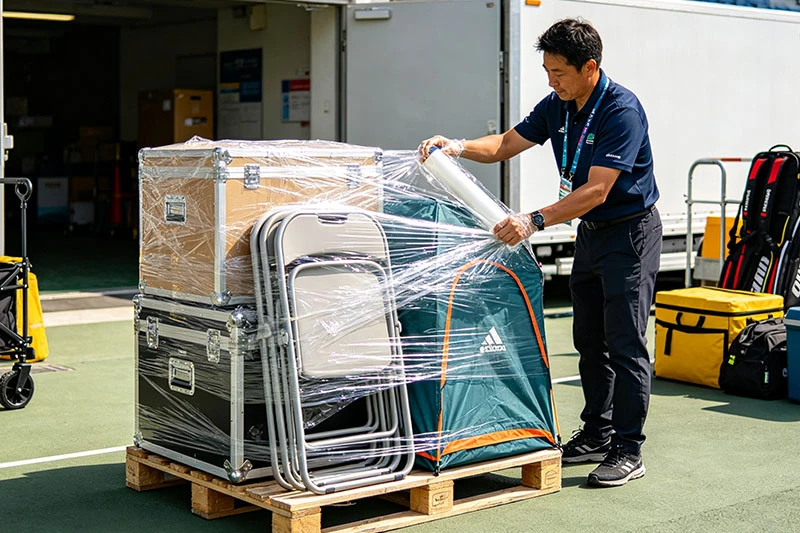
- Non-Standard or Irregular Loads: Hand wrapping enables operators to manually reinforce specific zones of a pallet—such as the top cap or bottom attachment to the wooden skid—adapting dynamically to irregular cargo geometries.
- Decentralized Packing Areas: In facilities where goods are packed across multiple staging zones rather than a single conveyor bottleneck, hand film allows workers to secure loads immediately at the point of packing.
Operational Constraints
Manual wrapping relies heavily on worker technique. Inconsistent application tension causes variations in load containment force, which increases the risk of product shifting during transport. Furthermore, physical fatigue limits human operators from achieving the high pre-stretch ratios achievable on automated equipment.
Key Technical Specifications: Cast vs. Blown Hand Stretch Film
The extrusion process used to manufacture film determines its mechanical properties, including puncture resistance, optical clarity, cling behavior, and unwinding noise levels.
          CAST EXTRUSION                               BLOWN EXTRUSION
  +----------------------------+              +----------------------------+
  |  Die -> Chilled Rollers    |              |   Die -> Vertical Bubble   |
  +----------------------------+              +----------------------------+
               |                                             |
               v                                             v
  • Exceptional Clarity                       • High Puncture Resistance
  • Quiet Unwind                              • Superior Tear Propagation
  • Smooth Outer Cling                        • Two-Sided High Tack / Cling
Cast Hand Stretch Film
Cast film is manufactured by extruding molten polyolefin resin through a flat die onto chilled rollers. This rapid cooling process produces a highly uniform crystal structure.
- Clarity: Superior optical transparency allows barcode scanners to read labels directly through multiple layers of film.
- Unwind Noise: Unwinds quietly from the roll, reducing ambient noise levels in high-activity distribution centers.
- Tear Resistance: Offers excellent resistance to tearing in the machine direction, though puncture resistance against sharp corners is moderate compared to blown film.
Blown Hand Stretch Film
Blown film is produced by extruding resin through a circular die, blowing it upward into a vertical bubble to stretch the material in both directions before air-cooling.
- Puncture and Tear Resistance: The bi-axial orientation gives blown film maximum toughness, making it highly resistant to sharp edges, wooden pallet splinters, and protruding box corners.
- Cling and Tack: Features high inherent cling on both sides, ensuring film layers bind tightly even in cold storage or dusty warehouse environments.
- Noise and Optics: Produces a noticeable noise during unwind and exhibits a slightly hazy finish, which can reduce barcode readability if wrapped in heavy layers.
Performance Comparison Matrix
| Property / Feature | Cast Hand Stretch Film | Blown Hand Stretch Film |
| Manufacturing Method | Flat die onto chilled rollers | Circular die with vertical air-cooled bubble |
| Optical Clarity | High (Transparent) | Moderate (Hazy/Translucent) |
| Puncture Resistance | Standard / Good | Exceptional (High-density stress loads) |
| Unwind Noise Level | Very Low / Quiet | Moderate to High |
| Two-Sided Cling Strength | Consistent / Smooth | High Tack / Aggressive Cling |
| Ideal Application | Standard boxed goods, display pallets | Sharp edges, heavy industrial goods, cold storage |
How to Select the Right Gauge/Microns for Pallet Load Stability
Matching film thickness to cargo weight and shape profile is essential to prevent containment failure while avoiding unnecessary material waste.
Understanding Load Profiles
- Profile A Loads (Uniform): Straight-sided, symmetrical loads where the cargo fits smoothly on the pallet footprint without sharp protrusions (e.g., standard cardboard master cartons).
- Profile B Loads (Non-Uniform): Loads with minor irregularities, protruding edges, or small gaps between stacked boxes.
- Profile C Loads (Severe): Highly irregular geometries with sharp edges, heavy weight variations, or exposed metal/wooden parts extending past the pallet perimeter.
Gauge, Micron, and Load Capacity Matching Matrix
| Load Class | Cargo Weight Range | Recommended Thickness (Microns) | Recommended Thickness (Gauge) | Recommended Film Type |
| Light (Profile A) | Under 400 kg (880 lbs) | 12 – 15 µm | 47 – 60 Gauge | Cast or Pre-Stretched Film |
| Medium (Profile A/B) | 400 – 800 kg (880 – 1,760 lbs) | 17 – 20 µm | 67 – 80 Gauge | Standard Cast or Blown |
| Heavy (Profile B/C) | 800 – 1,200 kg (1,760 – 2,640 lbs) | 23 – 25 µm | 90 – 100 Gauge | High-Performance Blown |
| Severe (Profile C) | Over 1,200 kg (2,640 lbs) | 28+ µm | 110+ Gauge | Heavy-Duty Blown / Reinforcement |
Technical Note on Pre-Stretched Film: Pre-stretched manual film has been mechanically elongated during converting near its yield point. It requires less physical exertion from the operator to achieve tight containment force, reduces total film weight used per pallet, and prevents neckdown (width reduction under tension).
Hand Stretch Film vs. Filimu ni misini: When to Upgrade
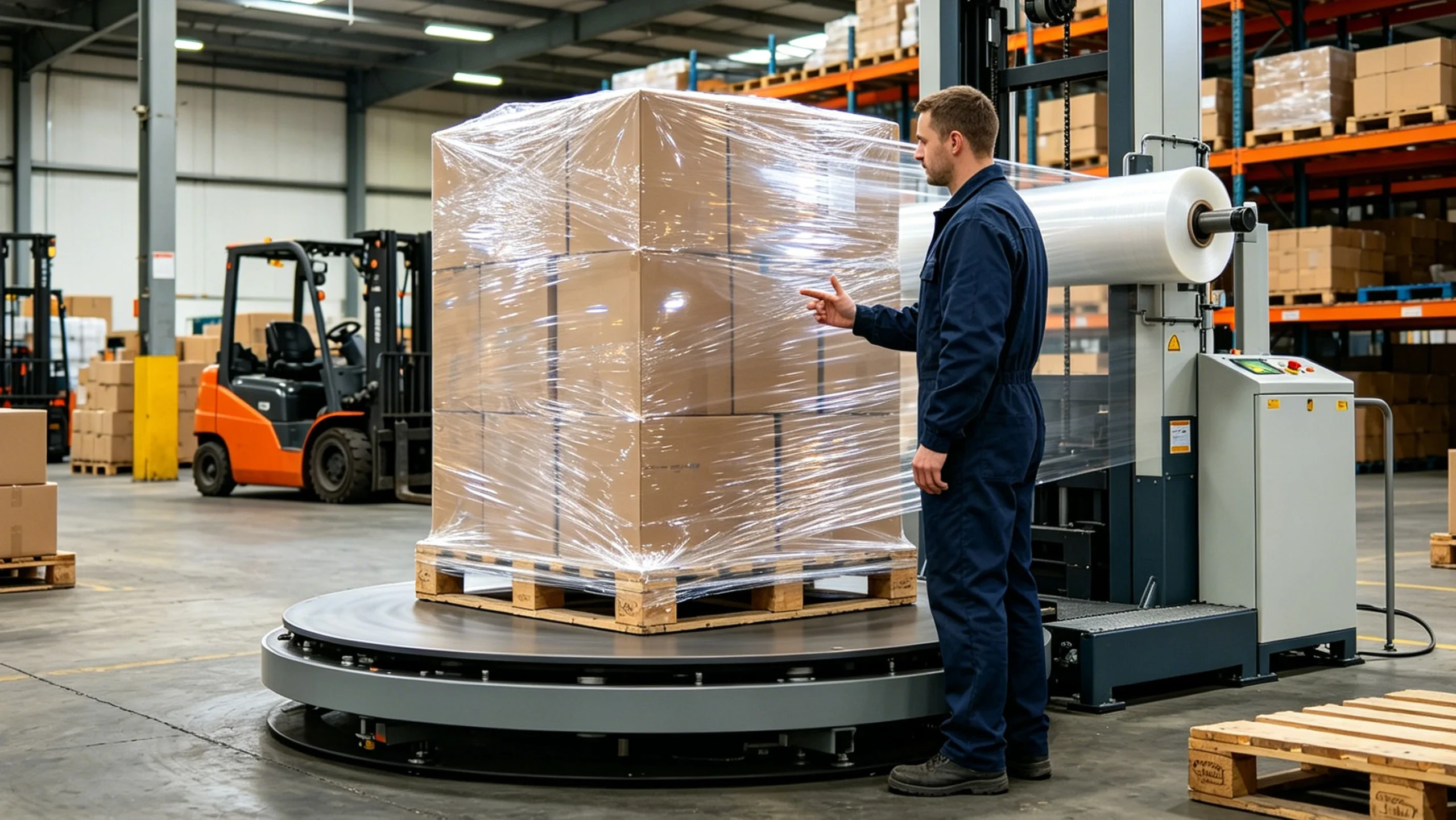
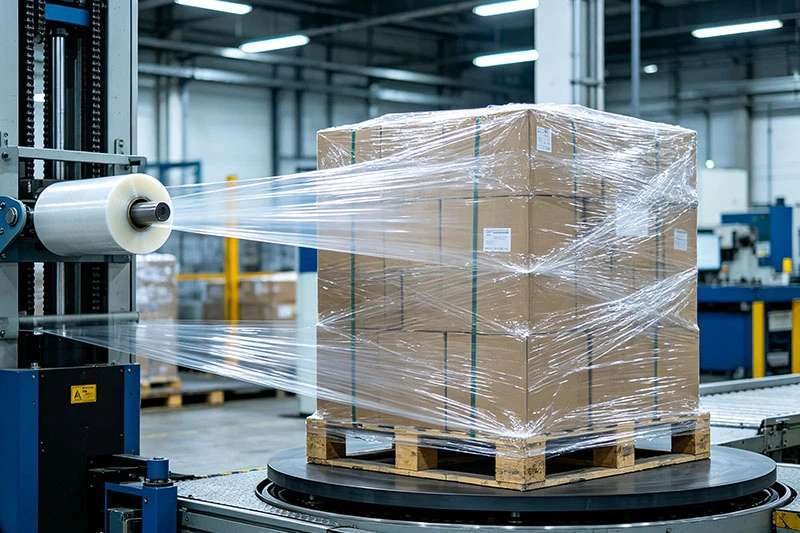
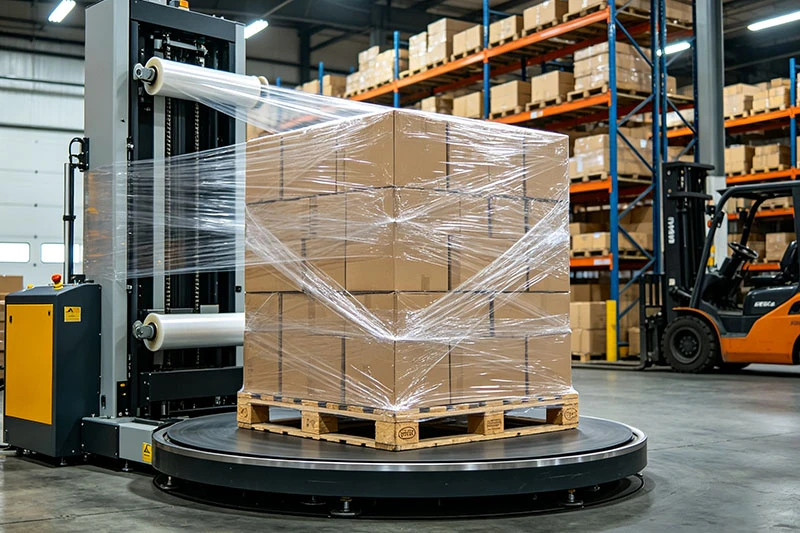
As facility throughput increases, maintaining a manual wrapping strategy can create supply chain bottlenecks and elevate labor costs. Evaluating the transition from hand stretch film to automated or semi-automated machine systems depends on daily volume, labor costs, and required wrapped consistency.
                      OPERATIONAL EVOLUTION PATHWAY

  Hand Stretch Film             Machine Stretch Film             Stretch Hood Film
+-------------------+         +---------------------+         +---------------------+
| Low Volume        |  --->   | Medium/High Volume  |  --->   | High Speed / Uniform|
| Manual Labor      |         | Semi/Fully Automated|         | 5-Sided Protection  |
| Flexible Stations |         | Consistent Tension  |         | High Throughput     |
+-------------------+         +---------------------+         +---------------------+
Key Upgrade Triggers
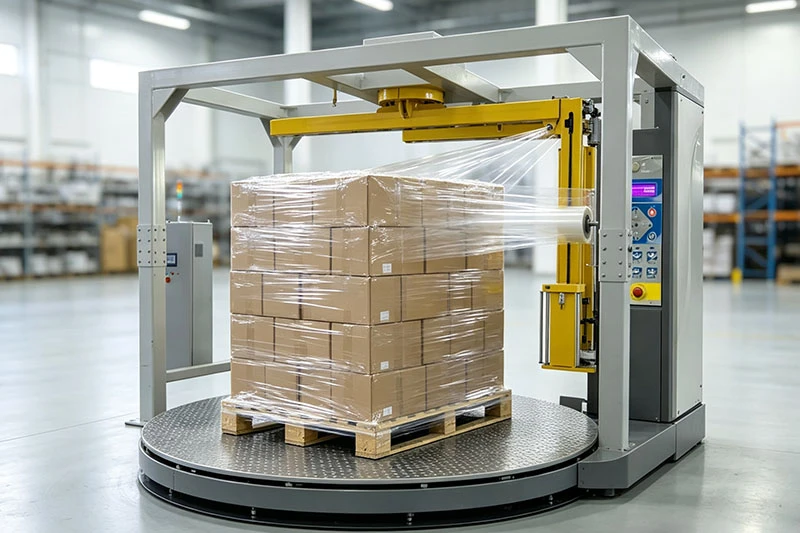
- Daily Pallet Threshold: When a single facility wraps more than 50 pallets per day consistently, the cumulative labor cost often exceeds the monthly financing or depreciation cost of a semi-automated turntable wrapper.
- Consistent Containment Requirements: High-value or fragile goods requiring verified, repeatable wrap patterns benefit from machine film systems, where pre-stretch ratios (up to 250%–300%) are controlled electronically rather than manually.
- Speed and Throughput Demands: Automated packaging lines utilizing high-performance machine film or tubular stretch hood options can secure 60 to 100+ pallets per hour, far exceeding manual capacity.
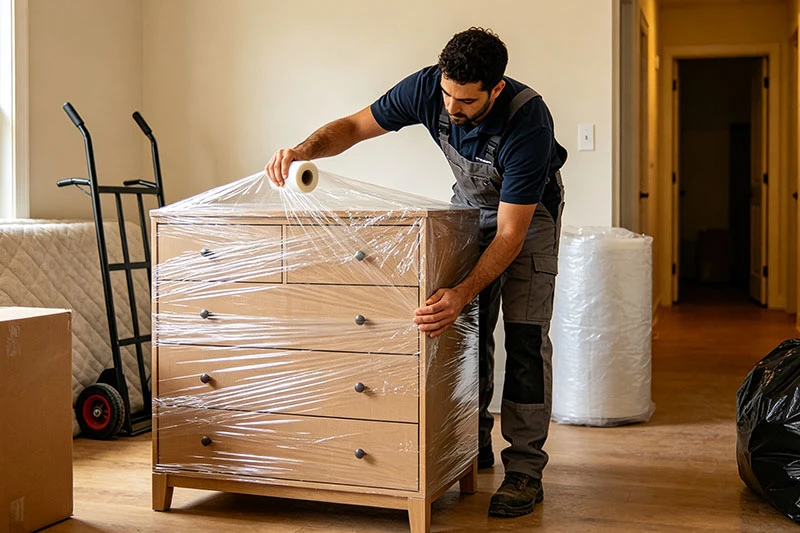
B2B Buyer’s Guide: Evaluating Quality, Roll Uniformity, and True Cost per Pallet
Purchasing stretch wrap solely based on price per roll often leads to higher overall operational expenses. Thinner, lower-quality films frequently tear during application, forcing operators to use twice as many layers or throw away damaged rolls.
Calculating the True Cost Per Pallet
To establish the accurate cost of a wrapping film, calculate the total cost required to wrap a single unitized pallet rather than comparing raw roll prices:
$$\text{Cost Per Pallet} = \left( \frac{\text{Roll Cost}}{\text{Net Roll Weight or Total Usable Meters}} \right) \times \text{Material Used Per Pallet}$$
Procurement Quality Checklist
Before committing to bulk purchases, B2B buyers should request technical datasheets and verify the following factors with suppliers:
- Net Weight vs. Gross Weight: Ensure the supplier quotes roll pricing based on net plastic weight rather than including the heavy paperboard core in the weight calculation.
- Roll Edge Integrity: Inspect sample rolls for nicked or crushed edges. Minor tears along the side of a hand roll cause constant film snapping when pulled under manual tension.
- Gauge Uniformity: Verify that thickness tolerances remain consistent across the full width of the roll. Inconsistent gauge leads to uneven load retention and localized film rupture.
- Unwind Tension Smoothness: Test rolls manually to ensure smooth, controllable unwind behavior that prevents worker wrist strain.
Summary of Key Findings
- Match Film to Application: Use cast hand stretch film for standard boxed goods requiring quiet unwind and high barcode clarity. Opt for blown film when wrapping heavy loads, sharp edges, or pallets stored in extreme environments.
- Select Thickness by Load Profile: Match microns/gauge to actual cargo weight and profile class (A, B, or C). Pre-stretched hand films offer significant ergonomics and resin savings for uniform light-to-medium loads.
- Focus on Total Cost Per Pallet: Evaluate suppliers based on net plastic weight, roll quality, and material usage per wrapped unit rather than roll price alone.
- Monitor Upgrade Thresholds: When daily wrapping volume exceeds 50 pallets per station, evaluate semi-automated machine wrapping systems to improve operational speed and load consistency.
Frequently Asked Questions
What is the standard roll width for industrial hand stretch film?
The most common standard widths for manual stretch film rolls are 400 mm (16 inches) and 450 mm to 500 mm (18 inches). These widths provide an optimal balance between coverage area per pass and physical ergonomics for warehouse operators.
How does pre-stretched hand film reduce worker fatigue?
Pre-stretched film is mechanically elongated during manufacturing, requiring minimal physical pulling force during application to achieve proper load containment. Because the operator does not need to stretch the film manually, physical fatigue and injury risks are reduced while maintaining consistent wrapping tension.
How should stretch film rolls be stored to prevent degradation?
Stretch film rolls should be stored vertically in their original packaging, away from direct sunlight, UV exposure, and heat sources. Recommended storage temperatures range between 15°C and 25°C (59°F to 77°F) to preserve optimal cling properties and mechanical integrity.