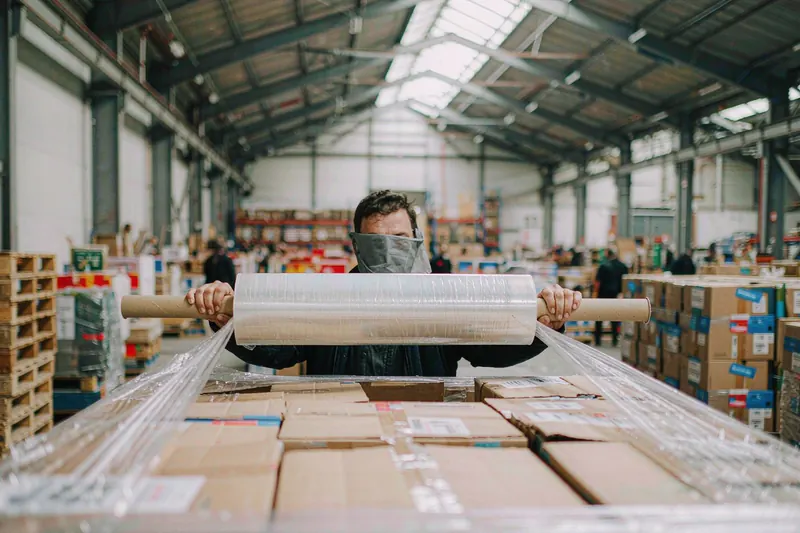


Wrapping pallets bare-handed leads to friction burns, operator fatigue, and inconsistent film tension. Namun, buying the most expensive hand stretch film dispenser is not always the correct solution. The ideal tool depends directly on your daily packaging volume. A facility securing five pallets a week requires completely different equipment than a distribution center wrapping fifty pallets a day.
Selecting the correct dispenser allows operators to apply the optimal stretch rate to the film, reducing material waste and ensuring load stability. This guide breaks down manual pallet wrappers—from basic plastic inserts to heavy-duty models with adjustable brakes—helping you match the equipment to your warehouse operations.
Assessing Your Pallet Wrap Volume: Where Do You Stand?
Before comparing specific dispenser mechanics, you must establish a baseline for your packaging operations. Dispenser wear and tear, along with operator fatigue, scale with the number of pallets wrapped.
To determine which category your facility falls into, evaluate your current daily throughput using the application matrix below.
| Volume Tier | Daily Pallet Volume | Primary Goal | Recommended Tool |
|---|---|---|---|
| Low Volume | 1–15 pallets/day | Prevent hand injuries | Plastic core inserts or end caps |
| Medium Volume | 15–40 pallets/day | Control film tension and reduce material waste | Heavy-duty stretch wrap dispenser with a brake handle |
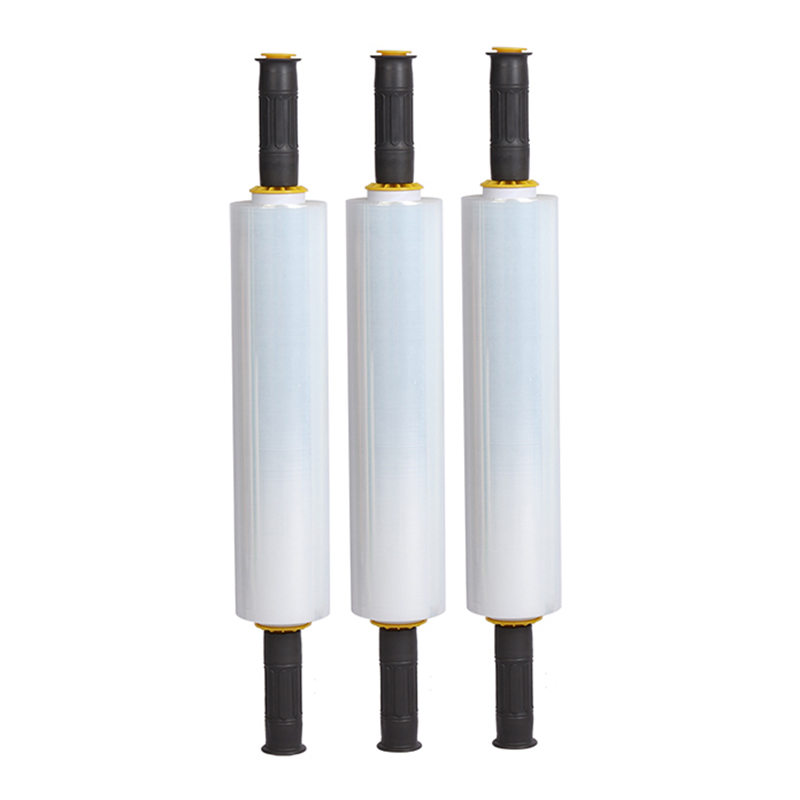
| High Volume | 40+ pallets/day | Maximize ergonomics, eliminate bending, and maintain high tension | Extended pole dispensers or ergonomic hand pallet wrappers |
Regardless of the tool you select, using reliable film regangan tangan designed for consistent elongation is required to achieve a secure load.
Low-Volume Tools: Plastic Core Inserts and End Caps
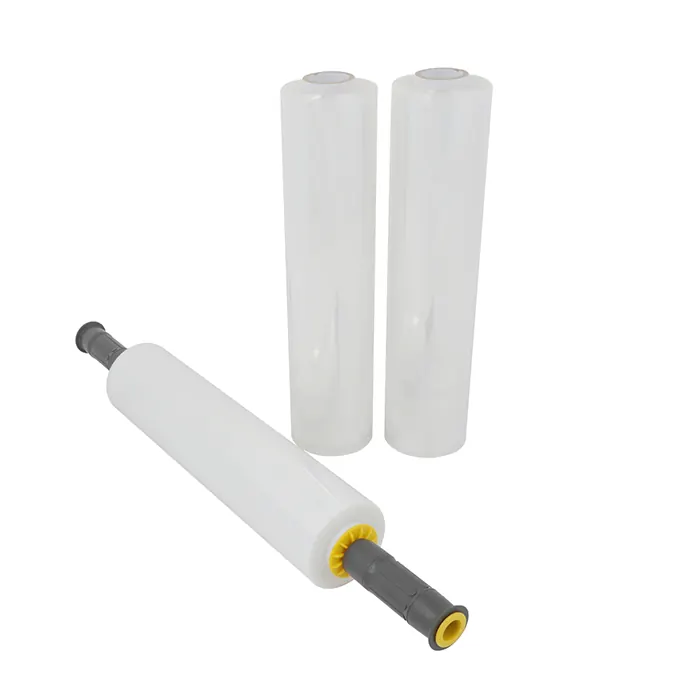
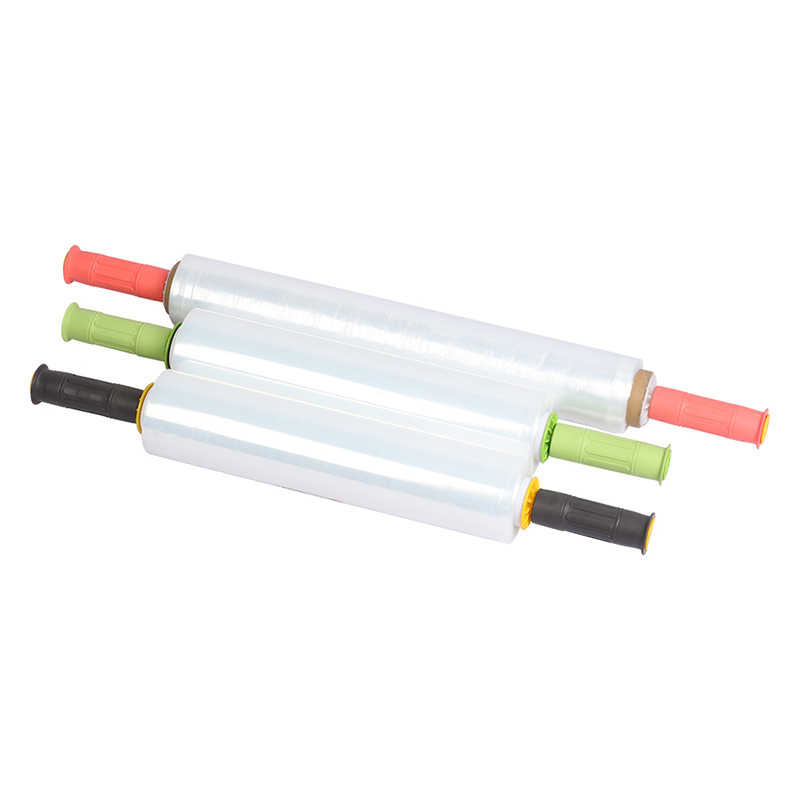
For small businesses or retail backrooms that only prepare a few shipments a day, investing in a heavy steel frame is unnecessary. Plastic core inserts (also known as stretch film handles) press directly into the cardboard core of the film roll.
These inserts act as a simple bearing between the operator’s hands and the spinning roll.
Pros
- Extremely lightweight and portable.
- Zero maintenance required; no moving parts.
- Low procurement cost.
- Eliminates the friction burns caused by holding a spinning cardboard core.
Cons
- No mechanical tension control. The operator must squeeze the inserts to create drag, which causes hand fatigue over time.
- Cannot extract the maximum yield from standard cast stretch film, potentially leading to higher consumable costs per pallet.
- Offers no ergonomic support for bending or reaching.
The Workhorse: Heavy-Duty Metal Dispensers with Tension Control
Once a facility exceeds 15 palet per hari, plastic inserts become inefficient. At this volume, a heavy duty stretch wrap dispenser becomes the industry standard. These units feature a solid metal frame, a top handle, and a bottom base that holds the film roll.
The defining feature of this tier is the tension control brake. By twisting the handle, the operator compresses a brake pad against the roll. This resistance forces the film to stretch as it is pulled around the pallet corners, creating a tighter holding force and reducing the total length of film required per load.

Specification Checklist: What to Look For
When evaluating a metal stretch wrap dispenser with brake, check the following components:
- Adjustable height shaft: Ensure the frame expands and collapses to accommodate standard 12-inch, 15-inch, and 18-inch film rolls.
- Ball bearing rotation: Look for smooth bearings at the top and bottom plates to prevent snagging during high-speed wrapping.
- Foam grips: Essential for preventing slippage caused by warehouse dust or operator sweat.
- Base plate durability: The bottom plate will frequently strike the floor or wooden pallet edges; solid steel or reinforced aluminum is necessary to prevent bending.
If your facility uses pre-stretched hand film, the brake mechanism requires less clamping force, further reducing the physical strain on the warehouse staff.
Ergonomic and Extended Pole Dispensers for High-Frequency Wrapping
High-volume operations relying on manual wrapping face a significant risk of repetitive strain injuries. Securing a standard pallet requires the operator to walk backward, bend low to lock the film to the wooden base, and reach high to secure the top tier.

Problem-Solution Ergonomic Matrix
| Problem | Solution |
|---|---|
| Lower back strain from bending repeatedly to wrap the bottom of pallets. | Extended pole stretch wrap dispensers allow the operator to hold the tool near chest height while the film roll glides inches from the floor. |
| Hand fatigue from constantly squeezing a brake handle. | Ergonomic hand pallet wrappers utilize a pre-set mechanical tension dial, removing the need for manual squeezing and delivering consistent film stretch across multiple operators. |
| Walking backward blindly around tight staging areas. | Pole dispensers enable operators to walk forward while wrapping, improving warehouse safety and visibility. |
Dispenser Comparison Match-Up: Which One Wins?
To finalize your equipment decision, compare your operational data against this selection framework.
| Dispenser Type | Daily Pallet Volume | Tension Control | Ergonomic Support | Relative Tool Cost |
|---|---|---|---|---|
| Plastic Core Inserts | 1–15 | Manual (Squeeze) | None | Low |
| Heavy-Duty Metal Dispenser | 15–40 | Adjustable Mechanical Brake | Moderate | Medium |
| Extended Pole / Ergonomic Wrapper | 40+ | Pre-set / Dial Tension | High | High |
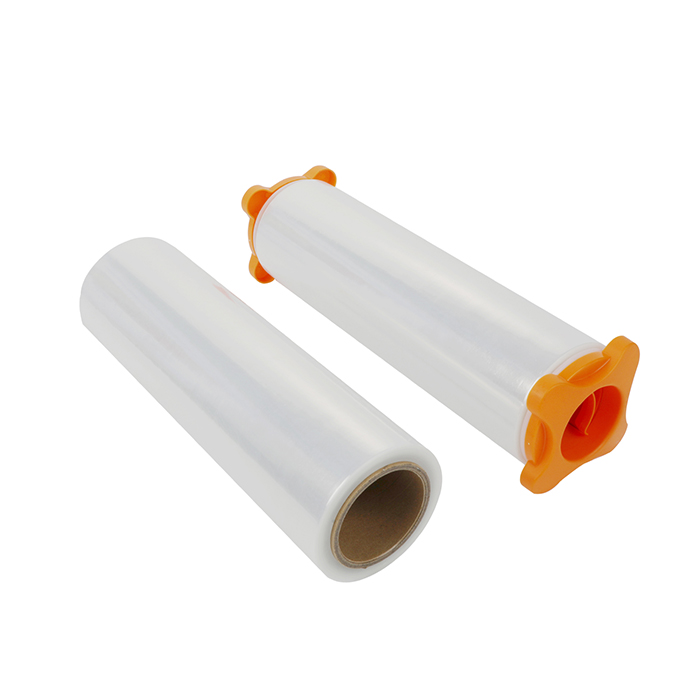
Before ordering, verify your current consumable specifications. Most industrial metal dispensers are designed to fit standard 3-inch core stretch film. If your facility uses 2-inch cores or coreless rolls, you will require specialized adapter plates.
Pair Your Dispenser with Premium Hand Stretch Film
A high-quality dispenser cannot compensate for brittle or low-grade plastic. To fully utilize your equipment’s tension control, you must pair it with a film that resists tearing under load. Evaluate your current stretch rates and ensure your consumables match your new hardware capabilities.
Explore Vistech’s high-performance film regangan tangan, engineered for optimal load retention and tear resistance across all manual packaging environments.
Key Takeaways
- Dispenser selection should be based on daily wrap volume rather than unit price alone.
- Low-volume setups (1-15 pallets/day) can operate on simple plastic core inserts to prevent hand friction.
- Medium-volume operations (15-40 pallets/day) require heavy-duty metal dispensers with mechanical brakes to maximize film stretch and reduce material waste.
- High-volume manual packaging (40+ pallets/day) demands ergonomic pole wrappers to prevent operator back injuries and ensure consistent tension.
- Hardware must match consumables; always verify the roll’s core diameter before purchasing a dispenser.
FAQ
How does a tension control brake save stretch film?
A tension control brake applies drag to the spinning roll. This resistance forces the film to stretch (elongate) as the operator walks around the pallet. Stretching the film to its intended capacity means you use fewer linear feet of material to achieve the necessary holding force, directly reducing consumable costs.
Can I use a 2-inch core film on a standard heavy-duty dispenser?
Most standard metal hand stretch film dispensers are built with end caps designed for 3-inch cardboard cores. If you attempt to use a 2-inch core, the roll will not fit over the bearings. You must either specify a 2-inch compatible dispenser or purchase adapter plates.
Are extended pole dispensers slower to use than standard metal handles?
While there is a brief learning curve, extended pole dispensers are generally faster for securing the bottom and top edges of a pallet. Because the operator does not need to crouch down or stretch upward, they can maintain a steady, forward-walking pace, improving overall cycle times.