

Choosing the correct hand stretch film directly dictates pallet stability, load containment, and overall packaging costs across warehouse operations. Daim ntawv nplaum tes—hu ua manual pallet wrap—yog tsim los kom ruaj ntseg cov khoom palletized thaum thauj thiab khaws cia yam tsis tas yuav siv tshuab tshuab. Xaiv daim yeeb yaj kiab kom raug yuav tsum tshuaj xyuas txoj kev tsim khoom (cast thiab blown film), gauge thickness piv rau qhov hnyav, thiab kev qhwv tes kom raug. Phau ntawv qhia no qhia txog cov ntsiab lus tseem ceeb, qib thauj khoom, thiab cov kev coj zoo tshaj plaws los pab cov thawj coj yuav khoom thiab cov saib xyuas logistics txhim kho kev ruaj ntseg ntawm pallet thiab txo kev siv daim duab.
1. Nkag siab txog Hand Stretch Film hauv Modern Pallet Packaging
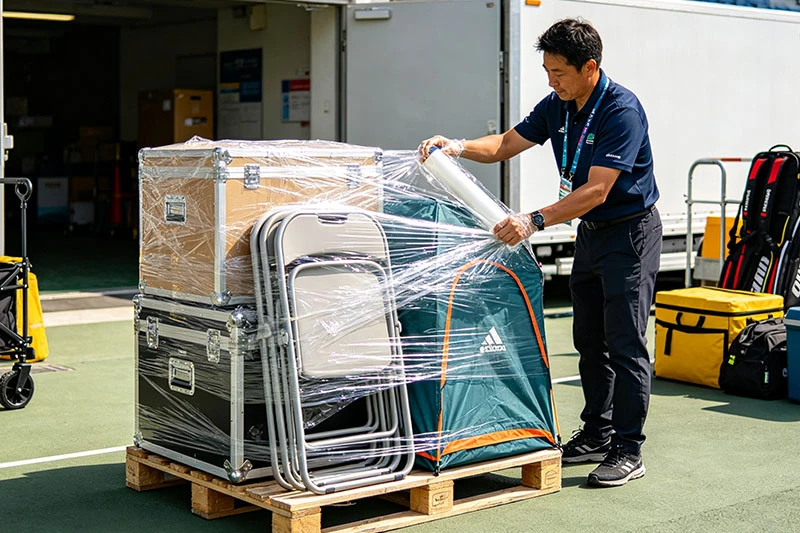
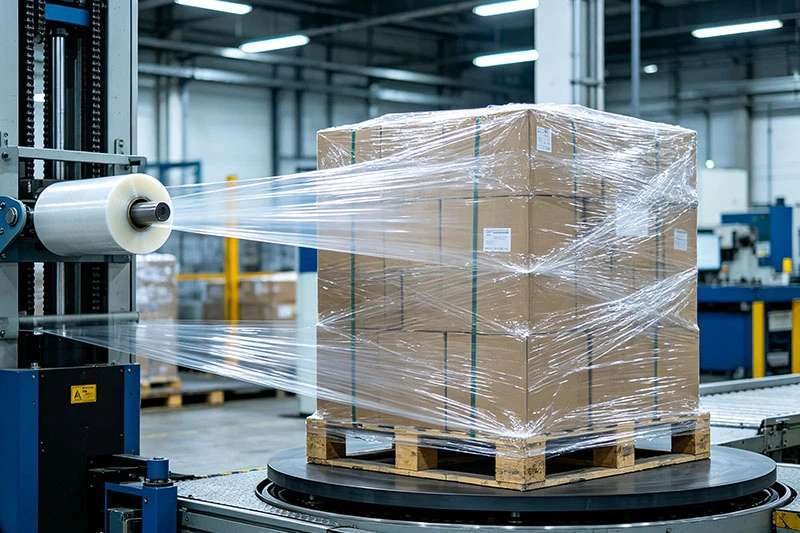
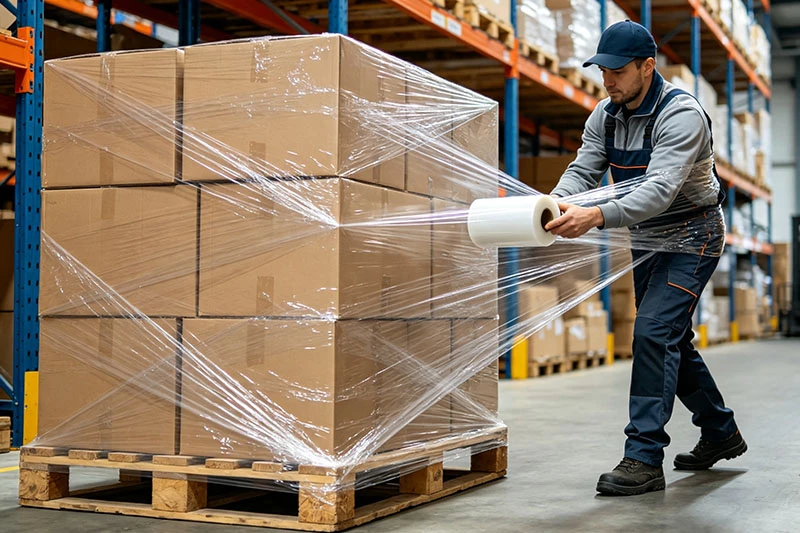
Hand stretch film muaj lub hom phiaj tshwj xeeb hauv kev lag luam. Tsis zoo li cov tshuab tsis siv neeg uas ua ntau pallet qauv, manual wrap muab kev txav thiab hloov tau yooj yim rau cov neeg ua haujlwm. It is ideal for lower-volume packaging lines, decentralized fulfillment centers, irregular load profiles, and tight warehouse spaces where machine wrapping is impractical.
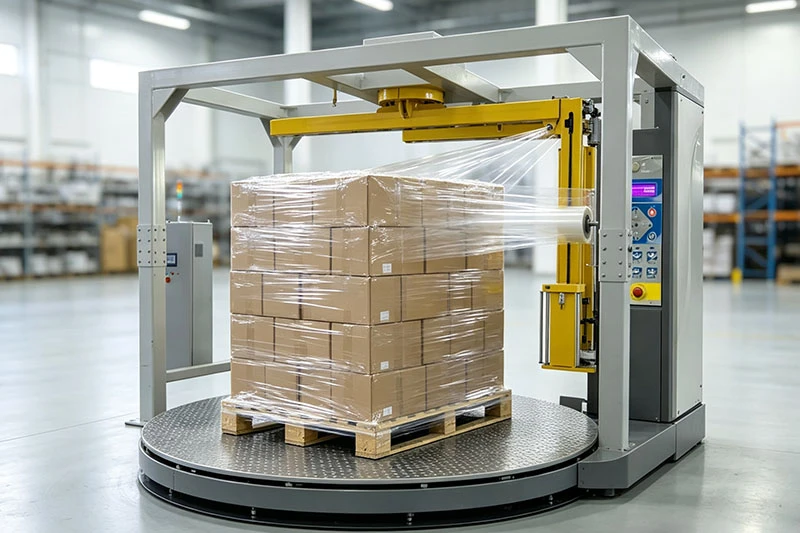
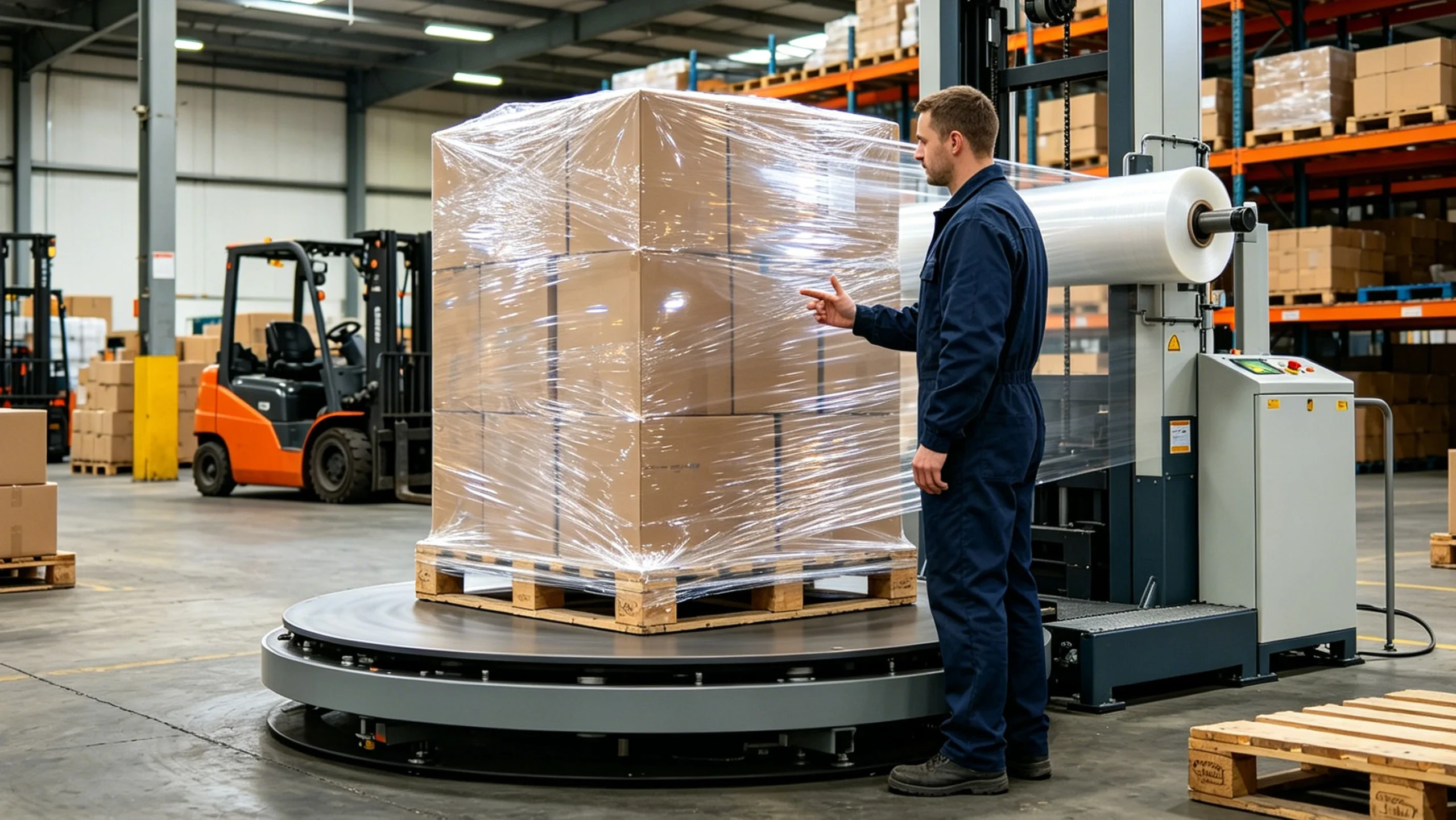
To select the right containment material, packaging buyers must distinguish between hand stretch film, zaj duab xis stretch tshuab, and stretch hood film:
| Packaging Feature | Tes Ncab Zaj Duab Xis | Tshuab Ncab Zaj Duab Xis | Stretch Hood Film |
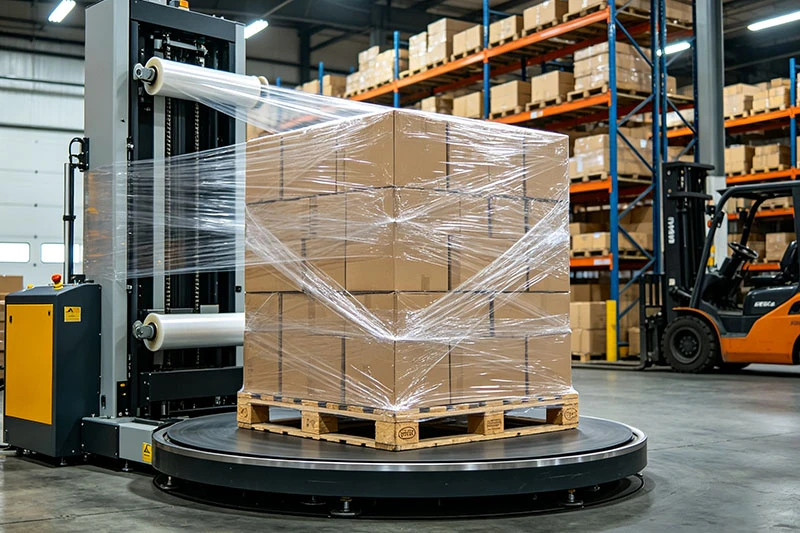
| Application Method | Manual application using hand dispensers or core grips | Semi-automatic or fully automatic turntable/rotary arm wrappers | Fully automated stretch hooding machinery |
| Throughput Volume | Low to medium (typically under 15–20 pallets per hour per station) | Medium to high (20 rau 100+ pallets per hour) | High to ultra-high continuous packaging lines |
| Pre-Stretch Ratio | Manual tensioning (typically 10% rau 100% stretch depending on operator strength) | Powered pre-stretch carriage (150% rau 300%+) | Mechanical tubular expansion over the load |
| Primary Advantage | Zero machinery capital expenditure; high mobility for decentralized loads | High consistency, reduced labor fatigue, faster wrap cycles | Superior 5-sided weather protection and load stability |
| Typical Target Use | Warehouses, distribution centers, staging areas, local delivery routes | High-volume manufacturing plants, central logistics hubs | Beverage industries, bagged cement, outdoor pallet storage |
For operations prioritizing low upfront equipment costs and flexibility across varied load shapes, investing in high-grade hand stretch film solutions provides targeted load retention without machine dependency.
2. Cast vs. Blown Hand Stretch Film: Material & Performance Analysis
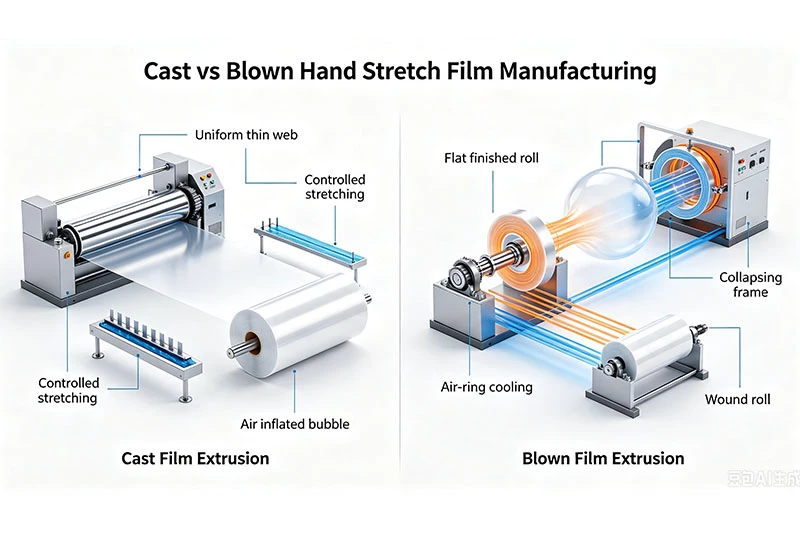
Hand stretch film is primarily manufactured using two polyethylene extrusion processes: cast extrusion and blown extrusion. Each process imparts distinct physical properties that determine performance under specific warehouse conditions.
       CAST EXTRUSION                         BLOWN EXTRUSION
+--------------------------+           +--------------------------+
|  Flat die onto chilled   |           |  Tubular die inflated    |
|       metal rollers      |           |    with air cooling      |
+--------------------------+           +--------------------------+
             |                                      |
             v                                      v
  • High optical clarity                 • Hazy appearance
  • Smooth, quiet unwind                 • Noisy unwind
  • High tear propagation                • Superior puncture/tear
  • Consistent gauge density               resistance in both directions
Cast Hand Stretch Film
In cast extrusion, molten polymer is extruded through a flat slot die onto chilled rollers. This rapid cooling yields specific functional benefits:
- Optical Clarity: High transparency allows barcode scanners to read labels directly through the wrap without unwrapping.
- Quiet Unwind: Produces minimal noise during application, creating a quieter warehouse environment.
- Consistent Gauge Control: Offers uniform film thickness across the roll, ensuring smooth manual tensioning.
- Cling Properties: Features smooth, one-sided or two-sided cling that sticks to itself without catching on adjacent pallets in transport.
- Best Suited For: Standard box loads, uniform pallets, indoor logistics, and scannable inventory.
Blown Hand Stretch Film
In blown extrusion, molten resin is forced through a circular die, inflated upward into a vertical bubble, and air-cooled. This slower cooling process creates a complex molecular structure:
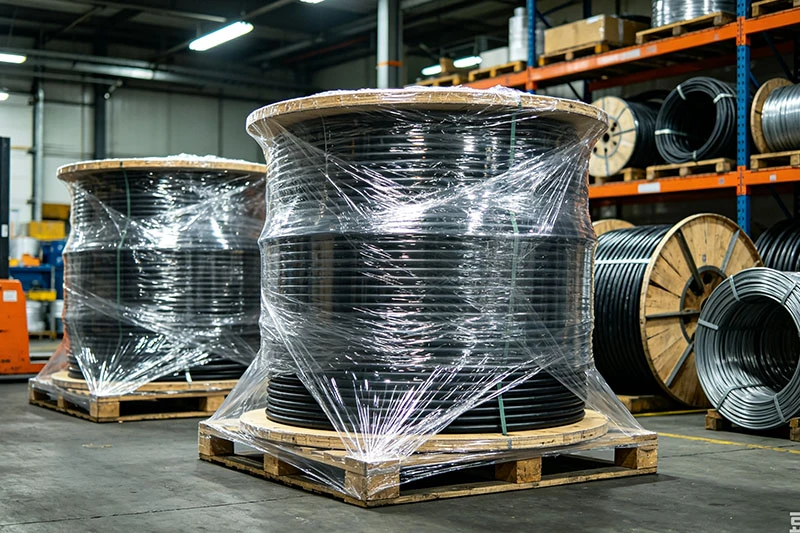
- High Puncture and Tear Resistance: The bi-directional resin orientation provides maximum resistance against sharp corners, protruding nails, or irregular crate edges.
- High Holding Force: Holds high-density or expanding loads firmly in place over long transport distances.
- Tackiness: Offers high natural cling, adhering securely even in dusty or cold-storage environments.
- Best Suited For: Heavy-duty loads, sharp or irregular cargo, cold-storage facilities, and harsh transit conditions.
3. Thickness, Gauge, and Load Rating Selection Matrix
Selecting the appropriate thickness—measured in gauge (mil) or microns ($\mu m$)—prevents film snapping during wrapping and ensures structural integrity during transit. Pallet loads are classified into three category profiles based on geometry and puncture risk:
- Type A Loads: Uniform, smooth cargo with no sharp edges (e.g., standard boxed goods flush with the pallet base).
- Type B Loads: Semi-irregular loads with minor protrusions, uneven stacking, or slight box offsets.
- Type C Loads: Highly irregular loads featuring sharp corners, varied dimensions, exposed wood, or protruding metal components.
Hand Stretch Film Gauge and Load Rating Matrix
| Load Profile & Weight | Recommended Film Thickness | Film Characteristics & Application Suitability |
| Light Duty (Type A loads under 1,000 lbs / 450 kg) | 30 – 50 Gauge ($7.5 – 12\ \mu m$) | Lightweight conventional or pre-stretched film. Reduces worker fatigue; ideal for stable, uniform box stacks. |
| Medium Duty (Type A/B loads up to 1,800 lbs / 815 kg) | 60 – 70 Gauge ($15 – 17.5\ \mu m$) | General-purpose warehouse wrap. Offers a balance of stretch capability, puncture resistance, and cost efficiency. |
| Heavy Duty (Type B/C loads up to 2,400 lbs / 1,080 kg) | 80 Gauge ($20\ \mu m$) | Industry standard for heavy pallet containment. High puncture resistance for mixed-product distribution. |
| Extra Heavy Duty (Type C loads over 2,400 lbs / 1,080 kg) | 90 – 120+ Gauge ($23 – 30+\ \mu m$) | High-grade cast or blown film designed for heavy machinery parts, sharp edges, and severe transit vibrations. |
Conventional vs. Pre-Stretched Hand Film
When evaluating options, buyers can choose between standard conventional film and pre-stretched film:
- Conventional Film: Stretched by the operator during application. Requires physical effort to achieve containment force, but allows manual control over tension.
- Pre-Stretched Film: Pre-expanded during manufacturing close to its ultimate yield point. It requires minimal force from the operator to apply, reduces neck-down (width loss under tension), and ensures consistent roll coverage while lowering overall material weight per wrapped pallet.
Buyers seeking exact technical specs and thickness variations can explore our hand stretch film specifications to align film parameters with specific pallet weight requirements.
4. Standard Operational Best Practices for Manual Pallet Wrapping
Improper manual wrapping techniques can lead to load shifting or failure, even when using high-quality film. Following a structured wrapping process ensures maximum structural stability and worker safety.
1.Prepare and Secure the Base Anchor:Ensures the film grips the pallet structure before load wrapping begins。
Tie or insert the end of the hand film through the lower corner of the wooden or plastic pallet base. Secure it with a simple twist or knot around a corner column. Never attach the initial anchor solely to the cardboard boxes, as this risks load slippage at the base.
2.Apply the Bottom Base Wraps:Integrates the cargo load directly to the pallet structure。
Wrap around the bottom of the pallet structure at least 3 rau 4 times, ensuring the film overlaps both the wooden pallet frame and the lowest tier of cargo. This base anchor prevents the entire load from sliding off the pallet during transport.
3.Spiral Upward with Consistent Overlap:Maintains vertical integrity along the entire load height。
Walk forward around the load while maintaining steady manual tension. Spiral upward, ensuring each new layer overlaps the previous layer by at least 30% rau 50%. Keep the film stretched consistently without over-pulling, which can cause film neck-down or snapping.
4.Secure the Top Layer and Apply Over-Top Protection:Prevents top-tier shifting and guards against dust or light moisture。
Apply 2 rau 3 full rotations around the top tier of cargo. If top protection against dust or rain is required, place a protective plastic sheet over the top surface before applying the final upper rotation to lock the cover sheet in place.
5.Spiral Downward and Perform Final Lock-Off:Provides double-layer structural support for heavy or tall loads。
Spiral back down toward the base of the pallet with a 30% rau 50% overlap. Once back at the base, tear the film, press the tail firmly against the wrapped stack so the cling properties lock it in place, or wipe the film end down smoothly to secure the tail.
5. Procurement Checklist: Evaluating Hand Stretch Film Suppliers
When sourcing hand stretch film in bulk, B2B procurement teams must evaluate key manufacturing metrics and supplier capabilities to ensure consistent quality.
- Raw Material Purity: Confirm whether the film uses 100% virgin LLDPE (Linear Low-Density Polyethylene) or certified post-consumer recycled (PCR) blends. Virgin resins generally yield higher stretch consistency and puncture resistance.
- Roll Consistency and Edge Quality: Inspect sample rolls for smooth, nick-free edges. Damaged roll edges cause film tears when operators pull tension during manual application.
- Core Integrity and Roll Weight: Verify that core weights are clearly specified. Unusually heavy paper cores can disguise lower net film weight per roll.
- Elongation and Tensile Strength Ratings: Request technical data sheets detailing ultimate elongation percentage and longitudinal/transverse tensile strength.
- Customization Capabilities: Confirm options for custom roll widths, extended cores, color-tinted security films (e.g., opaque black for theft prevention), or UV-inhibiting additives for outdoor storage.
Note: Specific parameters such as exact break-elongation percentages, roll net weights, paper core wall tolerances, and facility certifications require direct verification against manufacturer-issued technical data sheets.
Buyers seeking custom roll configurations or bulk technical documentation can contact Vistech Stretch Film Limited for technical datasheets and material testing support.
Key Takeaways
- Target Application: Hand stretch film is optimal for low-to-medium volume packaging, varied load profiles, and operations where mobility and zero capital machinery expenditure are priorities.
- Material Selection: Choose cast film for smooth, quiet application and high barcode clarity on standard box loads. Choose blown film for maximum puncture resistance against sharp corners, heavy cargo, and cold-storage environments.
- Thickness Alignment: Match gauge to load weight and profile: 30–50 gauge for light loads under 1,000 lbs; 60–70 gauge for medium loads; and 80–120+ gauge for heavy, irregular, or high-risk cargo.
- Wrapping Technique: Load containment depends on securing the film to the pallet base with 3–4 bottom wraps and maintaining a 30%–50% layer overlap during spiral application.
FAQ
Q1: What is the main difference between hand stretch film and pre-stretched hand film?
Standard hand stretch film requires operators to manually pull and stretch the material during application to achieve hold tension. Pre-stretched hand film is mechanically pre-expanded during manufacturing. It requires less physical effort to apply, minimizes roll neck-down, and reduces total film weight used per pallet while maintaining load containment.
Q2: How many layers of hand stretch film are required to properly secure a pallet?
A standard pallet typically requires 3 rau 4 complete rotations at the base (anchoring the load to the pallet structure), a 30% rau 50% spiral overlap moving up and down the load, and 2 rau 3 rotations at the top. Heavy, tall, or irregular loads (Type B or C) may require an additional downward spiral wrap pass to ensure stability.
Q3: Can hand stretch film be recycled after use?
Yes. Hand stretch film manufactured from LLDPE (Linear Low-Density Polyethylene) is classified under Resin Identification Code #4. It can be collected, baled, and recycled through commercial soft-plastic recycling streams, provided it is free of severe dirt, excessive tape contamination, or hazardous residues.