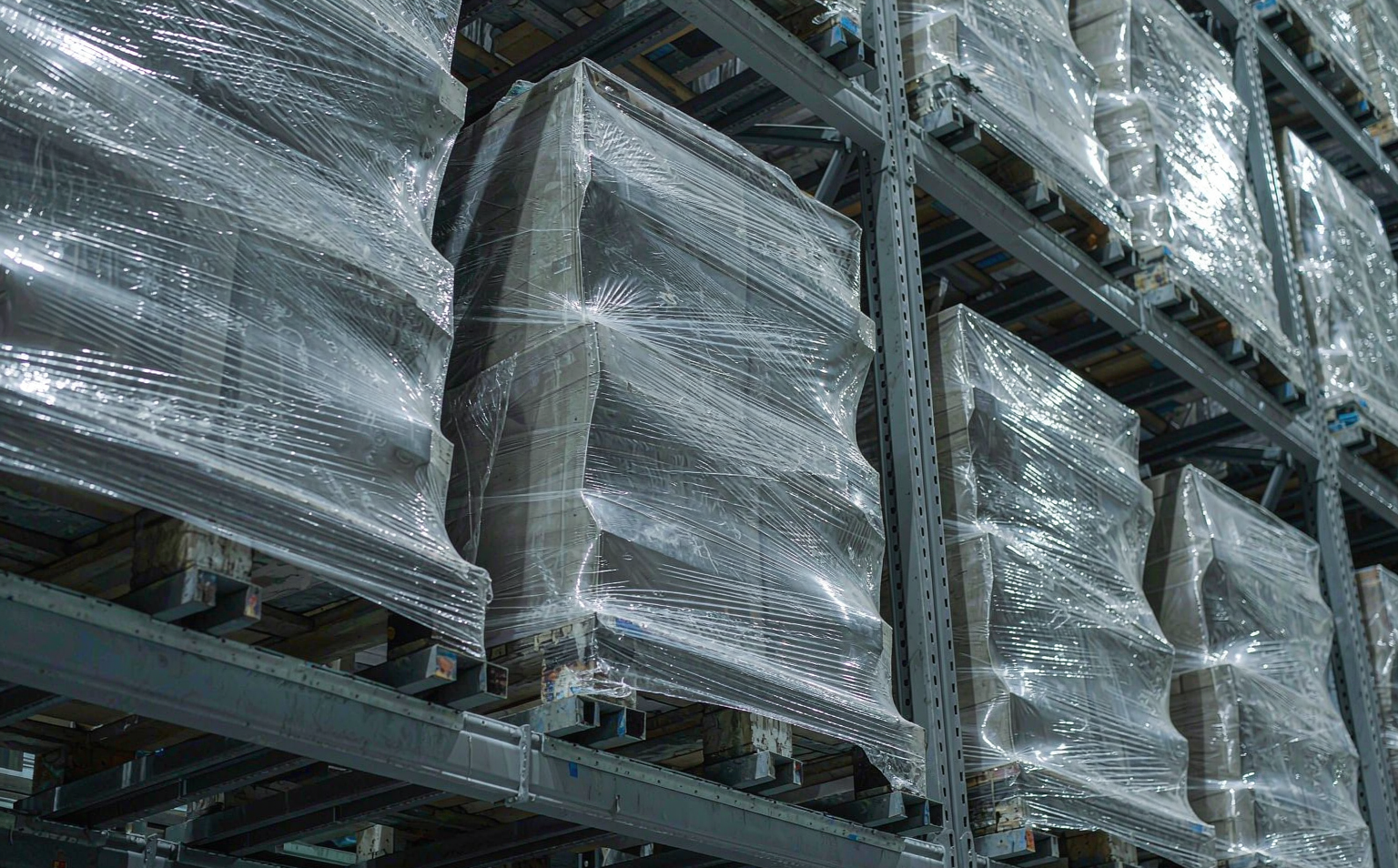


Selecting the right hand stretch film requires matching film thickness, manufacturing process, and roll dimensions to your actual pallet weight, load profile, and warehouse environment—rather than simply buying the lowest-priced roll. Purchasing teams and warehouse managers often face hidden costs from film breakage, worker fatigue, and transit damage when specifications are mismatched to load demands.
This guide answers the 25 most frequent technical and procurement questions B2B buyers ask across four practical stages:
- තෝරා ගැනීම & පිරිවිතර: Gauge/micron sizing, roll dimensions, core types, and color options.
- Material & Process Comparisons: Cast vs. blown film, pre-stretched options, and hand vs. machine wrapping thresholds.
- Warehouse Operations & Troubleshooting: Manual wrapping techniques, cold-storage cling issues, and breakage prevention.
- Cost Optimization & Procurement: Calculating true cost per pallet, verifying roll weight, and testing incoming samples.
තෝරා ගැනීම & පිරිවිතර: How to Choose the Right Hand Stretch Film
Choosing manual stretch wrap starts with understanding physical measurements and how they interact with load weight and operator ergonomics.
Q1. What is the difference between gauge and micron in hand stretch film?
Gauge and micron are two units used to measure film thickness, where 100 gauge equals 25.4 මයික්රෝන (හෝ 1 මිලි). North American suppliers typically specify hand wrap film in gauge (commonly ranging from 60 දක්වා 120 මානය), whereas European and Asian manufacturers usually list thickness in microns (typically 15 දක්වා 30 මයික්රෝන). Understanding this conversion prevents ordering errors when comparing quotes from international suppliers.
Q2. What gauge hand stretch film do I need for light, medium, and heavy loads?
The required thickness depends on total pallet weight, load uniformity, and whether the cargo has sharp edges. Lighter, uniform boxes require less containment force than heavy, irregular machinery parts.
| Load Category | Typical Pallet Weight | Recommended Gauge (මයික්රොන්) | Suitable Load Profile & Conditions |
|---|---|---|---|
| Light-Duty Loads | Up to 1,000 රාත්තල් (450 kg) | 60–65 gauge (15–17 µm) | Uniform cartons, lightweight consumer goods, short-haul transit |
| Medium-Duty Loads | 1,000–2,000 lbs (450–900 kg) | 70–80 gauge (18–20 µm) | Mixed-size boxes, bagged goods, standard warehouse distribution |
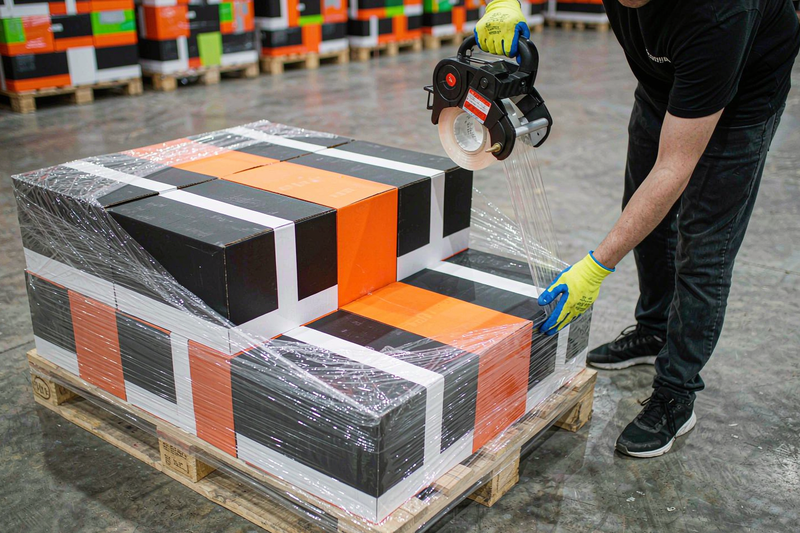
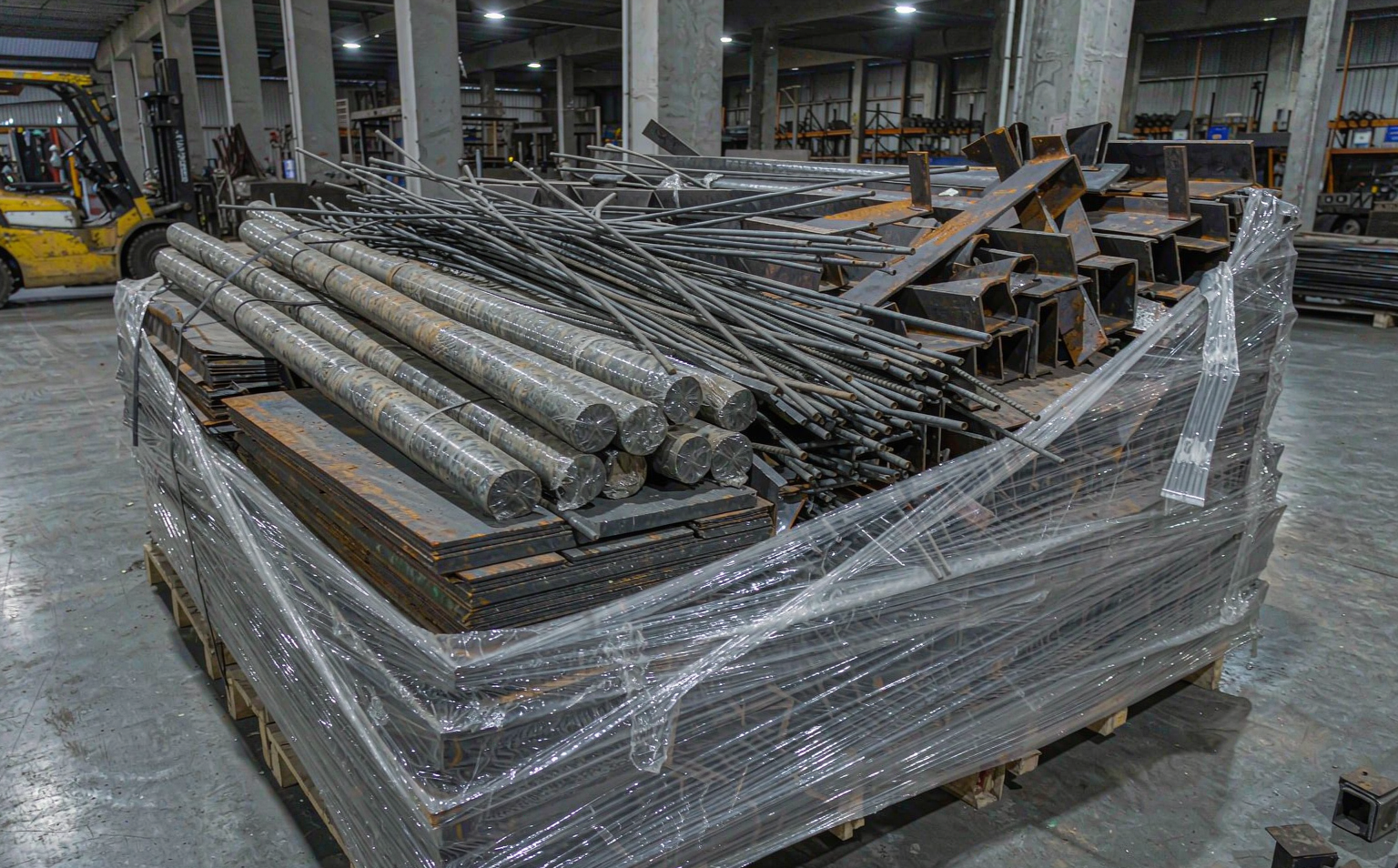
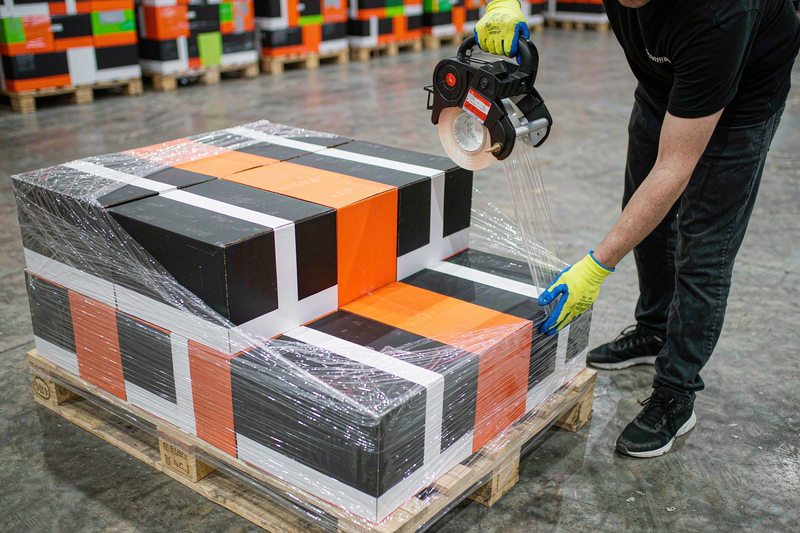
| Heavy-Duty Loads | 2,000–3,000+ lbs (900–1,360+ kg) | 90–120 gauge (23–30 µm) | Heavy industrial parts, uneven loads, sharp corners, long-distance freight |
Note: Exact gauge requirements depend on film resin formulation and wrapping overlap. Always verify performance with load testing.
Q3. What are the standard widths and roll lengths for hand wrap?
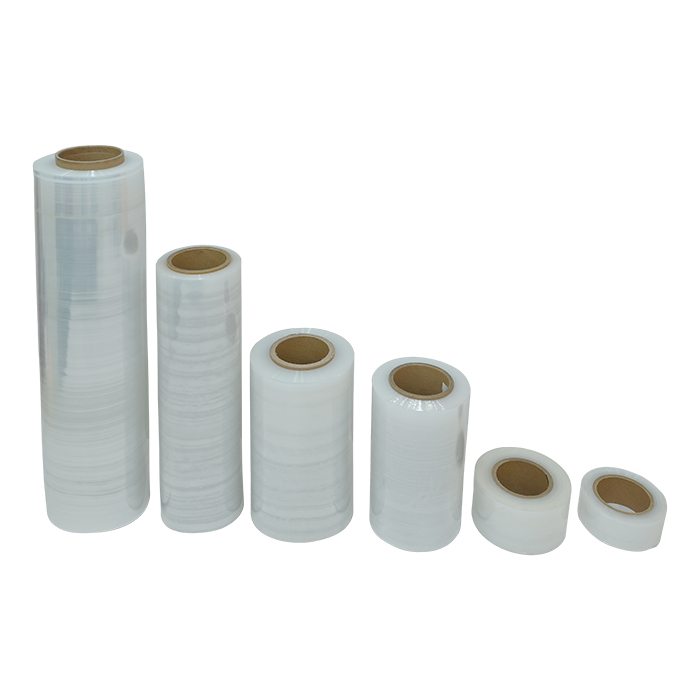
Standard hand stretch film widths typically range from 15 inches to 20 අඟල් (380 mm to 500 මි.මී), with 18 inches being the most common width for general palletizing because it balances vertical coverage with manageable wrist tension. Standard roll lengths generally fall between 1,000 feet and 2,000 feet (300 m to 600 m), depending on film thickness and target roll weight.
Q4. How heavy should a hand stretch film roll be to prevent worker fatigue?
A single roll of hand stretch film should ideally weigh between 6 lbs and 10 රාත්තල් (2.7 kg to 4.5 kg), including the cardboard core. Rolls exceeding 12 lbs significantly increase shoulder and lower-back strain during continuous wrapping shifts, leading to slower wrapping speeds and looser film tension toward the end of the workday.
Q5. When should buyers choose clear vs. colored or opaque hand stretch film?
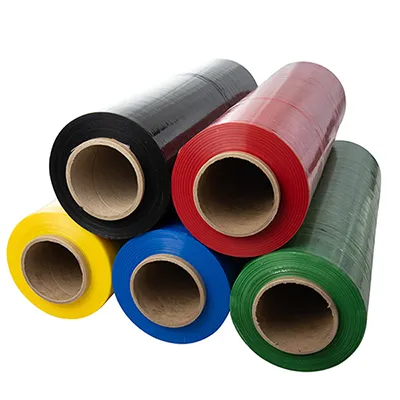
Clear hand stretch film is the default choice when warehouse staff and receivers need to scan barcodes, inspect labels, and verify SKU counts without unwrapping the pallet. Opaque black or white films are used to conceal high-value goods from theft, protect UV-sensitive materials during outdoor staging, or keep products clean. Tinted colored films (such as blue, red, or green) help facilities visually color-code pallets by shipping route, production shift, or quarantine status.
Q6. What core sizes are standard, and do extended cores make a difference?
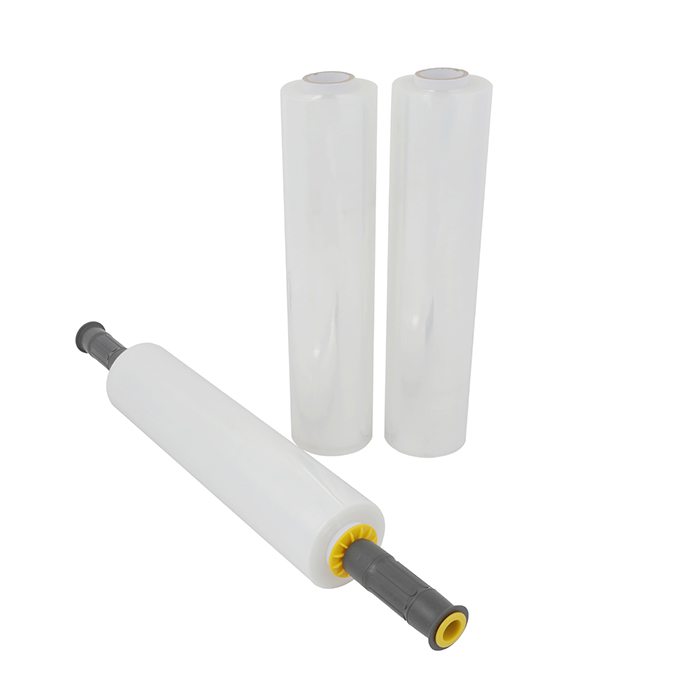
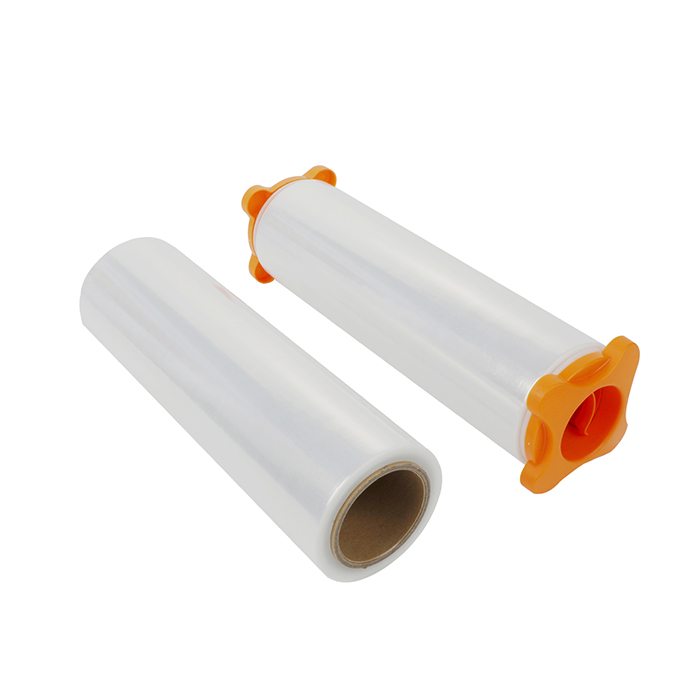
Most manual stretch wrap rolls are wound onto 3-inch (76 මි.මී) inner-diameter cardboard cores designed to fit standard handheld dispensers.Extended-core hand stretch film features a longer cardboard tube protruding from both ends of the film roll to act as built-in handles. While extended-core rolls eliminate the need to buy separate dispensers, they offer less tension control and can cause friction burns on workers’ hands compared to ball-bearing dispensers.
Q7. Is thicker hand stretch film always stronger?
No. A thicker film made from lower-grade linear low-density polyethylene (LLDPE) resin can tear more easily and hold less load force than a thinner, multi-layer co-extruded film engineered with metallocene resins. Modern high-performance films achieve higher puncture resistance and holding force at thinner gauges, allowing buyers todown-gauge without sacrificing load stability.
Material & Process Comparisons: Cast, පිඹින ලදී, and Pre-Stretched Films
Manufacturing methods and film structures determine how a roll behaves during unwinding, stretching, and transit.
Q8. Cast vs. blown hand stretch film: Which performs better for your warehouse?
Cast stretch film is extruded through a flat die onto chilled rollers, producing a clear, quiet-unwinding film with consistent thickness. Blown stretch film is extruded vertically into a bubble and air-cooled, creating tougher cross-directional molecular orientation.
| Evaluation Criteria | Cast Hand Stretch Film | Blown Hand Stretch Film | පෙර දිගු කළ අත් පටලය |
|---|---|---|---|
| Puncture & Tear Resistance | Moderate to Good | ඉහළ (best for sharp corners) | මධ්යස්ථ (uniform edges) |
| Unwind Noise | Very quiet | Loud crackling sound | Quiet |
| Clarity & Barcode Scanning | High gloss and clarity | Slightly hazy/translucent | Clear |
| Operator Effort Required | මධ්යස්ථ (requires manual pull) | ඉහළ (stiffer stretch resistance) | Low (already stretched at factory) |
| Typical Best-Fit Use | Uniform cartons, indoor warehouses, noise-sensitive areas | Irregular loads, තියුණු දාර, cold storage | High-volume manual wrapping, reducing worker fatigue |
Q9. What is pre-stretched hand film, and when is it better than standard film?
Pre-stretched hand film is mechanically stretched near its yield point during manufacturing before being wound onto the core. Because the film is already stretched, operators do not need to pull hard to activate its holding force—they simply walk around the pallet and apply it under light tension. Pre-stretched film is ideal for reducing material waste, preventing neck-down (width narrowing), and minimizing worker fatigue, though it provides lower maximum containment force than heavy-gauge blown film on ultra-heavy loads.
Q10. How does hand stretch film compare to machine stretch film?
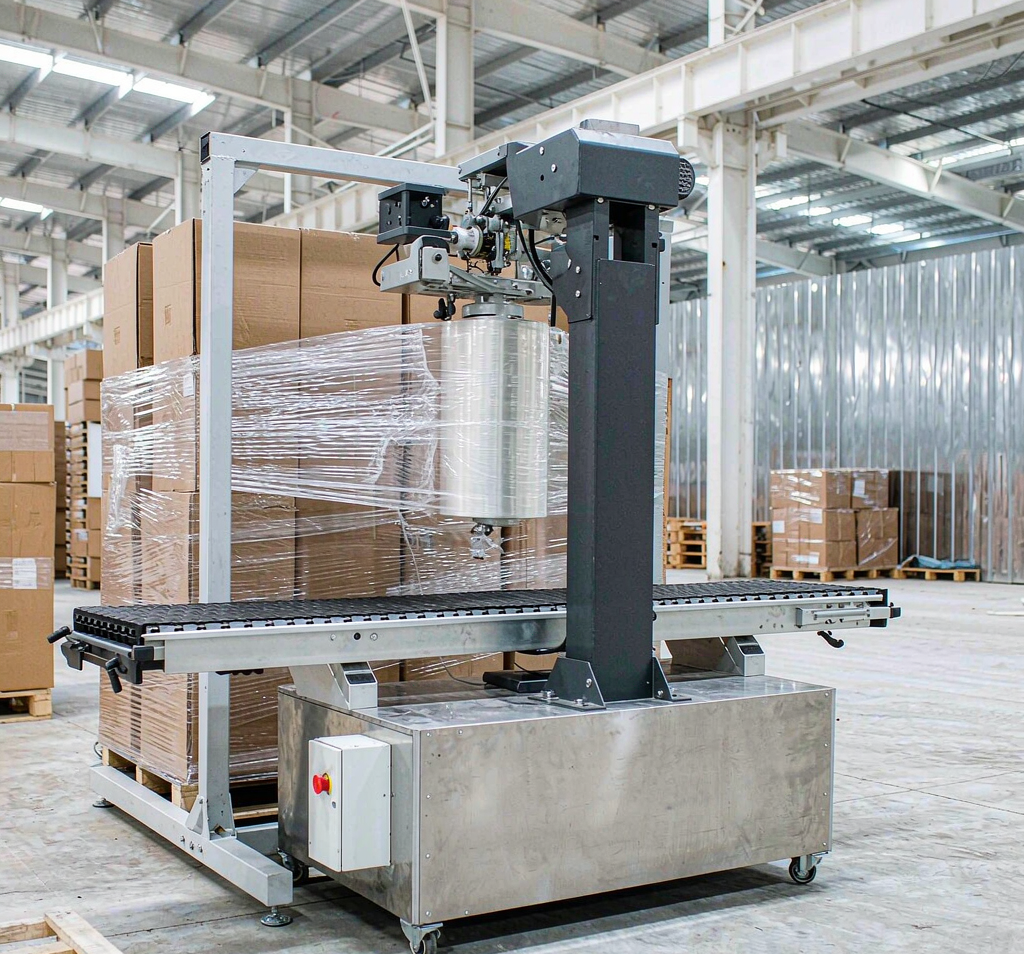
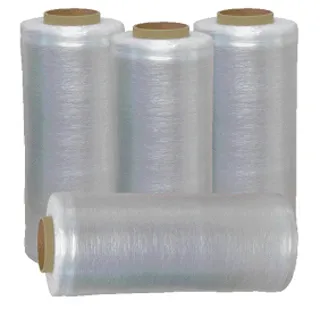
Hand stretch film is designed for manual application, typically offering 50% දක්වා 100% stretch capability depending on operator strength.යන්ත්රය දිගු චිත්රපටය is formulated for powered pre-stretch carriages on turntable or rotary-arm wrappers, achieving 200% දක්වා 300% pre-stretch and delivering far more consistent containment force across every pallet.
Q11. At what daily pallet volume should a facility switch from hand to machine wrap?
Facilities wrapping more than 15 දක්වා 20 pallets per day typically reach the economic threshold where a semi-automatic stretch wrapper becomes more cost-effective than manual wrapping. Below 15 pallets daily, hand stretch film avoids capital equipment costs and floor-space constraints. Above 20 pallets daily, machine film’s higher pre-stretch ratios usually cut film consumption per pallet by 30% දක්වා 50% while eliminating inconsistent hand-wrapping tension.
Q12. What is cling, and why does single-sided vs. double-sided cling matter?
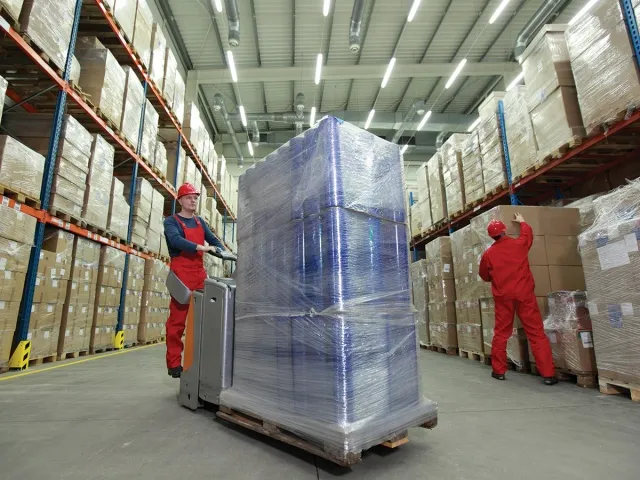
Cling is the tackiness that allows layers of stretch film to adhere to themselves without adhesive residue. Double-sided cling sticks on both inner and outer surfaces, offering strong tail hold; however, in tightly packed trucks, adjacent pallets wrapped in double-sided cling can stick together and rip each other open during unloading. Single-sided (one-sided) cling features a tacky inner layer that bonds to the load and a slick outer layer that prevents pallets from locking together in transit.
Q13. Are there recyclable or PCR (post-consumer recycled) hand stretch film options?
Standard LLDPE hand stretch film is classified as #4 LDPE/LLDPE recyclable plastic, provided it is kept clean, dry, and separated from cardboard and strapping. Many manufacturers also supply films containing Post-Consumer Recycled (PCR) or Post-Industrial Recycled (PIR) resin. When evaluating PCR films, buyers should verify whether the recycled content affects optical clarity, සිදුරු ප්රතිරෝධය, or consistency compared to virgin resin formulations.
Warehouse Operations & Troubleshooting: Solving Common Wrapping Failures
Even well-specifiedඅත් දිගු චිත්රපටය will underperform if wrapping technique or storage conditions are flawed.
Q14. Why does hand stretch film keep breaking or tearing during wrapping?
Sudden film snaps during manual wrapping usually stem from physical roll damage or sharp load contact rather than defective resin:
- Nicked roll edges: Dropping a roll onto a concrete floor creates a microscopic notch on the roll edge that splits immediately under tension.
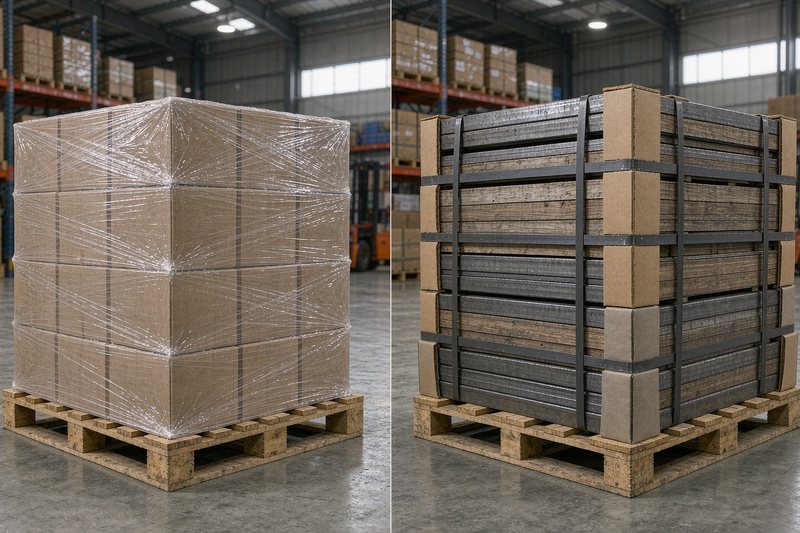
- Sharp pallet corners: Wooden splinters or metal crate edges puncture stretched film unless corner boards are used or a higher-puncture blown film is selected.
- Excessive tension on thin gauges: Pulling a 60-gauge film too aggressively over irregular angles exceeds its tear propagation threshold.
Q15. Why is my stretch film losing its cling in cold or dusty warehouses?
Cling additives migrate to the film surface more slowly at low temperatures. In refrigerated or unheated warehouses below 40°F (4°C), standard cast film may lose tackiness, causing the film tail to flag loose. Dusty environments also coat the film surface and block layer-to-layer adhesion. For cold or dusty facilities, buyers should specify cold-temperature-formulated films or blown stretch films, which retain higher mechanical tack in harsh conditions.
Q16. How do you properly wrap a pallet by hand to prevent load shifting?
Following a repeatable wrapping sequence locks the load to the pallet base and maintains uniform tension:
- Anchor the film tail: Tie or tuck the starting end securely around a corner of the wooden pallet base.
- Wrap the base first: Apply 3 දක්වා 4 tight revolutions around the bottom of the load and the top of the pallet deck to prevent the cargo from sliding off the pallet during braking.
- Spiral upward with 50% අතිච්ඡාදනය: Walk backward or forward around the pallet while keeping consistent tension, overlapping each pass by roughly half the film width.
- Reinforce the top: Apply 2 දක්වා 3 revolutions around the upper rim of the load, crossing diagonally over top corners if additional stability is needed.
- Wipe down the tail: Tear the film cleanly and press the loose tail firmly onto a flat film surface rather than tucking it inside a layer where it can snag.
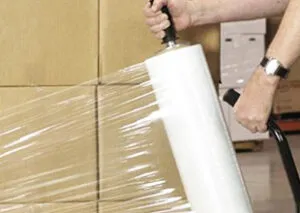
Q17. Do hand stretch film dispensers really improve wrapping efficiency?
ඔව්. Lightweight ergonomic dispensers with adjustable tension brakes allow operators to maintain steady stretch resistance without squeezing the cardboard core directly. This prevents hand friction injuries, keeps film tension uniform from the bottom to the top of the pallet, and speeds up wrapping cycles compared to bare-hand application.
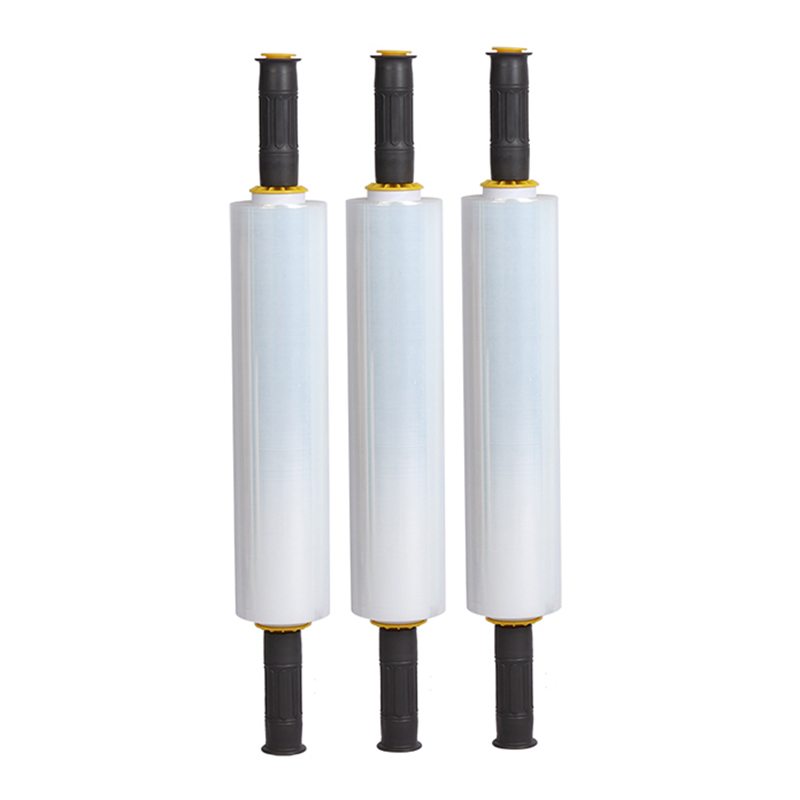
Q18. What are the ideal storage conditions and shelf life for stretch film?
Store hand stretch film indoors at 60°F to 80°F (15°C to 27°C) away from direct sunlight, heaters, and high humidity. UV exposure degrades polyethylene polymers and dries out cling additives, while extreme heat can cause rolls to “block” (fuse together). Boxes or palletized rolls should always be stored upright on their ends—never stacked horizontally on their sides, which crushes the roll edge and causes continuous tearing during unwinding. Under proper conditions, stretch film typically maintains full performance for 12 months.
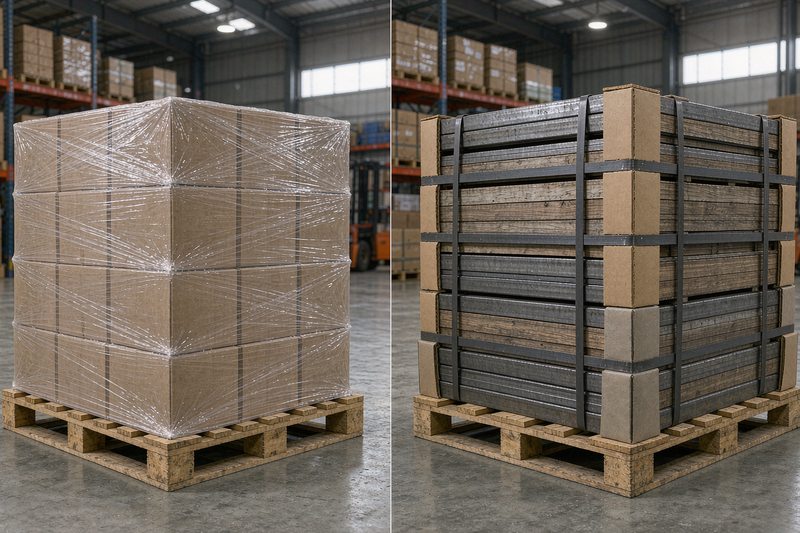
Q19. Why do pallets telescope or collapse during transit even when wrapped?
Wrapping a pallet ten times with zero tension creates plenty of plastic waste but almost no containment force (the inward squeezing pressure that holds boxes together). If operators walk around a pallet without stretching the film, vibration during truck transit causes boxes to settle, loosening the wrap and allowing upper tiers to shift or collapse. Increasing stretch tension or switching to a stiffer film gauge resolves low containment force.
Cost Optimization & Procurement: How to Evaluate Suppliers and Quotes
Smart procurement teams evaluate quotes based on delivered yield and load security rather than headline price per roll.
Q20. How do you calculate the true cost per pallet instead of just price per roll?
A cheaper roll that is shorter, thinner, or breaks frequently costs more per shipped pallet. Buyers can compare competing quotes using a straightforward cost-per-pallet calculation:
- Calculate Net Film Weight: Net Film Weight = Gross Roll Weight − Cardboard Core Weight.
- Verify Roll Footage: Compare the confirmed linear feet (or meters) per roll across quotes at the same width and gauge.
- Measure Consumption per Pallet: Wrap 5 representative test pallets using your standard wrapping pattern, then weigh the roll before and after to find the average grams or ounces used per pallet.
- Calculate Cost per Pallet: Cost per Pallet = (Price per Roll ÷ Net Film Weight per Roll) × Average Film Weight Used per Pallet.
Cost per Pallet = (Price per Roll ÷ Net Film Weight per Roll) × Average Film Weight Used per Pallet
Q21. How can buyers verify actual film thickness and roll weight upon delivery?
To protect against under-gauged rolls or heavy cores disguised as film weight, incoming quality checks should include:
- Micrometer check: Measure single-layer film thickness at multiple points across the web width using a calibrated digital micrometer.
- Gross vs. core weight audit: Weigh an unopened roll, and weigh an empty core from the same batch to verify the actual net film weight matches the purchase order specification.
Q22. What key performance metrics should be on a Technical Data Sheet (TDS)?
When requesting a Technical Data Sheet from a supplier, look beyond basic width and gauge to compare:
- Tensile Strength at Break (MD/TD): Maximum pulling force the film withstands in both machine direction (MD) and transverse direction (TD).
- Elongation at Break (%): How far the film stretches before snapping.
- Dart Drop / Puncture Resistance: Resistance to sharp impacts and protruding box corners.
- Cling Value: Measured adhesion force between film layers.
Q23. What are typical MOQs and lead times when ordering wholesale hand stretch film?
Minimum Order Quantities (MOQs) and lead times depend on whether you are ordering standard stock dimensions or custom-slit widths, colors, or private-label packaging. Standard stock sizes are often available by the pallet (typically 36 දක්වා 60 cases per pallet depending on roll configuration), whereas custom extrusion runs require higher volume commitments. Exact MOQs, pallet configurations, and production lead times should be confirmed directly with your supplier based on order volume and shipping destination.
Q24. Should you choose standard boxed rolls or bulk palletized rolls for warehouse supply?
Boxed rolls (typically 4 rolls per corrugated carton) protect roll edges from drops and dust during storage and distribution, making them practical for multi-site operations and distributors. Bulk palletized rolls (packed vertically on a pallet with separator sheets and no individual cartons) reduce packaging waste, lower unit cost, and speed up line replenishment for high-volume facilities.
Q25. How should buyers test a new hand stretch film sample before placing a bulk order?
Before committing to a bulk purchase, run a controlled warehouse trial on your actual loads:
- Operator handling test: Have regular warehouse packers wrap 5 දක්වා 10 typical pallets to evaluate unwind smoothness, ඇලෙනවා, and wrist effort.
- Corner puncture stress test: Wrap a pallet containing sharp box corners or irregular edges to check for tear propagation.
- Overnight retention check: Leave wrapped test pallets staged for 24 hours to verify that film tension holds without tail flagging or load relaxation.
Need Help Matching the Right Hand Stretch Film to Your Load?
Selecting the right manual stretch wrap comes down to aligning film gauge, cast or blown construction, and roll dimensions with your pallet weight and warehouse workflow. Testing samples against your actual containment requirements is the most reliable way to lower cost per pallet without risking transit damage.
To compare available roll sizes, ඝණකම, and packaging formats, review theVistech hand stretch film specifications or share your pallet weight, load profile, and monthly volume with our team to request sample rolls for warehouse testing.
ප්රධාන රැගෙන යාම
- Prioritize Cost per Pallet Over Price per Roll: A roll with verified net film weight, consistent gauge, and higher puncture resistance reduces breaks and film usage per load.
- Match Gauge to Load Weight and Profile: Light uniform loads typically perform well with 60–65 gauge film, whereas heavy or sharp-edged loads require 90–120 gauge or blown stretch film.
- Choose Process by Environment: Cast film offers quiet unwinding and high clarity for barcode scanning; blown film delivers superior puncture resistance and cold-warehouse tack; pre-stretched film minimizes operator fatigue.
- Protect Roll Edges in Storage: Store rolls upright indoors at 60°F–80°F; dropped or side-stacked rolls suffer edge nicks that cause continuous tearing during use.
- Evaluate Machine Wrapping at 15–20+ Pallets Daily: Facilities wrapping more than 15–20 pallets per day often achieve lower material costs by transitioning from manual to machine stretch wrap.
නිති අසන පැණ
What is the most common gauge for hand stretch film?
80 මානය (20.3 මයික්රෝන) is the most widely used general-purpose thickness for hand stretch film because it balances puncture resistance, holding force, and stretchability for medium-duty pallet loads between 1,000 සහ 2,000 lbs.How many pallets can one roll of hand stretch film wrap?
A standard 18-inch × 1,500-foot roll of 80-gauge hand stretch film typically wraps 15 දක්වා 25 standard 48″ × 40″ pallets, depending on pallet height, overlap percentage, and how tightly the operator stretches the film.Why does hand stretch film keep ripping off the roll?
Continuous ripping from the roll is almost always caused by a nicked or crushed roll edge resulting from being dropped or stored horizontally on its side, rather than a resin defect across the entire web.Is pre-stretched hand film better than standard hand stretch film?
Pre-stretched hand film is better for reducing worker fatigue and maintaining consistent film width on light-to-medium uniform loads, while standard heavy-gauge or blown hand film is better for heavy, sharp-edged loads requiring maximum containment force.