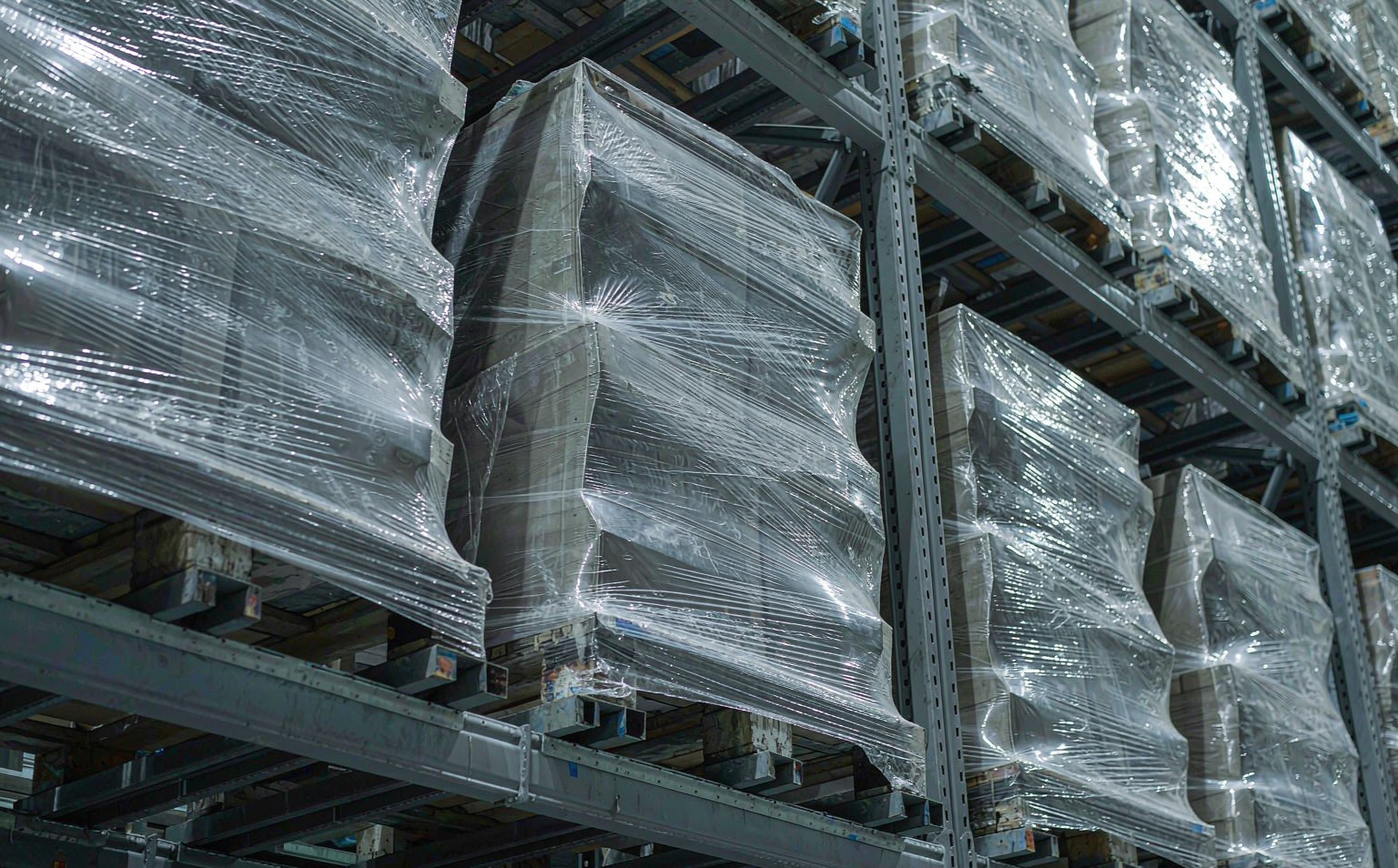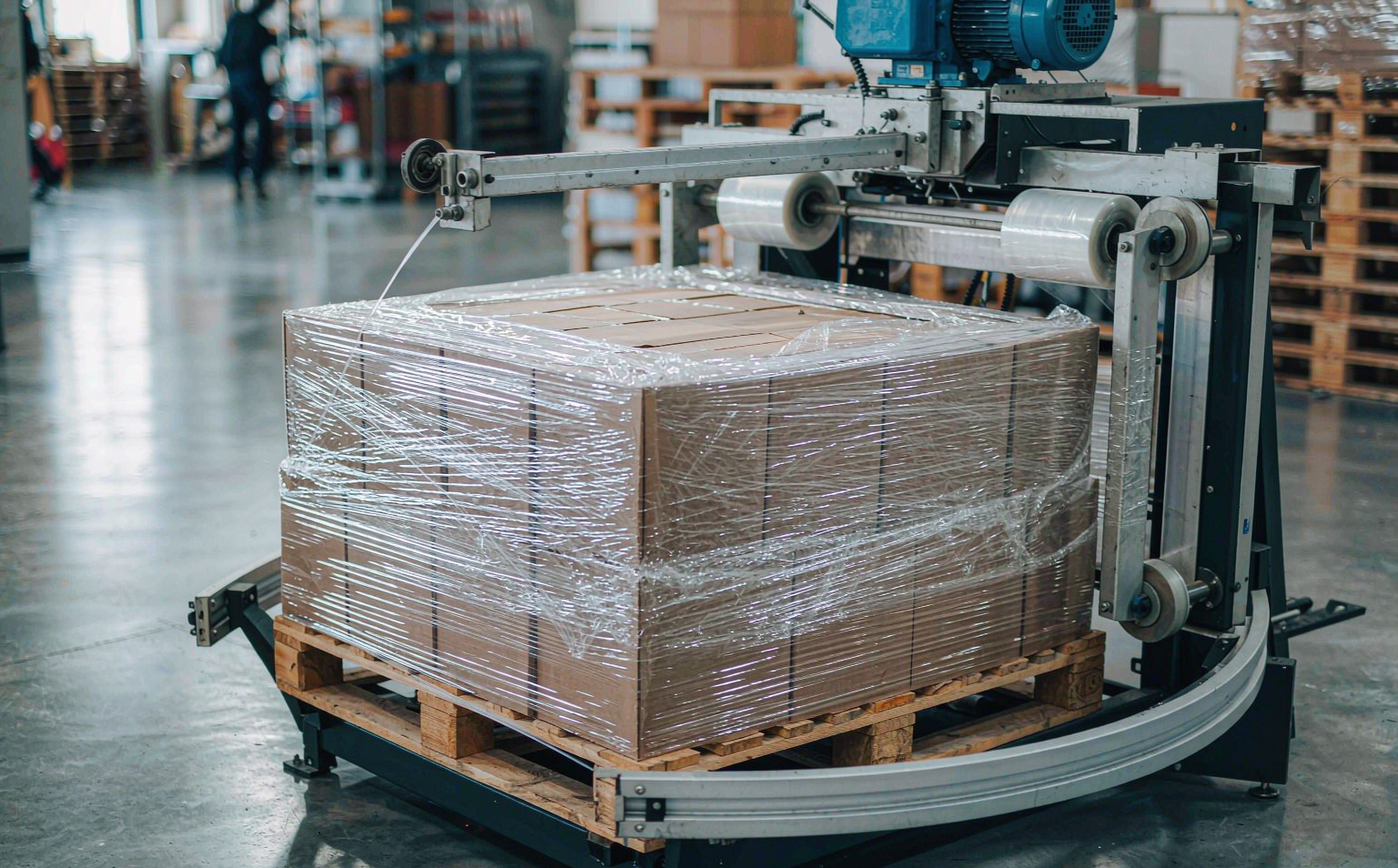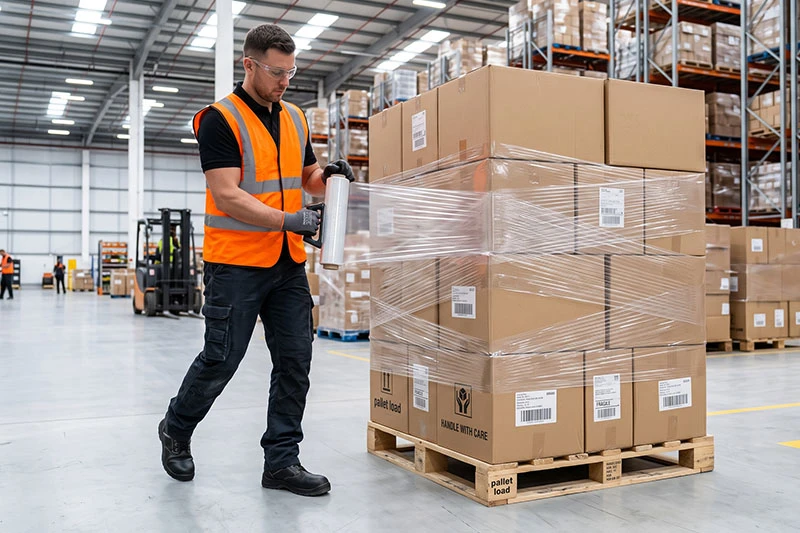


Machine stretch wrap for cold storage performs one job that standard warehouse film cannot: it keeps stretching, gripping, and holding when the pallet moves into freezer temperatures. Conventional stretch films are formulated for ambient conditions, and as temperatures drop toward typical freezer ranges of roughly -18°C to -30°C, they stiffen, lose elastic recovery, and become brittle enough to split on impact. The result is loose loads, torn film, and product damage that only appears after the pallet has been in cold storage for hours or days.
This article explains why film behavior changes at low temperature, what a freezer-grade machine stretch wrap must deliver, how cast and blown films compare in cold environments, how to adjust wrapping machine settings, and what to confirm with a supplier before ordering. It is written for warehouse managers, packaging engineers, and procurement teams responsible for cold chain operations.
Why Standard Stretch Film Fails at Freezer Temperatures

Stretch film works because polyethylene molecules uncoil and realign as the film is stretched, then try to pull back toward their original state. That elastic recovery is what creates containment force. Temperature controls how well this mechanism works:
- Stiffness increases as temperature falls. A film that stretches easily at 20°C requires more force to elongate at -20°C. A wrapping machine dialed in for ambient film may not reach its target pre-stretch percentage in cold conditions, or may break the film outright.
- Elastic recovery declines. Cold-soaked film relaxes more slowly and less completely, so the tension holding the load together decays over the first hours in the freezer. A pallet that looked tight at the dock can be visibly loose the next morning.
- Brittleness and impact failure. Hardened film absorbs less energy from shocks. A forklift bump, the corner of a frozen carton, or a dropped pallet that an ambient film would survive can split a cold-soaked standard film.
- Cling behaves differently in moisture. Freezer doorways create condensation. Frost and water films on the surface change how adjacent layers cling to each other, sometimes causing layers to slide or, at the other extreme, to fuse.
The practical consequence: cold storage wrapping problems are usually formulation problems, not operator problems. If standard film consistently fails after the pallet enters the freezer, the fix is a film engineered for low temperature, not more wraps or more tension.
What Freezer-Grade Machine Stretch Wrap Must Deliver
A film intended for cold storage and freezer warehouse operations should be evaluated against five requirements:
- Flexibility at the lowest service temperature. The film must remain elastic at the actual storage temperature of your facility, whether that is a chilled room at 2°C or a deep freezer at -25°C. Suppliers should state the temperature range the film is formulated for; if they cannot, treat the claim as unverified.
- Retained containment force after cold soak. The meaningful test is not how the film performs at room temperature, but how much tension remains after the wrapped pallet has been in the freezer for 24 hours or more. A supplier with cold chain experience should be able to discuss this behavior, even if exact numbers depend on the load and machine configuration.
- Puncture and tear resistance against frozen loads. Frozen cartons and boxes with sharp corners behave like rigid objects. The film needs the dart drop and tear resistance to survive them, and the exact specification should be confirmed with the supplier against your load profile.
- Cling stability under condensation. The film layers must keep holding as the pallet passes through temperature transitions at freezer doors and loading docks.
- Clarity for identification. Labels, barcodes, and product dates must stay readable through the wrap. Frost formation on the film surface is a storage environment issue, but base film clarity still affects daily scanning and inspection work.
Each of these five requirements maps to a specific question for the supplier, which is why the procurement checklist later in this article is organized around them.
Cold Storage Film vs. Ambient Film: What Actually Changes
| Requirement | Ambient warehouse film | Cold storage / freezer grade film |
|---|---|---|
| Elasticity at -20°C to -30°C | Stiffens; pre-stretch becomes unreliable | Formulated to stay flexible at low temperature |
| Containment force over time | Can relax significantly after cold soak | Engineered to retain tension in freezer conditions |
| Impact and puncture behavior | Brittle failure risk increases in cold | Balanced impact resistance for frozen, hard-edged loads |
| Cling in humid doorways | Inconsistent with condensation present | Cling system selected for moisture and frost exposure |
| Wrapping machine settings | Standard pre-stretch profile | May need reduced pre-stretch or adjusted tension, depending on the film and machine |
The comparison above is directional rather than absolute, because films differ by resin recipe and manufacturing process. Actual performance may vary according to the process setup, so any switch to a cold storage grade should be validated with a trial on your own wrapper before committing to volume.
Cast vs. Blown Film in Freezer Applications
Both masini fa'asolo ata manufacturing processes can produce films for cold environments, and the right answer depends more on the specific formulation than on the process alone. Still, the general trade-offs matter:
- Blown film is produced with the melt extruded upward and cooled slowly by air. The slower cooling typically yields a film with higher toughness and puncture resistance, which is why blown films are often preferred for demanding loads. The trade-offs are lower clarity and more operator noise during unwrapping.
- Cast film is extruded through a flat die onto chilled rollers, giving excellent clarity, quieter unwrapping, and consistent thickness. A cast film engineered with the right low-temperature resins can perform well in cold storage, particularly on uniform boxed loads.
For freezer applications with heavy, irregular, or sharp-edged loads, buyers commonly start their evaluation with blown films for toughness; for lighter, uniform loads where scan-ability and housekeeping matter more, a cold-storage cast film may be the better fit. The decision should be made from trial results, not process labels alone.
Setting the Wrapping Machine for Cold Conditions
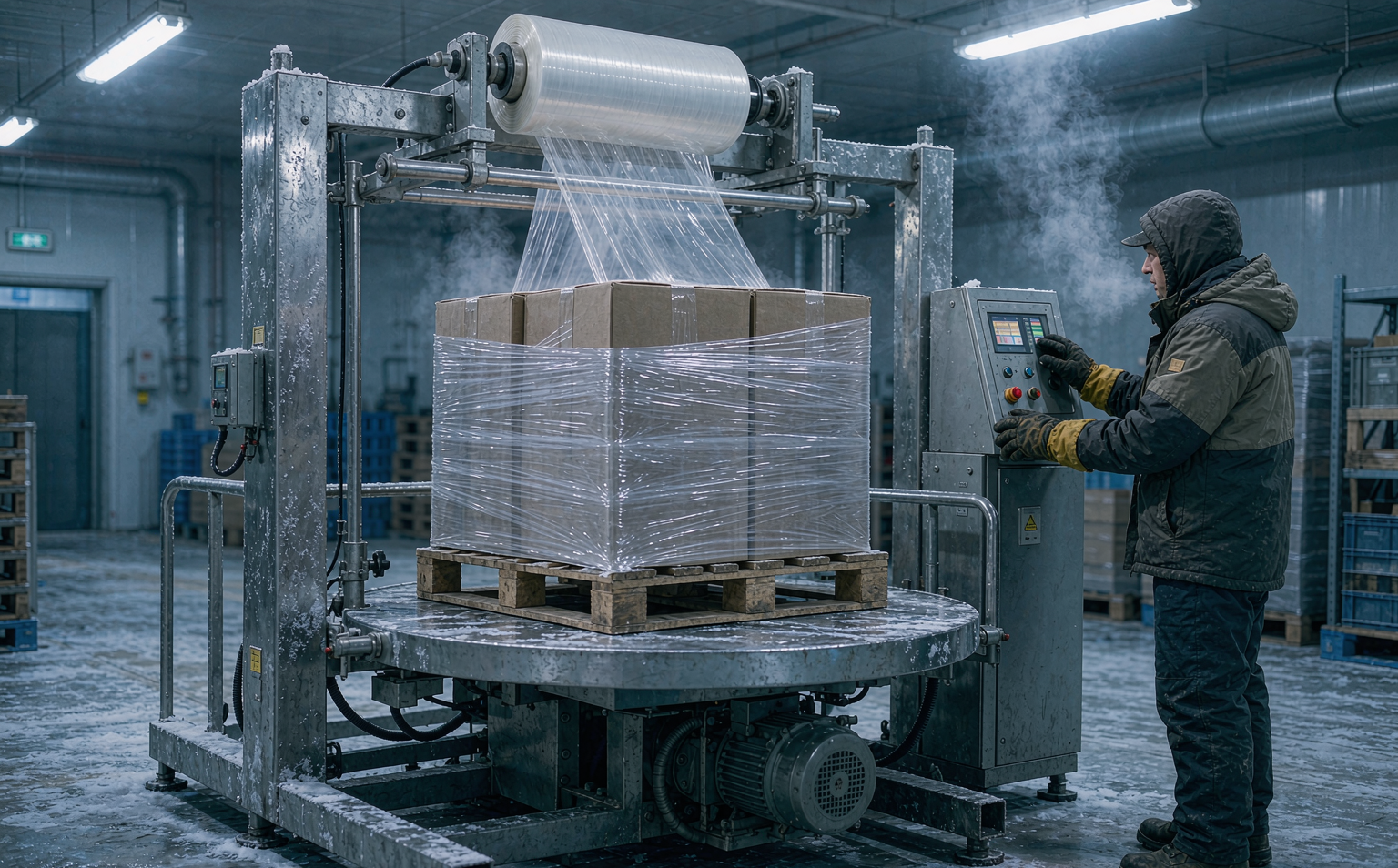
The wrapper itself needs attention when the environment changes:
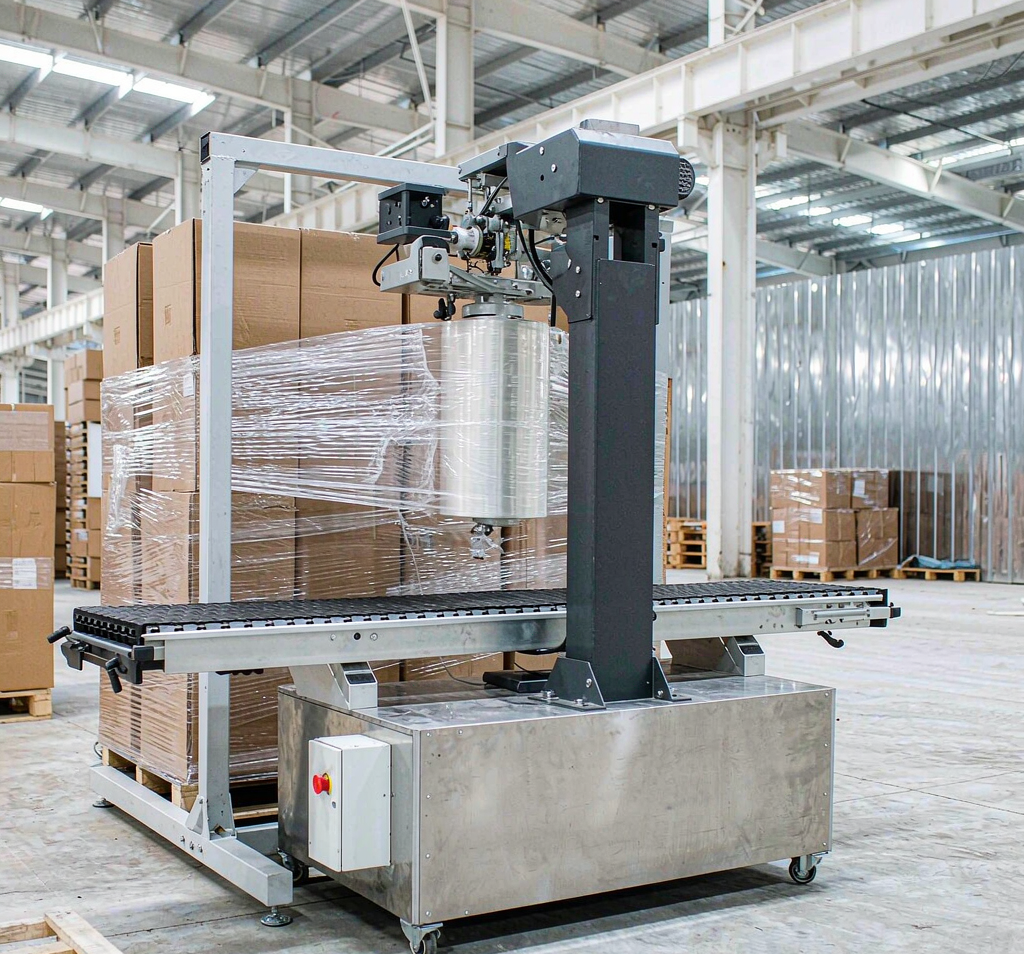
- Reduce pre-stretch if the film fights the machine. In cold rooms, the force needed to elongate film rises. If the film breaks on the carriage or necks down severely, lowering the pre-stretch ratio restores a stable wrap pattern. The usable ratio depends on the film and the machine configuration, so adjust incrementally.
- Watch tension at the top and bottom of the pallet. Cold film that is stretched near its limit can tear at the anchor points where it is attached to the pallet base or cut at the load’s top corners.
- Wrap location matters as much as film choice. Many cold chain operations wrap in the ambient dock area and only then move the pallet into the freezer. Wrapping under cold conditions is sometimes unavoidable for products that arrive frozen, and in those cases the film and machine settings must both be specified for the actual wrapping temperature.
- Maintenance intervals shorten in cold rooms. Rollers, chains, and electronic components on wrappers operating inside freezers require more frequent inspection. This does not change film selection, but it affects the total cost picture of wrapping inside versus outside the cold zone.
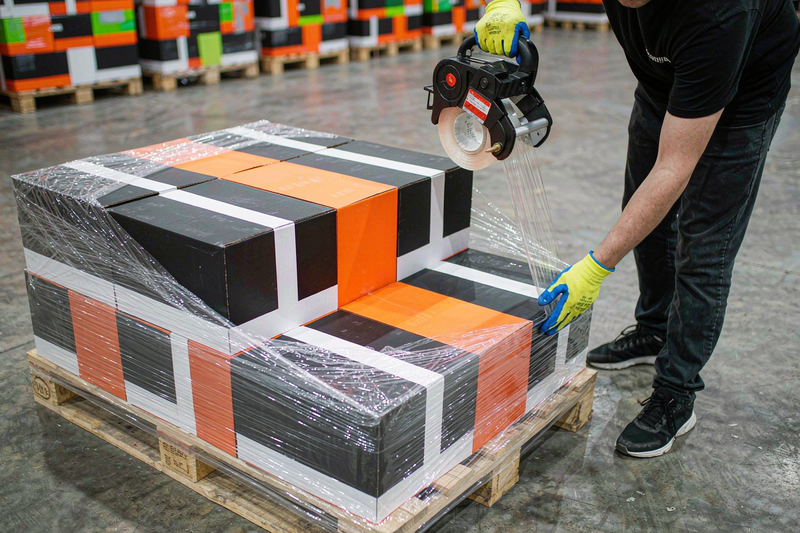
For operations that combine machine wrapping with manual work in smaller cold rooms, the same temperature logic applies to ata lima fa'aloaloa selection: ambient hand wrap used in a freezer stiffens exactly the same way.
Managing Condensation, Frost, and Identification
Two environmental behaviors shape cold storage wrapping quality:
Condensation forms when moist air meets a cold surface. A pallet wrapped at ambient temperature and pushed through a freezer door will collect frost on the film surface as it cools. This is normal physics, not a film defect, but it affects scanning and visual inspection. Wrapping as close as possible to the point of cold entry, and keeping dock humidity controlled, reduces the effect.
Frost changes film handling. Once a layer of frost sits between film layers, cling performance at the pallet surface changes. Loads that will be stored long-term in deep freeze are often wrapped with more overlap at the base of the pallet, where handling abuse concentrates. The correct overlap pattern depends on the load and handling conditions rather than a universal rule.
Buyers who distribute or resupply other cold chain operators should also evaluate jumbo roll formats for slitting and repacking programs, since stretch film jumbo rolls are the standard basis for regional converting.
Common Mistakes in Freezer Pallet Wrapping
- Choosing film only on price per roll without confirming the low-temperature service range.
- Testing film at ambient temperature and assuming the result predicts freezer performance.
- Running the same pre-stretch settings year-round while dock temperatures swing.
- Adding more wraps instead of switching to a properly formulated film, which raises material cost while the root cause remains.
- Ignoring the transition zones—freezer doorways and loading docks—where condensation does the most damage.
- Replacing film without re-checking machine tension after a cold-room relocation of the wrapper.
Procurement Checklist for Cold Storage Stretch Film
Before ordering, confirm each of these points with the supplier:
- The film’s stated service temperature range, and whether it matches your lowest storage temperature
- Whether the quoted film is specifically formulated for cold storage, or a general-purpose grade
- Which test basis backs the puncture and tensile claims, and at what gauge
- Whether the supplier can support a cold-condition trial on your own wrapper
- Roll format and packaging details for your storage and handling, including core type and available widths
- For distributors: jumbo roll availability, slitting programs, and lead times
- How the film behaves through condensation cycles, based on the supplier’s cold chain experience
Key Takeaways
- Standard stretch film stiffens, loses containment force, and becomes brittle at freezer temperatures; cold storage failures are usually a formulation problem.
- Evaluate freezer-grade film on flexibility at the lowest service temperature, retained tension after cold soak, tete'e tu'i, cling stability under condensation, and clarity.
- Blown films generally suit tough, irregular frozen loads; cold-storage cast films suit lighter uniform loads where clarity matters. Decide with trials, not process labels.
- Cold conditions change machine behavior: pre-stretch ratios and tension settings may need reduction, and the wrap location (dock versus cold room) is a genuine engineering decision.
- Confirm the supplier’s service temperature range and trial support before committing to volume.
Frequently Asked Questions
Can I use regular stretch film in a freezer?
Regular film can be applied in a freezer, but performance suffers: it stiffens, retains less tension, and punctures more easily as temperature drops. For long-term storage or deep freeze ranges, use a film formulated for low temperature.
At what temperature does stretch film start to fail?
There is no single threshold, because performance depends on the resin formulation, fua, and how the film was applied. Films formulated only for ambient use show noticeable stiffening well before deep freezer temperatures, while cold storage grades are engineered to keep their elastic behavior down to their stated service range.
Should I wrap pallets before or after they enter the freezer?
Wrapping in the ambient zone before cold entry reduces condensation problems at the film surface and eases machine operation. Some operations must wrap already-frozen goods, in which case both the film and the machine settings should be specified for cold wrapping.
Does frost on the wrapped pallet mean the film is failing?
No. Frost forms when humid air contacts a cold film surface. It affects scanning and appearance but does not itself mean the wrap has failed. If tension is also visibly lost, that points to elastic recovery failure, which is a film formulation issue.
How do I compare cold storage film suppliers fairly?
Ask each supplier for the stated service temperature range, the test basis behind strength claims, and cold-condition trial support. Compare on cost per wrapped pallet at your actual pre-stretch settings rather than on roll price.
Fa'ai'uga: Get the Right Film for Your Cold Chain
Cold storage wrapping succeeds when three variables line up: a film formulated for the actual storage temperature, a load profile the film can hold, and machine settings adjusted for cold-condition behavior. Miss any one of the three and the failure shows up where it costs the most—deep in the freezer, after the pallet has already been put away.
Tell us your lowest storage temperature, your typical load profile (weight, carton type, edge sharpness), and your wrapper’s pre-stretch capability. We will match those conditions to the appropriate machine stretch wrap formulation and support a trial before you commit to volume. Start by sending your cold storage requirements through our contact page.