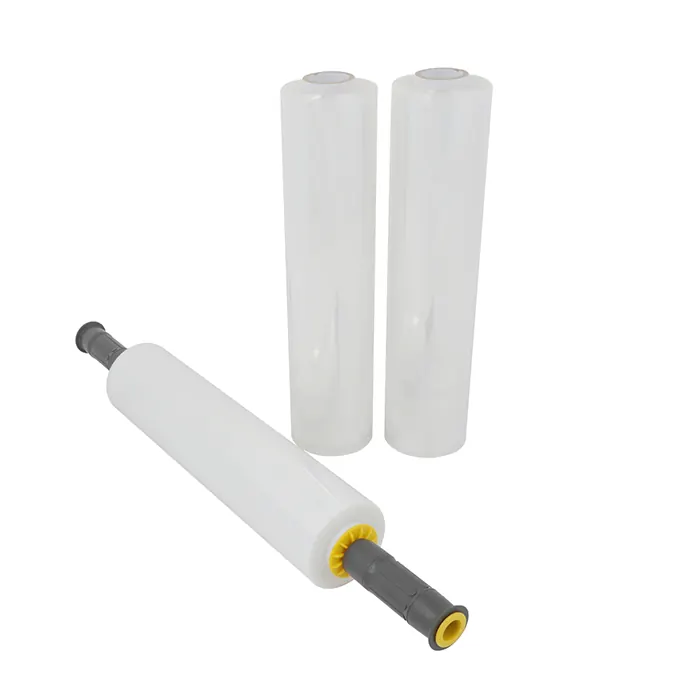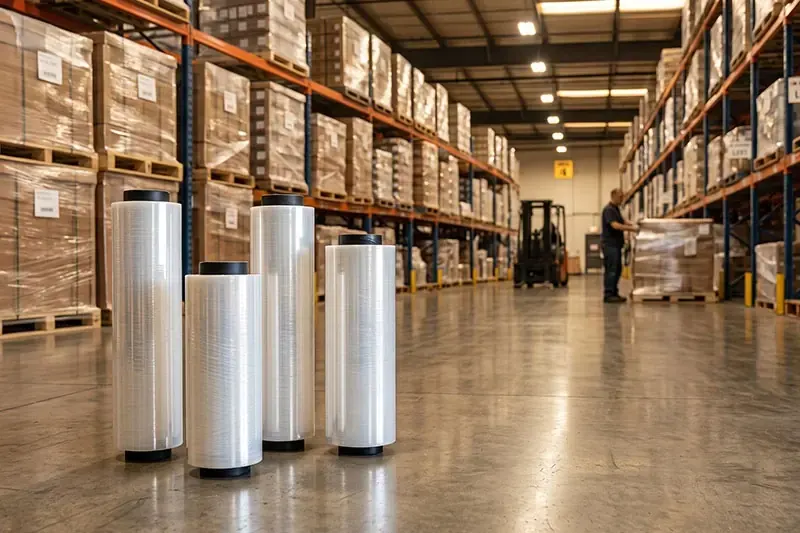


When wrapping pallets for transit, selecting the correct hand stretch film gauge is a calculated decision based on physics, not a warehouse guessing game. Using a film that is too thin results in pallet failure, load shifting, and damaged goods. Conversely, defaulting to thick, 80-gauge film for every pallet wastes thousands of dollars annually in unnecessary plastic consumables.
To lock in load stability while minimizing material costs, warehouse managers and packaging engineers evaluate three primary variables: pallet load weight, load profile (the shape and edges of the product), and the specific transit risk (freight mode and distance). This guide breaks down exactly how to match your stretch film thickness to your specific pallet loads.
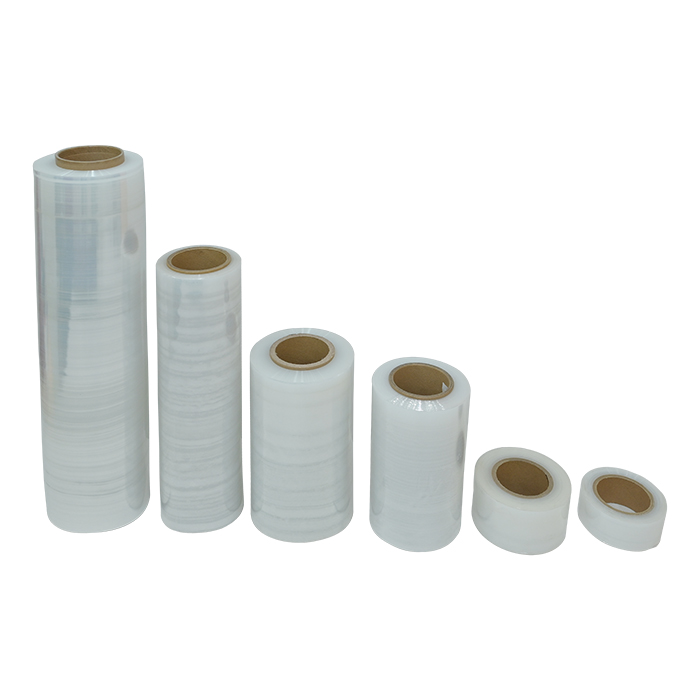
Stop Guessing Your Stretch Film Gauge
Relying on operator intuition to choose stretch film thickness creates immediate operational risks. When operators experience film breaks with a thin gauge, their standard reaction is to over-wrap the next pallet or request a much thicker gauge.
This reaction masks the root cause of the problem. Film failure usually happens because the load’s corners puncture the film, or the load weight exceeds the film’s holding force. By establishing strict, documented standards for stretch film thickness based on actual load data, facilities can standardize their wrapping procedures, eliminate transit damage, and significantly lower their cost-per-pallet.
Variable 1: Determining Gauge by Pallet Weight
The foundational metric for hand wrap stretch film thickness is the total weight of the palletized load. Heavier loads exert more outward pressure on the film during transit, requiring a higher containment force to prevent the boxes or products from sliding.
Use this baseline specification checklist to align pallet weight with standard hand wrap stretch film thickness:
| Pallet Load Weight | Recommended Gauge | Typical Application |
|---|---|---|
| Up to 500 lbs | 37-gauge to 47-gauge | Ideal for lightweight, uniform boxes |
| 500 lbs to 1,000 lbs | 60-gauge to 70-gauge | Standard medium-duty applications |
| 1,000 lbs to 2,500 lbs | 80-gauge to 90-gauge | Heavy-duty industrial loads |
| 2,500 lbs to 3,000+ lbs | 100-gauge to 120-gauge | Extremely heavy items like machinery or metal parts that typically justify powered wrapping |

Weight alone only provides the baseline. This baseline thickness must be adjusted based on the shape of the goods being wrapped.
Variable 2: How Load Profiles (A, B, C) Alter Your Gauge Requirements
Load profile classification defines how the physical shape of your product interacts with the stretch film. A heavier gauge is often required to resist punctures from sharp corners, even if the total pallet weight is relatively low.
- Load Profile A (Uniform): The pallet consists of perfectly stacked, identical boxes with no gaps and no overhang. The edges are uniform. You can safely use the baseline weight gauge or even downgrade to a thinner, high-performance film.
- Load Profile B (Irregular): The load has some irregular shapes, slight pallet overhang, or gaps between boxes. Puncture risk is moderate. You will generally need to apply more tension or step up one gauge level to ensure the film does not tear against the uneven edges.
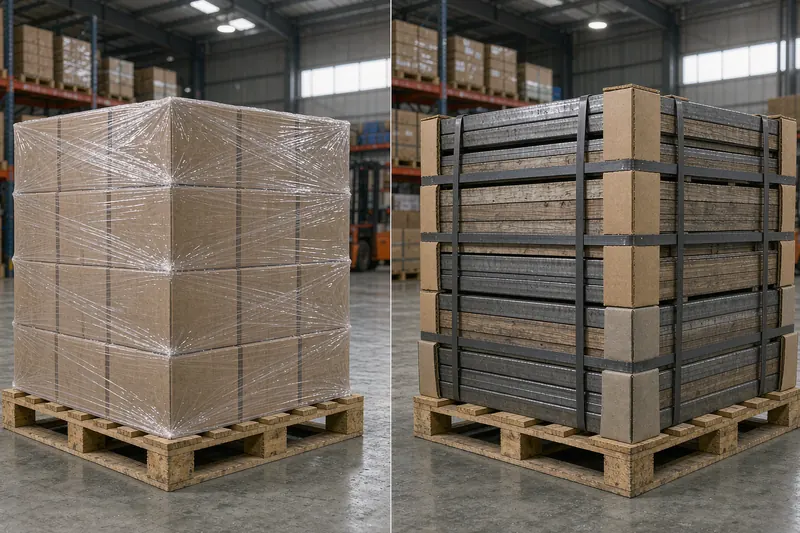
- Load Profile C (Sharp): The load features sharp edges, metal corners, wood splinters, or highly irregular protruding shapes. Puncture risk is critical. Regardless of the weight, Load Profile C requires a high-gauge film (typically 80-gauge or higher) or a specialized puncture-resistant film to prevent the wrap from splitting during transport.

Variable 3: Factoring in Transit Distance and Freight Modes
The logistics environment dictates the amount of vibration, shock, and collision your pallet will endure. Your baseline gauge must account for how the freight is handled once it leaves your loading dock.
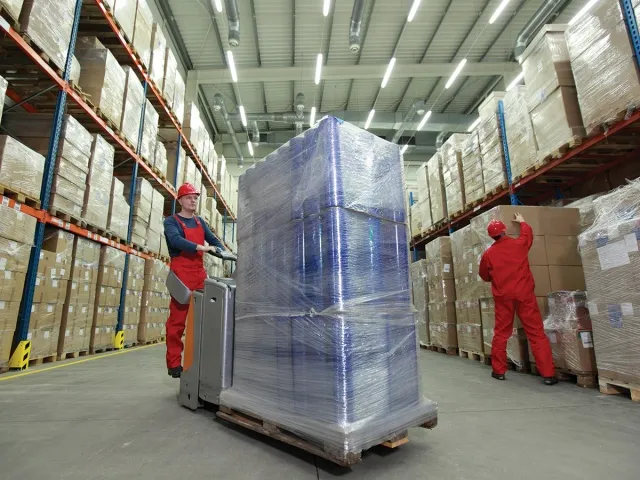
Full Truckload (FTL) shipping means your pallet is loaded once, driven to its destination, and unloaded. The vibration is relatively predictable, and the collision risk is low. FTL shipments can generally rely on the standard gauge calculated from weight and profile.
Less Than Truckload (LTL) shipping subjects pallets to cross-docking, frequent forklift handling, and being packed tightly against incompatible freight from other shippers. LTL pallets face a severe risk of friction and impact. To prevent pallet damage during transit in LTL networks, packaging engineers strongly recommend bumping up the stretch film thickness by at least one gauge category and increasing the number of top and bottom wraps.
The Hand Stretch Film Selection Matrix
By combining the three variables—weight, profile, and freight mode—you can establish a clear decision framework for your warehouse floor. Reference this matrix to select the optimal gauge.
| Pallet Weight | Profile A (Uniform) | Profile B (Irregular) | Profile C (Sharp) | LTL Adjustment |
|---|---|---|---|---|
| Under 500 lbs | 37–47 Gauge | 60 Gauge | 70–80 Gauge | Add 10–20 Gauge |
| 500–1,000 lbs | 60 Gauge | 70 Gauge | 80 Gauge | Add 10–20 Gauge |
| 1,000–2,500 lbs | 80 Gauge | 80–90 Gauge | 90–100 Gauge | Add 20 Gauge |
| Over 2,500 lbs | 100 Gauge | 110 Gauge | 120 Gauge | Use Max Gauge / స్ట్రాపింగ్ |
Note: The exact specification should be confirmed with the supplier based on your specific application and wrapping technique.
Advanced Tip: High-Performance Films vs. Conventional Gauge
For decades, purchasing managers equated thicker gauge numbers with higher strength. Due to advancements in multi-layer resin extrusion technology, this is no longer the definitive rule.
Today, you can source high-performance hand stretch film engineered to deliver the containment force and puncture resistance of an 80-gauge conventional film while only measuring 47-gauge in actual thickness.
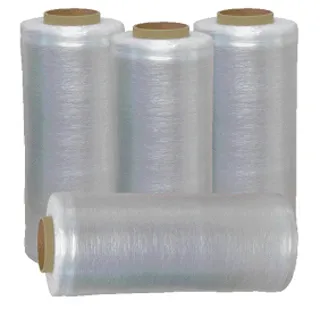
Evaluating high-performance films allows facilities to reduce their per-pallet plastic consumption and lower material costs without sacrificing the stability required for Load Profile C or heavy LTL freight. When comparing conventional and high-performance options, evaluate the film based on its load containment force rather than just the gauge number.
Establish Your Optimal Wrapping Strategy
Selecting the right film prevents transit damage and stops consumable waste. Evaluate your heaviest loads, assess your most irregular load profiles, and factor in your LTL shipping frequency to pinpoint your baseline gauge.
Every warehouse faces unique logistical challenges. Rather than guessing which film will survive your distribution network, run a controlled test using a few different gauges on your actual pallets to determine the precise thickness that provides optimal load containment force at the lowest cost per pallet.
కీ టేకావేలు
- Hand stretch film gauge should be selected based on three primary variables: pallet load weight, load profile (A, B, or C), and transit risk (FTL vs. LTL).
- Pallets over 1,000 lbs typically require 80-gauge film or higher to maintain load containment force.
- Load Profile C (sharp edges and irregular shapes) demands higher puncture resistance, often requiring a thicker gauge regardless of the overall pallet weight.
- LTL shipments undergo frequent handling and require thicker film or additional wraps compared to dedicated FTL shipments.
- Modern high-performance stretch films can provide the strength of conventional 80-gauge film at a much lower actual thickness, reducing plastic waste and cost.
తరచుగా అడిగే ప్రశ్నలు
What gauge stretch film do I need for a 1,000 lb pallet?
For a uniform, 1,000 lb pallet (Load Profile A), a standard 60-gauge to 70-gauge stretch film is typically sufficient. అయితే, if the load has sharp edges or is shipping via LTL freight, you should increase the thickness to 80-gauge to ensure puncture resistance and stability.
What is a Load Profile C pallet?
A Load Profile C pallet is a load with highly irregular shapes, sharp corners, protruding parts, or metal edges that pose a high risk of puncturing the stretch film. These loads require high-gauge or specially engineered puncture-resistant films.
Can I use thinner stretch film to save money?
అవును, but only if you upgrade to high-performance, multi-layered stretch film. High-performance resin technologies allow films as thin as 47-gauge to match the holding power of conventional 80-gauge films, lowering cost-per-pallet without compromising transit security.