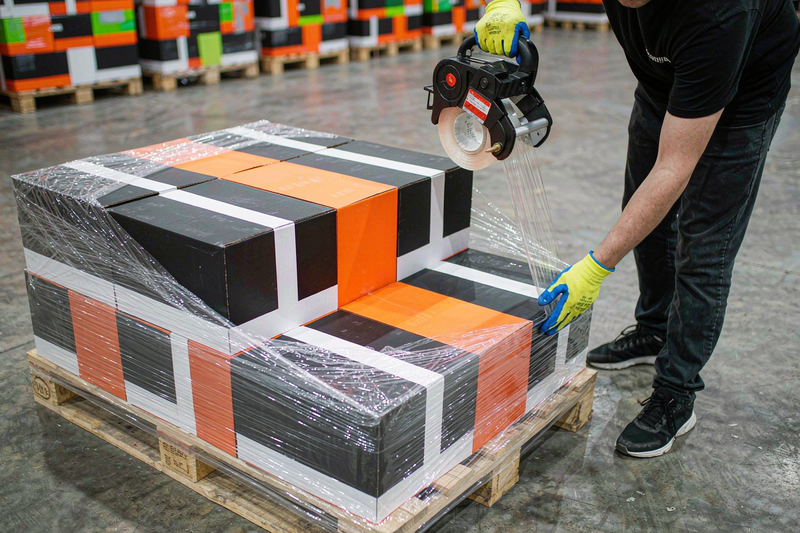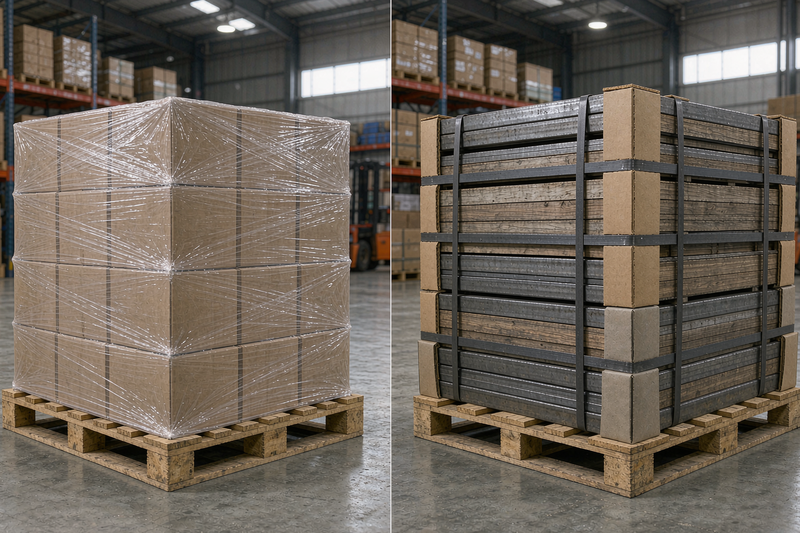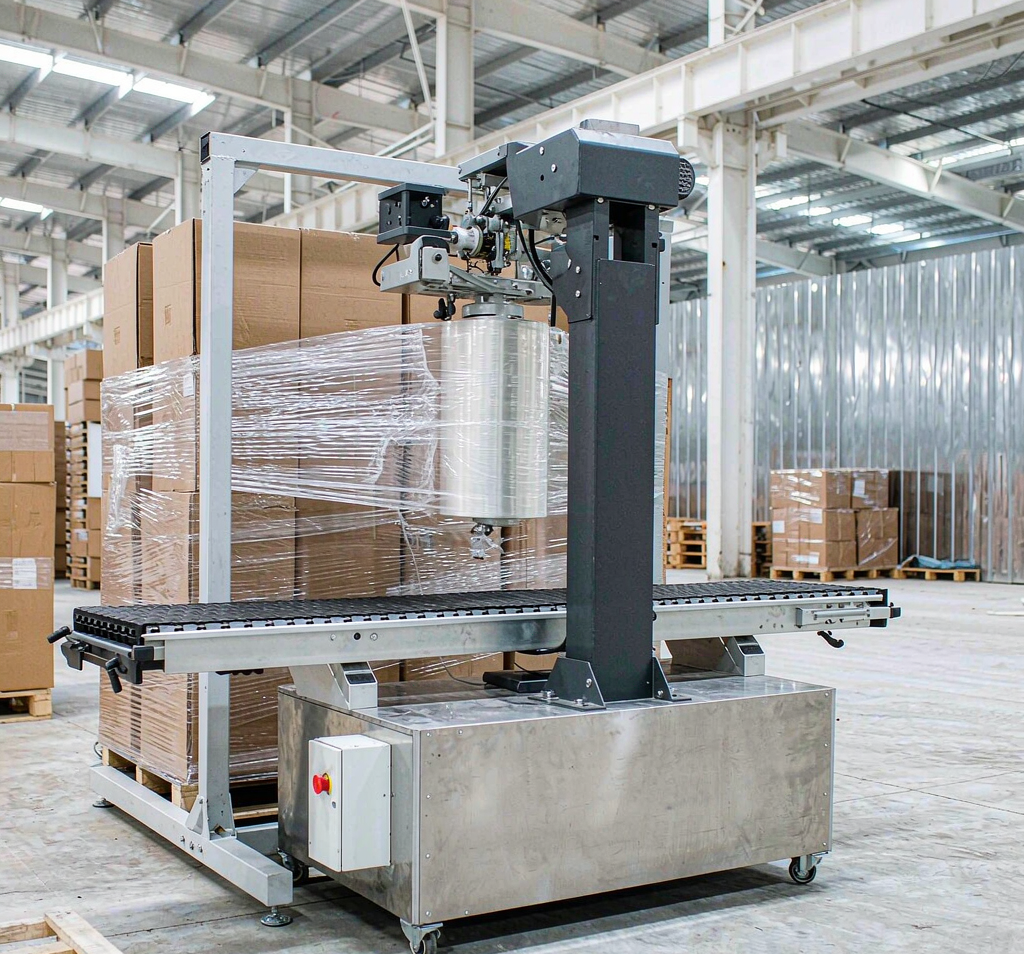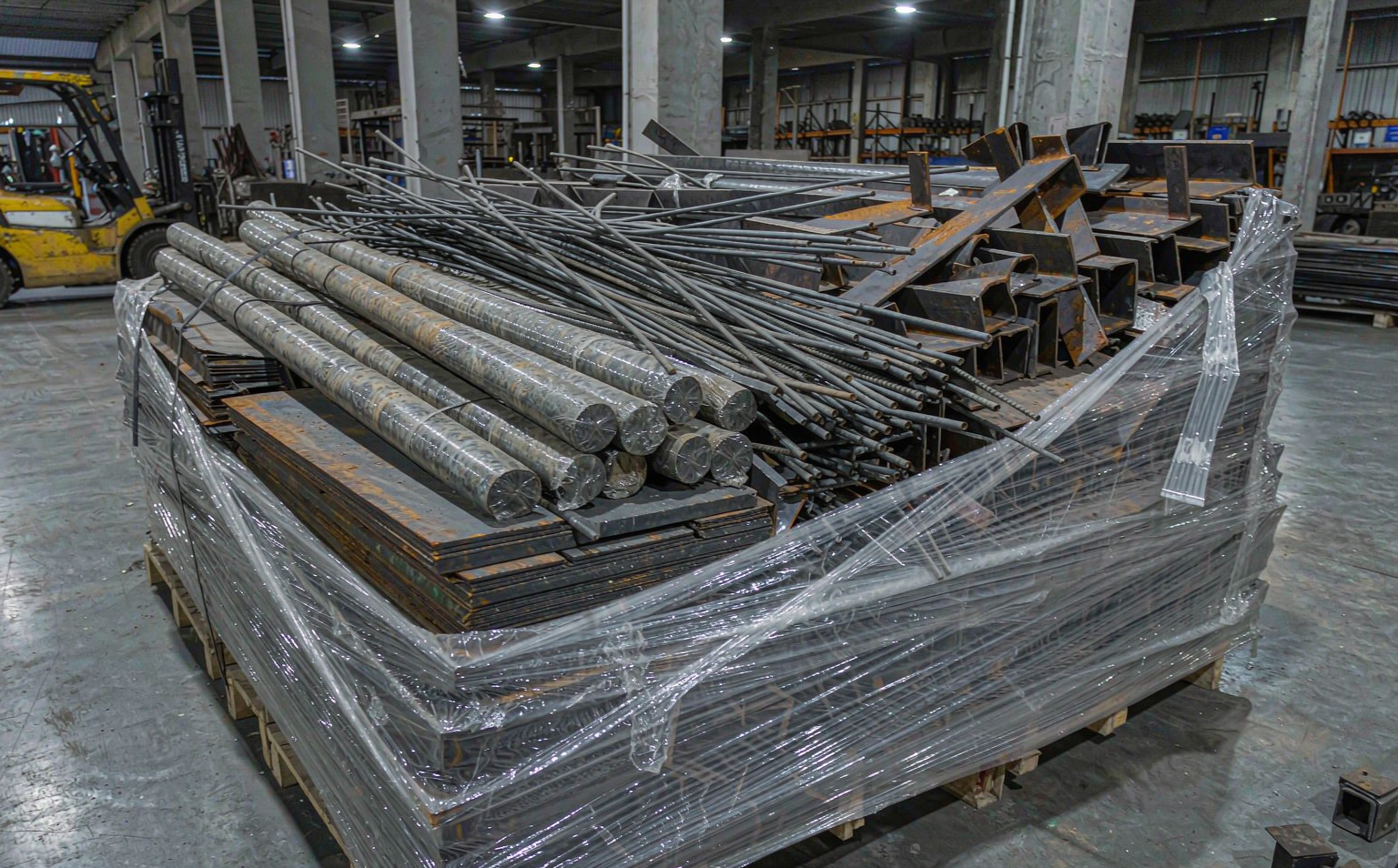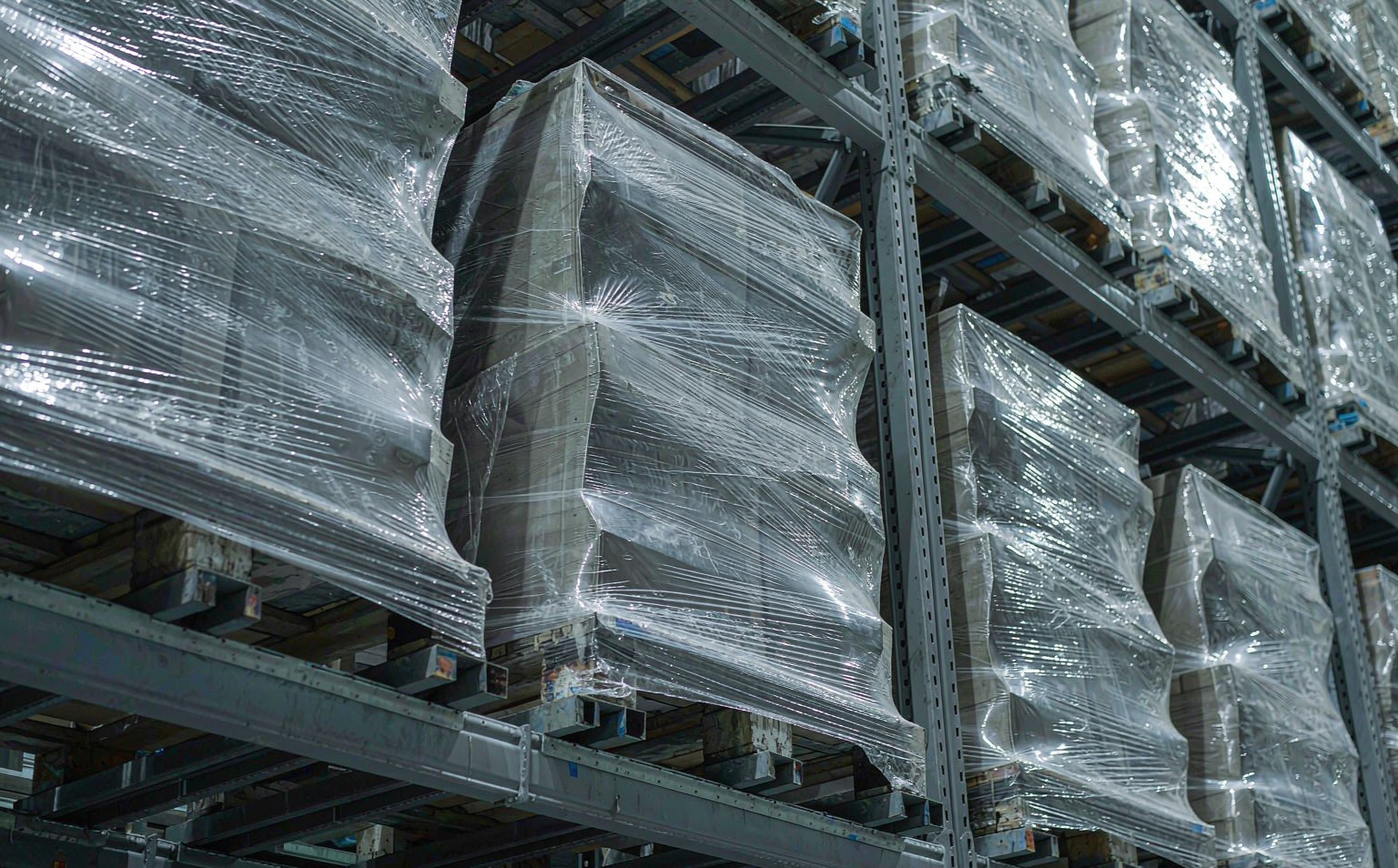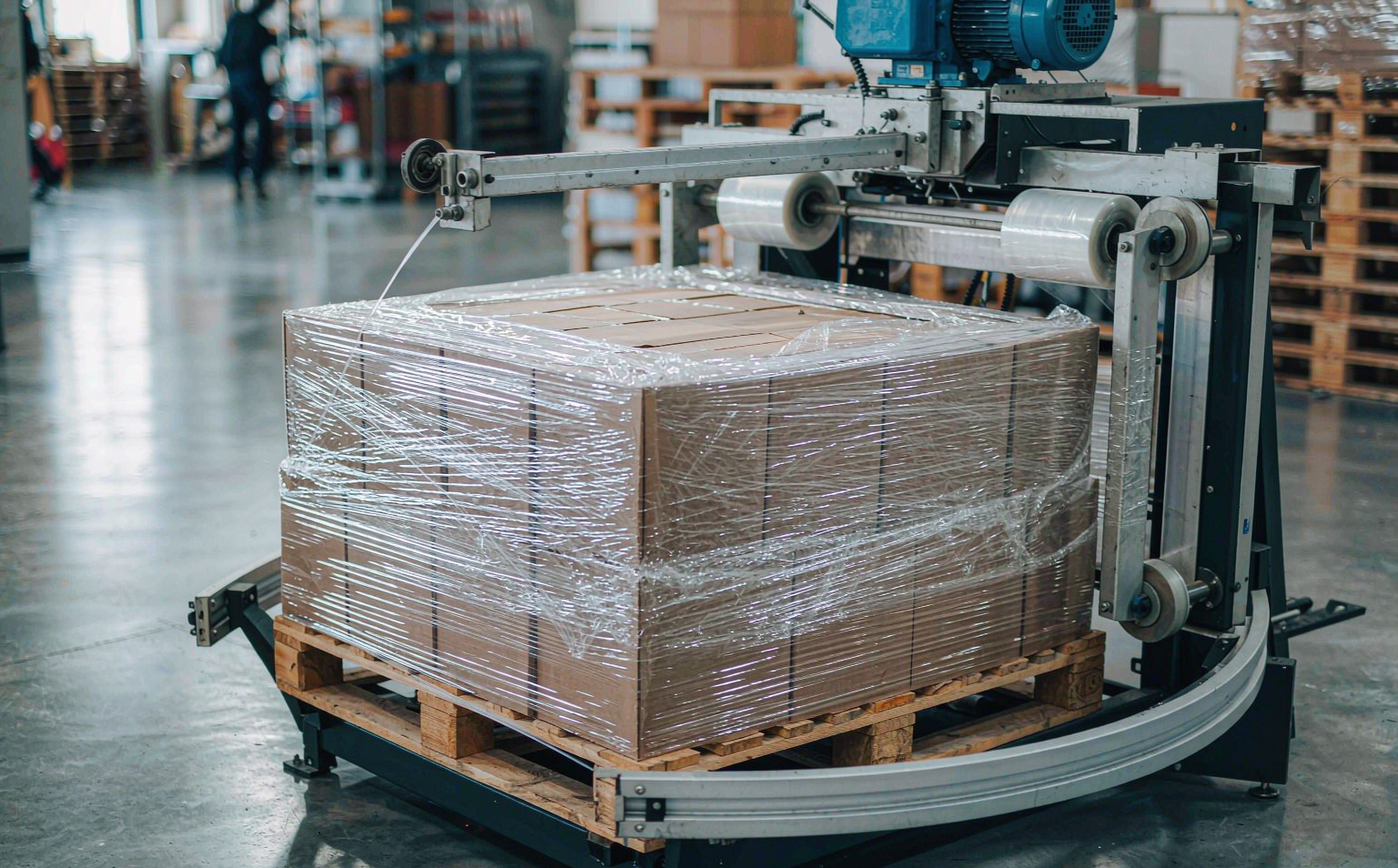


Anti-puncture machine stretch film is the grade you reach for when the load on the pallet works against standard cling film — metal parts with exposed flanges, profiled ceramics, boxed hardware with strapping edges, soft bundles that shift and expose corners. A standard 23-micron LLDPE film will hold a uniform cartoned pallet reliably. The same film, asked to wrap a stack of rebar or angle iron with sharp cut ends, will tear at the first corner. Puncture is one of the most common causes of load failure on irregular pallets, and standard film gauges were never designed to absorb that kind of impact. Anti-puncture grades exist specifically to bridge that gap.
This article explains how they are engineered, which loads they suit, and how to compare them against the standard film you are using now.
What Puncture Resistance Really Means in Machine Stretch Film
Puncture resistance is the film’s ability to absorb a concentrated force from a sharp or narrow object without tearing through. It is not the same as tear resistance (how far a tear propagates once it has started) or impact resistance (how the film absorbs a sudden, blunt shock, as in dart drop testing). A film can score well on one property and poorly on another. For loads with protruding edges, exposed hardware, or bundled items that move during transit, puncture is the failure mode that drives the most load claims — and it is the metric that separates a standard 23-micron LLDPE film from an anti-puncture grade built for the same job.
Three material properties drive puncture performance in machine stretch film:
- Resin toughness. Metallocene-catalyzed LLDPE (mLLDPE) films deliver higher puncture energy than conventional Ziegler-Natta LLDPE at the same gauge, because uniform short-chain branching lets the film stretch around a point without splitting.
- Multi-layer structure. Co-extruded films with elastomeric or high-toughness core layers distribute puncture energy across more material volume before any single layer fails.
- Stiffness versus ductility balance. A film that is too stiff resists the initial push but splits cleanly when it yields; a film that is too ductile stretches but offers no resistance. Anti-puncture grades are tuned for the middle ground — stiff enough to deflect, elastic enough to absorb.
Where Pallets Generate Punctures: Mapping the Failure Points
Punctures rarely start in the middle of a flat panel. They concentrate at corners, edges, strapping clips, and any point where the film is asked to conform around a rigid boundary. Common load categories that trigger puncture failure in regular B2B operations:
- Metal stock and profiles. Steel coils, rebar, angle iron, channel, and plate — every cut end is a potential puncture site, especially when the load tilts during transit.
- Packaged hardware with strapping edges. Cartoned tools, fittings, or fasteners with exposed steel banding that cuts into the wrap on the corner.
- Concrete and masonry products. Brick, block, and stone pallets have rough, irregular surfaces that abrade the film over multiple handling cycles.
- Bottles and glass containers. Palletized drinks and glass jars under top-load compression develop localized film stress at bottle shoulders and crowns.
- Bagged goods on soft pallets. Resin bags, fertilizer sacks, or pet food bags can settle diagonally in transit, exposing deck-board edges to bare film.
The weakest part of the wrap pattern is almost always the top-corner reinforcement and the area where the load meets the deck board. Standard films stretch thinly at those zones and are the first to fail under vibration or a fork-truck corner strike.

How Anti-Puncture Machine Stretch Film Is Engineered
Anti-puncture grades are not a single change to a standard film. They combine three or four engineering choices that work together:
- Resin upgrade. Conventional C4-LLDPE or C6-LLDPE is replaced partly or fully with metallocene LLDPE, which has a narrower molecular weight distribution and more uniform short-chain branching. The result is a film that propagates less stress at the puncture point.
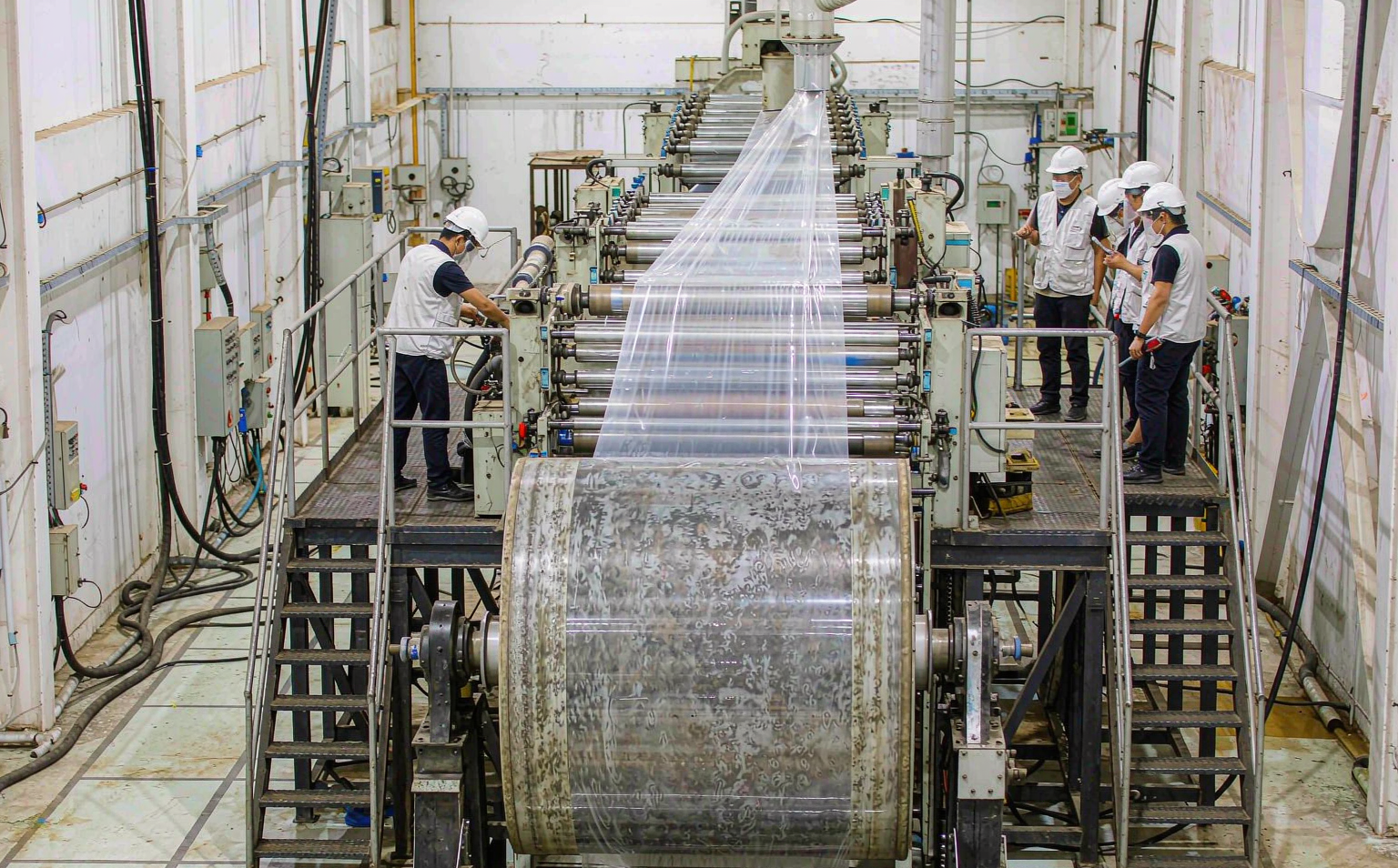
- High-toughness core layer. In a 3-layer or 5-layer co-extrusion, the middle layer is loaded with a high-density or elastomeric-grade resin. The outer layers retain cling, gloss, and unwind properties; the core absorbs the mechanical stress. For sharper or higher-volume loads, a stretch film jumbo roll converter can tune the core layer to the application.
- Edge-reinforcement additives. Some anti-puncture films use polyolefin plastomers (POP) or ethylene-vinyl acetate (EVA) blends at low addition rates to toughen the film without losing pre-stretch behavior — particularly common in downgauged constructions.
- Gauge and density tuning. Anti-puncture films are typically supplied at the same gauge as standard film (15 to 25 microns) rather than as a heavier gauge. The improvement comes from material engineering, not from making the film thicker.
These changes shift the failure threshold rather than eliminate puncture. The right grade depends on the load profile, handling intensity, and storage duration — not on whether the supplier calls the film “puncture-resistant” on the spec sheet.
Standard vs. Anti-Puncture Machine Stretch Film: How They Compare
The table below summarizes how the two film categories typically differ in lab performance and field behavior. Actual values vary by manufacturer, gauge, and formulation; the exact specification should be confirmed with the supplier.
| Attribute | Standard 23-micron LLDPE | Anti-puncture 23-micron |
|---|---|---|
| Typical resin system | Conventional Ziegler-Natta C4–C8 LLDPE | Metallocene LLDPE with high-toughness core |
| Puncture energy (ASTM D5748) | Baseline | 30–80% higher, depending on construction |
| Tear propagation (ASTM D1922) | Moderate; tear can run after a corner strike | Higher; localized damage containment |
| Dart drop (ASTM D1709) | Acceptable for cartoned goods | Improved tolerance to point impact |
| Pre-stretch capability | Up to ~250% on most wrappers | Comparable; formulation-specific |
| Cost per wrapped pallet | Baseline | Typically 8–20% premium |
| Best-fit load | Uniform cartoned pallet loads | Mixed, sharp-edged, irregular loads |
Choosing the Right Anti-Puncture Grade for Your Load
Anti-puncture is not a single product — it is a family. Picking the wrong grade is a common cause of overspend. A simple decision rule based on load severity:
- Light irregular loads (occasional sharp edge, mostly cartoned) — a standard metallocene 17 to 20-micron film with an anti-puncture resin system often delivers the right balance without a price premium over commodity LLDPE.
- Moderate irregular loads (regular sharp edges, partial mixed pallet) — mid-grade anti-puncture 20 to 23-micron co-extruded film with a high-toughness core layer. The most common specification for general B2B warehouse operations shipping hardware, fasteners, or wrapped industrial parts.
- Heavy irregular loads (metal stock, masonry, glass, exposed strapping) — heavy-duty anti-puncture 23 to 30-micron film with maximum core-layer toughness, often paired with top-sheet reinforcement or load-specific wrap patterns on the machine.
- Extreme or fully automatic handling — heavier-grade anti-puncture film, paired with a power pre-stretch unit and reduced wrap tension to keep residual stress low. For fully enclosed wrap, stretch hood film is a complementary option worth evaluating alongside anti-puncture stretch wrap.
The grade choice should also reflect storage and handling conditions. Loads that sit for extended periods, move through variable temperatures, or undergo repeated handling cycles compound puncture stress over time. Short-journey loads in climate-controlled warehouses can usually tolerate a lighter specification.
Wrap Settings That Reduce — or Worsen — Puncture Risk
The film grade is only half of the equation. Machine wrap settings either compound or contain puncture stress:
- Pre-stretch. Higher pre-stretch thins the film at the corner before impact, reducing the safety margin the engineered resin was supposed to deliver. For anti-puncture film on sharp loads, the operating pre-stretch is usually 200 to 250%, not the 300% that standard film can reach on the same wrapper.
- Wrap tension. Excess tension “sets” the film tightly around corners, so a minor impact can snap the wrap at that rigid line. Lower tension combined with more top wraps is generally a better combination than maximum tension with minimum wraps.
- Top-sheet count. Anti-puncture film performs best with explicit top-sheet reinforcement — an extra two to four wraps concentrated on the upper third of the load, where most puncture damage originates.
- Corner-fit pattern. Some wrapping machines offer a “rope” or “rope-and-tail” pattern that lays a thicker band at the top-corner zone. One of the most effective ways to deploy anti-puncture film on irregular loads.
The relationship between film grade and machine settings is iterative: changing one without the other usually does not solve the underlying failure. The exact specification for a given machine depends on its configuration and the load profile; pilot trials at the warehouse are the only reliable way to set both at once.
Procurement Checklist: Anti-Puncture Machine Stretch Film
- Document the failure mode: where on the load film is currently tearing, and at what point in transit or handling
- List the load profile: dominant product type, presence of exposed edges or strapping, typical weight, storage duration
- Request ASTM D5748 (puncture), D1922 (tear), D1709 (dart drop) test data at the gauge you will order, in both MD and TD directions
- Confirm resin system: metallocene LLDPE, conventional LLDPE, or hybrid; whether the core layer is elastomer-modified
- Compare cost-per-pallet, not cost-per-roll, against current standard film — premium pricing should deliver fewer damaged loads, not a thicker gauge
- Agree on a wrap-pattern trial at the warehouse before signing a long-term supply contract
- Set pre-stretch, tension, and top-sheet count on the wrapper to match the film grade
- Record containment force at the trial, using the same load type you ship most often, for a baseline before switching the full fleet
Common Mistakes When Switching to Anti-Puncture Film
- Specifying a heavier gauge instead of a tougher film. A 30-micron standard film does not match the puncture energy of a 23-micron anti-puncture film. Upgrading film grade and gauge simultaneously usually overspecifies cost without proportional performance gain.
- Running anti-puncture film at standard settings. Higher pre-stretch and tension reduce the safety margin the engineered resin was supposed to deliver. Pre-stretch, tension, and gauge are linked, not independent.
- Skipping the pallet trial. Lab puncture numbers are useful for comparison, but field failure modes vary. A short side-by-side trial on actual loads is the most reliable predictor of performance.
- Assuming anti-puncture film replaces corner boards. For very heavy or stacked-edge products, anti-puncture film works alongside — not instead of — protective edging or slip sheets.
- Buying on price per roll instead of per pallet. Anti-puncture film typically costs more per roll but uses fewer wraps to achieve the same containment. The unit that matters is cost per wrapped pallet, including waste from failed loads.
Key Takeaways
- Puncture is one of the most common causes of film failure on irregular, sharp-edged, and mixed-load pallets — distinct from tear propagation or blunt impact.
- Anti-puncture machine stretch film achieves higher puncture energy through metallocene LLDPE, high-toughness core layers, and tailored additives — not by adding gauge.
- Match the grade to load severity: light, moderate, heavy, and extreme irregular each call for a different film construction.
- Wrap settings — pre-stretch, tension, top-sheet count, corner-fit pattern — interact with film grade. Tune both together rather than treating them as independent variables.
- Procurement decisions should compare cost-per-pallet, not cost-per-roll, and validate lab data with a wrapped-pallet trial before full fleet rollout.
Frequently Asked Questions
What gauge of anti-puncture film replaces standard 23-micron LLDPE?
Anti-puncture film at the same 23-micron gauge typically matches or exceeds the puncture performance of 25 to 30-micron standard film. For load types where puncture is the binding failure mode, gauge-for-gauge substitution is the right starting point. The exact specification should be confirmed with the supplier based on the load profile and wrap settings in use.
Can anti-puncture film be downgauged?
Downgauging anti-puncture film is technically possible but should be treated as a deliberate specification change, not a procurement shortcut. Moving from a 23-micron anti-puncture film to a 17-micron equivalent requires a wrapped-pallet trial before fleet-wide rollout, because the safety margin at thin gauges is smaller. Depending on the load, the wrap pattern may also need adjustment.
Is anti-puncture film the same as high-tack or stretch hood film?
No. Anti-puncture film is a stretch-wrap film engineered for high puncture energy. Stretch hood film is a different product category — a heat-shrinkable sleeve that fully encloses a pallet load. Depending on the load profile, both can play a role in a packaging specification, but they are not interchangeable.
Does anti-puncture film work on pre-stretch wrappers above 250%?
Most anti-puncture films are formulated for pre-stretch in the 200 to 300% range. Above that, the film thickness at the corner becomes the limiting factor, not the resin. The reliable way to confirm safe pre-stretch for a given grade is a wrapped-pallet trial with measured containment force. Depending on the machine configuration, the wrapper may also have a programmable pre-stretch limit worth setting explicitly.
Can I use anti-puncture machine film for hand-wrapped pallets?
Anti-puncture film is engineered primarily for machine wrapping, where pre-stretch and tension are controlled. On irregular hand-wrapped loads, a heavy-grade hand stretch film with a matching resin system is usually the more economical choice. Mixing anti-puncture machine film with manual application is technically possible but rarely cost-effective.
What test data should I request from the supplier before switching?
At minimum, request ASTM D5748 (puncture energy), ASTM D1922 (tear propagation), ASTM D1709 (dart drop), and ASTM D882 (tensile strength and elongation) — all reported at the gauge you intend to buy, with MD and TD values, test conditions, and sample size. Single-value or single-direction reports are not enough to compare suppliers or predict field performance on irregular loads.
Conclusion
Anti-puncture machine stretch film is the most direct way to stop one of the most common causes of load failure on irregular and sharp-edged pallets. The right grade — light, moderate, heavy, or extreme — depends on the load profile rather than a generic specification, and pairs well with explicit top-sheet reinforcement and wrap-pattern tuning.
If your pallets involve exposed edges, metal stock, masonry, glass, or mixed product loads that standard film keeps tearing — send your current failure photos, load specifications, and any test reports on your incumbent film, and we will match a sample set of anti-puncture grades to your operation for a guarded trial.