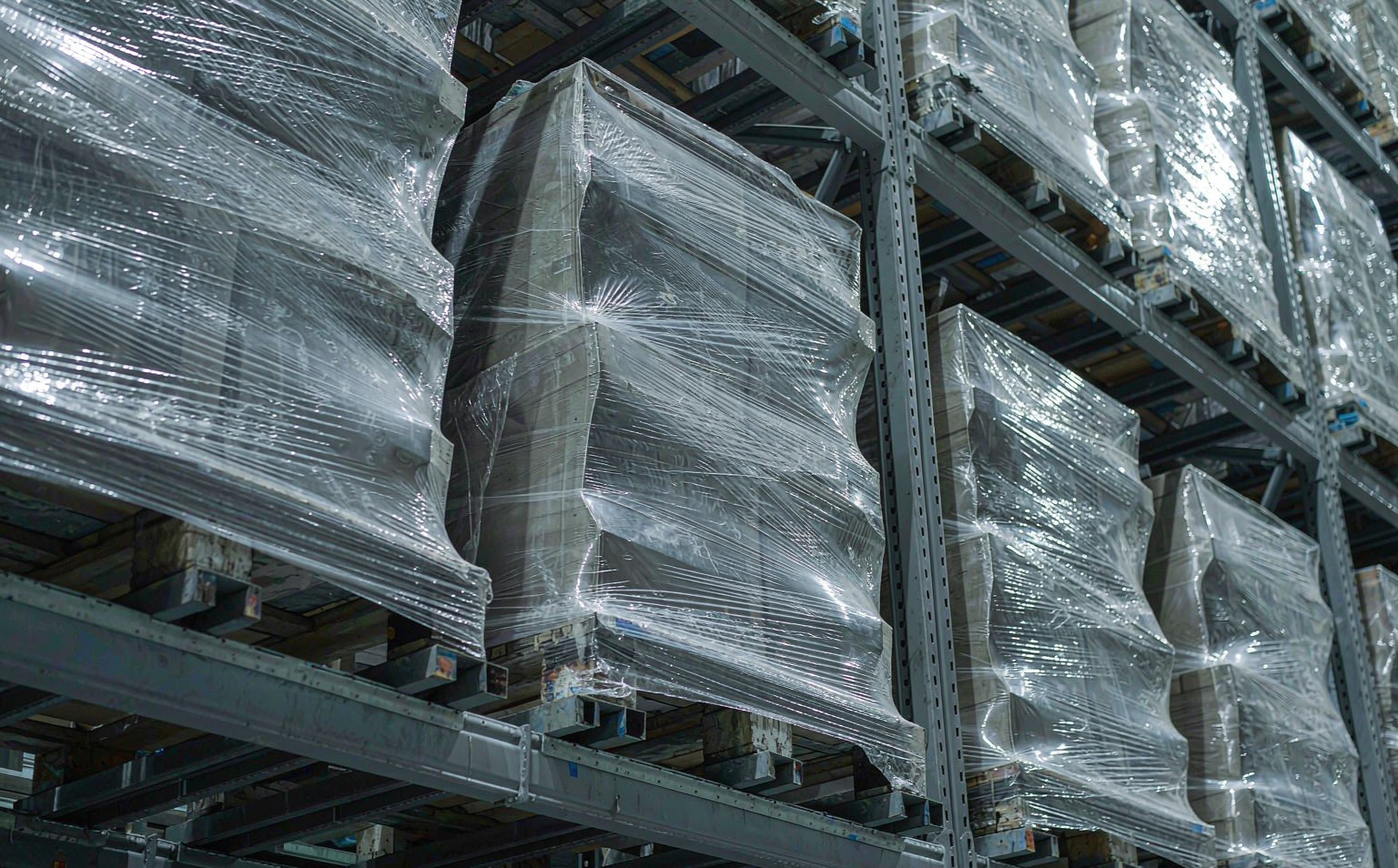


When you compare machine stretch film suppliers, three laboratory metrics do most of the work of predicting real-world performance: yield, tensile strength, and dart drop impact resistance. Yield determines how much coverage you get from every kilogram of film and therefore your true cost per wrapped pallet. Tensile strength determines how well the film holds a load together after it has been stretched on the wrapper. Dart drop measures resistance to puncture and impact, which decides whether the film survives contact with sharp corners and rough handling in transit.
This article explains what each metric measures, how the three interact, how to read them on a spec sheet, and what to confirm with a supplier before placing an order. It is written for packaging engineers, procurement teams, and distributors who buy machine stretch film in volume and need to compare offers on substance rather than gauge claims.
What Machine Stretch Film Actually Is
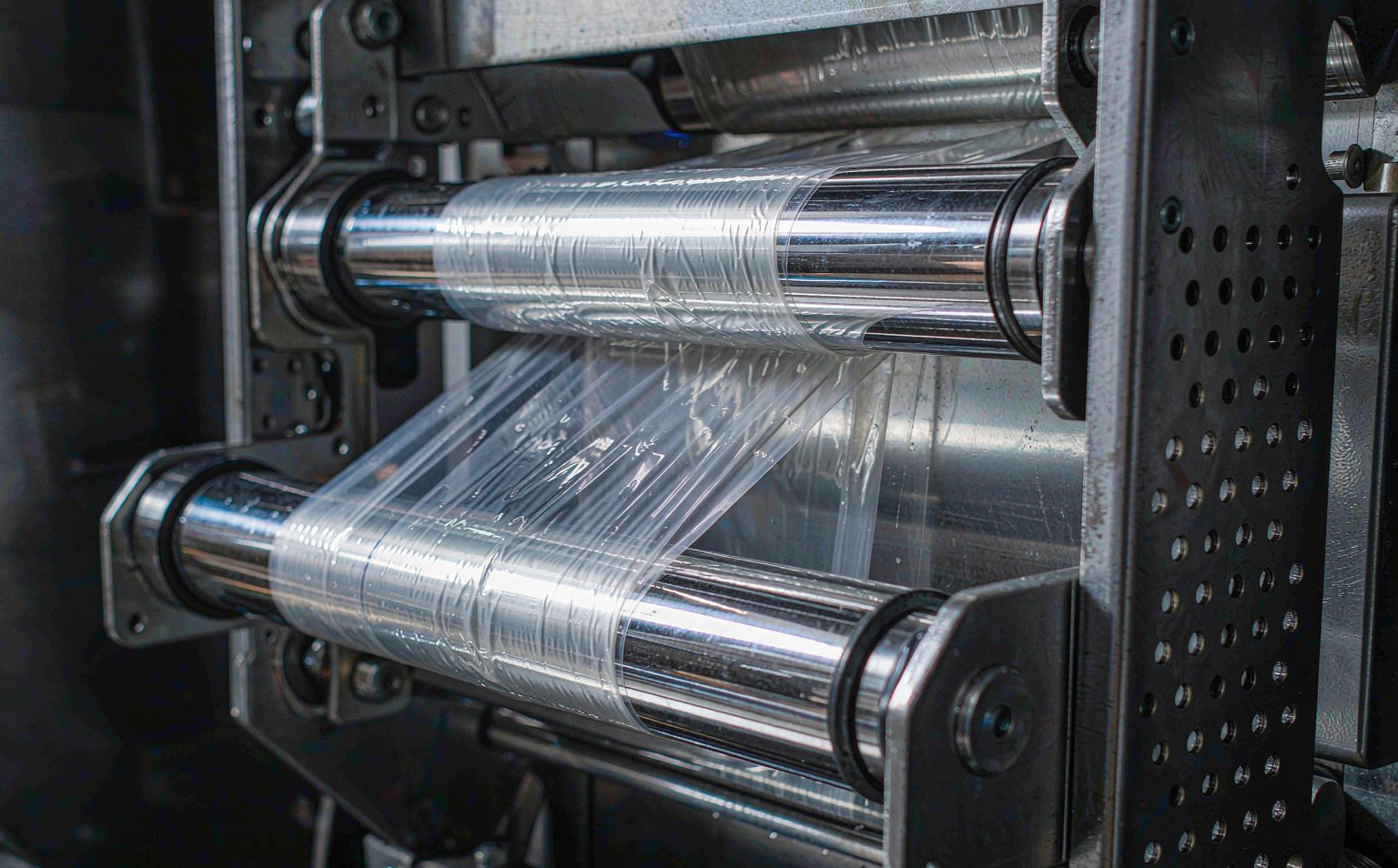
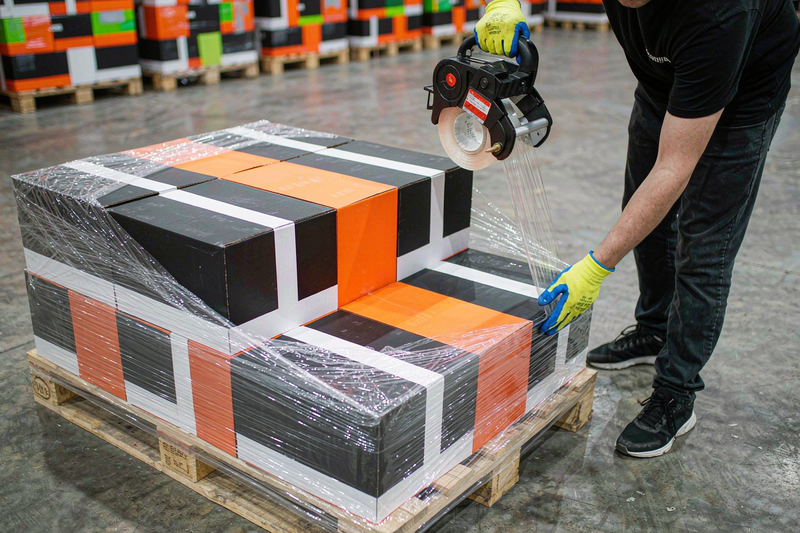
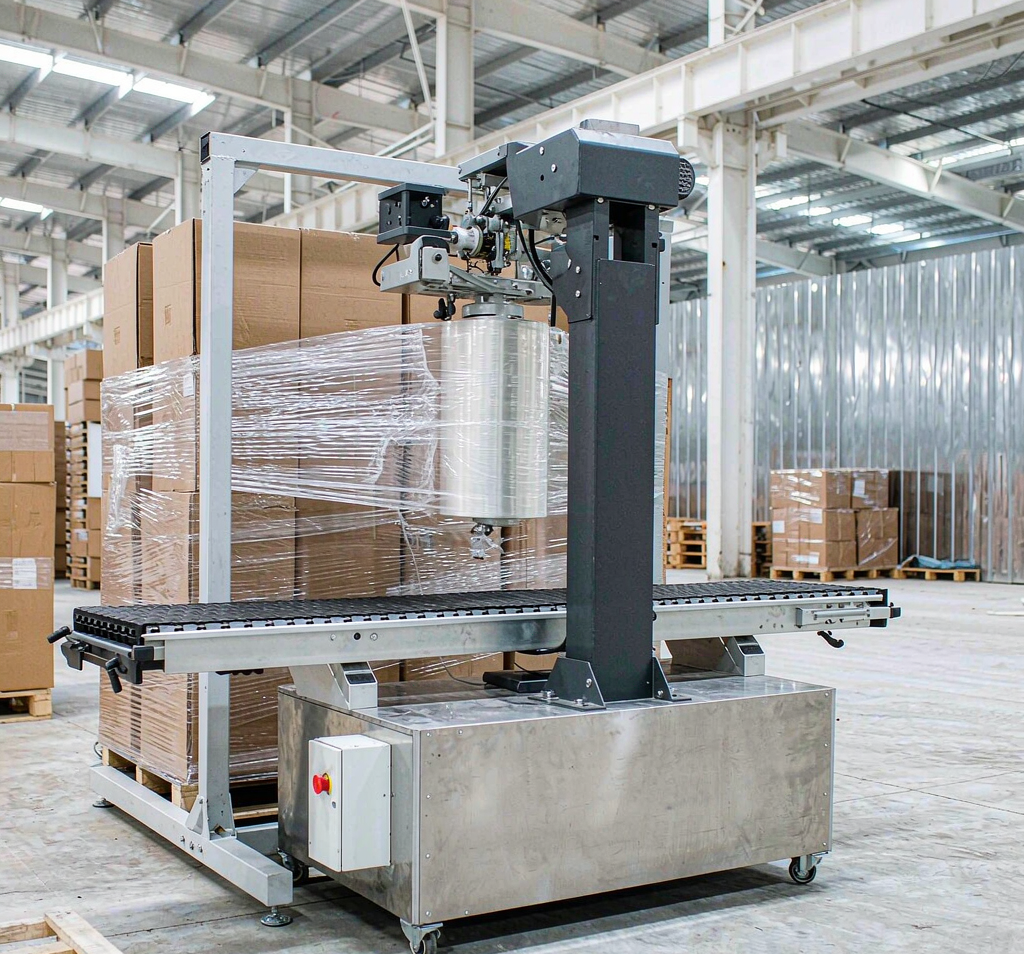
Machine stretch film is a thin, elastic polyethylene film—typically based on linear low-density polyethylene (LLDPE) and produced in multi-layer co-extrusion lines—engineered to be applied by an automatic or semi-automatic pallet wrapper rather than by hand. Because a wrapping machine can pre-stretch the film far beyond what a person can pull by hand, machine-grade rolls are designed to be elongated significantly on the carriage rollers while still holding enough tension to lock a load in place. This is the key difference from hand stretch film, which is applied at much lower stretch levels and relies more on operator technique.
That machine-side stretching is exactly why the three metrics below matter. Every property of the film is measured before and after controlled elongation, because the film only performs containment work after it has been stretched around the pallet.
Yield: The Metric That Decides Your Cost per Pallet
Yield describes how much film area you receive per unit of weight, usually expressed in square meters per kilogram (m²/kg) or square feet per pound. A higher yield means a roll of the same weight covers more pallets.
Why yield matters more than gauge:
- Gauge (thickness in microns) alone is an incomplete basis for comparison, because the effective coverage of the film also depends on how far your machine pre-stretches it. A film applied at a higher pre-stretch ratio delivers more square meters per pallet than the same film applied at a lower ratio.
- Cost comparisons per roll are misleading. The meaningful number is cost per square meter actually applied to the load, and that depends on yield, stretch, and price together.
- Advanced downgauged films—thinner films built with high-strength resins—can replace thicker commodity films at equal or better containment, depending on the resin formulation and the machine configuration. The exact specification should be confirmed with the supplier against your wrapper’s pre-stretch settings.
To use yield in procurement, work the arithmetic in this order: film area applied per pallet × price per square meter = wrapping cost per pallet. Comparing suppliers on this basis, rather than on roll price or gauge, is the single most useful correction most buyers can make, because two rolls with identical dimensions and price can differ in yield if their recipes and thicknesses differ.
Yield is also the metric where quality risk hides. A film that achieves high yield by being cut thin, without the tensile and puncture properties to back it up, will fail on the machine or in transit. That is why yield must always be evaluated together with the next two metrics.
Tensile Strength: Containment Force and Pre-Stretch Behavior
Tensile strength describes how much pulling force the film can withstand before it breaks, measured in the machine direction (the direction the film is stretched during wrapping) using standardized strip tests such as ASTM D882. On spec sheets it appears as break strength per unit width.
For wrapping performance, tensile strength works together with two related behaviors:
- Force to stretch. The wrapping machine must be able to elongate the film to the target pre-stretch level. A film that requires excessive force to elongate will strain the carriage rollers and reduce effective stretch.
- Elastic recovery and retained tension. After the film is stretched around the load, it tries to return to its original length. This residual tension is what creates containment force—the squeezing pressure that keeps boxes from shifting. A film with good recovery keeps the load tight hours and days after wrapping; a film with poor recovery relaxes and the load loosens in transit.
The practical implication for buyers: higher pre-stretch settings are only usable with films engineered for them. Pushing a film beyond its design point causes necking (the film web narrows and thins unevenly), breaks during wrapping, or a finished load that looks tight but has little holding force because the film has yielded past its elastic range. Machine direction and transverse direction strength also need to stay in balance, since a film that is strong only in one direction can split lengthwise under impact.
Dart Drop: Real-World Impact and Puncture Resistance

Dart drop, tested under methods such as ASTM D1709, measures the weight of a falling dart that causes the film to fail—reported in grams. It is the standard indicator of impact resistance and puncture resistance.
This is the metric that protects your load during the part of the journey nobody controls: the corner of a box pressed into the film during strapping, the forklift contact, the pallet dropped a few centimeters onto a dock plate. Loads with irregular shapes, protruding corners, or mixed stacking patterns place the highest demands on dart drop performance.
Three points buyers should keep in mind:
- Dart drop and film stiffness trade off against each other within a given formulation family. Maximizing one property can reduce another, which is why reputable suppliers report all three metrics together instead of a single headline number.
- Comparison between suppliers is only valid at the same film gauge and the same test method. A dart drop value quoted without thickness or test standard is close to meaningless.
- General industry experience is that blown films and cast films behave differently in impact versus clarity and stretch consistency, and the right choice depends on the load profile and the machine. Actual performance may vary according to the process setup, so the deciding factor should be a trial on your own wrapper rather than a datasheet number alone.
How the Three Metrics Work Together
The three properties form a system. Improving yield usually means engineering a thinner, more sophisticated film—and that film must then maintain tensile strength and dart drop at the reduced gauge to be usable. Here is how each metric maps to a buying decision:
| Metric | What it measures | Typical test basis | Why it matters to you | Failure mode if too low |
|---|---|---|---|---|
| Yield | Film area per unit weight (m²/kg) | Roll weight, width, length, gauge | Wrapping cost per pallet; material efficiency | Overpaying per pallet even when the roll price looks cheap |
| Tensile strength | Force at break, machine direction | ASTM D882 strip testing | Containment force; compatibility with high pre-stretch carriages | Film breaks on the machine; loads that loosen in transit |
| Dart drop | Impact / puncture resistance | ASTM D1709 dart drop | Protection against corners, impacts, handling abuse | Holes and punctures during shipping; load instability |
A useful selection framework: start from your load profile. Light, uniform, boxed loads tolerate optimized-yield films; heavy, irregular, or sharp-edged loads shift the priority toward tensile and dart drop performance. Then involve your machine’s pre-stretch capability, and finally compare supplier offers on cost per square meter applied.
How to Read a Machine Stretch Film Spec Sheet: Procurement Checklist
Before ordering, confirm each of the following in writing with the supplier:
- Gauge with stated tolerance, and whether it is nominal or minimum
- Yield in m²/kg (or the roll dimensions and weight that let you calculate it)
- Machine-direction break strength and the test standard used
- Dart drop value with gauge and test method noted
- Recommended pre-stretch range for your type of carriage
- Number of layers and resin structure if a performance claim depends on it
- Available roll widths, core types, and formats, including jumbo rolls if you convert film downstream
- Lot test reports or a defined incoming inspection procedure for verification
Distributors should also confirm which of these values the supplier is prepared to guarantee per production batch, since consistent lot-to-lot behavior is what allows a downstream converter to promise performance to their own customers.
Common Purchasing Mistakes to Avoid
- Comparing price per roll instead of cost per square meter applied. Rolls of the same size and price can differ in yield and pre-stretch performance.
- Buying by gauge alone. Thickness tells you nothing about resin quality, layer structure, or impact resistance.
- Applying generic pre-stretch settings. A ratio that works on one supplier’s film can break or neck another supplier’s film on the same machine.
- Accepting dart drop values without gauge or test method. The number is not comparable across suppliers without that context.
- Skipping a production trial. Datasheet values guide selection; the wrapper and the actual load confirm it.
Key Takeaways
- Yield, tensile strength, and dart drop are the three spec-sheet numbers that predict machine stretch film performance in the field.
- Yield drives cost per pallet; compare suppliers on cost per square meter applied, not roll price.
- Tensile strength and elastic recovery create containment force; they also determine which pre-stretch settings your machine can safely use.
- Dart drop protects against puncture and impact, and is most critical for loads with corners, mixed stacking, or rough handling.
- Valid comparisons require the same gauge and test method, and any performance claim should be confirmed with a trial on your own wrapper before volume ordering.
Frequently Asked Questions
What does yield mean in stretch film specifications?
Yield is the film area obtained per unit of weight, commonly in m²/kg. Higher yield means more coverage per kilogram, which lowers the material cost per wrapped pallet when the film’s strength properties are sufficient for the load.
How is dart drop measured for machine stretch film?
A dart of increasing weight is dropped onto a clamped film sample until the film fails; the result is reported in grams under a defined method such as ASTM D1709. It indicates impact and puncture resistance. Values are comparable only at the same gauge and test method.
Does higher tensile strength always mean better film?
Not necessarily. Tensile strength must be balanced with force to stretch, elastic recovery, and puncture resistance. A film that is very strong but too stiff or brittle can perform worse on the wrapper and in transit than a well-balanced formulation.
Can I downgauge my machine stretch film to save cost?
Often yes, provided the supplier demonstrates that tensile strength and dart drop are maintained at the lower gauge for your load profile, and the film is validated on your machine’s pre-stretch settings. The exact specification should be confirmed with the supplier through a controlled trial.
Which matters more for sharp-cornered loads: gauge or dart drop?
Dart drop, together with overall puncture resistance, matters more than gauge. Two films of the same thickness can differ significantly in impact resistance depending on resin and layer structure.
Conclusion: Choosing on Substance
Machine stretch film selection comes down to a simple decision logic: define the load profile, match it to the balance of yield, tensile strength, and dart drop the application requires, verify pre-stretch compatibility with the wrapper, and compare supplier offers on cost per square meter applied rather than price per roll. Films that look identical on a quote sheet can differ substantially across all three metrics once they are on the machine.
If you are evaluating a switch to a thinner, higher-performance machine stretch film, or you want an outside view on whether your current spec matches your load profile, share your wrapper’s pre-stretch range, current gauge, and typical load description. Vistech’s technical team can review the application and recommend a film specification with lot test data to support it.