

To get more pallets out of every roll of hand stretch film, procurement and warehouse teams must shift their primary buying metric from price per roll to cost per wrapped pallet. Lowering packaging expenditure requires matching film specifications—such as gauge, resin formulation, and pre-stretch properties—to actual load profiles while standardizing manual wrapping tension and overlap on the warehouse floor.
This guide breaks down how to calculate true stretch film yield, identify the manual wrapping habits that cause material waste, evaluate down-gauged and pre-stretched options, and establish a procurement verification checklist before placing bulk orders.

Why Roll Price Misleads Buyers: Shifting to Cost-Per-Pallet
Purchasing decisions based strictly on the lowest invoice price per roll frequently result in higher total packaging spend. A lower-priced roll made from inferior resin blends or inconsistent extrusion often suffers from poor puncture resistance, weak load retention, and frequent tearing during application. When operators experience film breaks or feel the film lacks holding force, they instinctively compensate by wrapping extra revolutions around the pallet.
Tracking stretch film cost per pallet provides an accurate measure of packaging efficiency because it accounts for both material price and real-world yield.
Core Cost-Per-Pallet Formula
Cost per Pallet = Price per Roll ÷ Number of Pallets Wrapped per Roll
(Or, for weight-based audits: Cost per Pallet = Price per kg/lb × Film Weight Consumed per Pallet)
| Evaluation Metric | Budget Low-Yield Roll | Engineered High-Yield Roll | Operational Impact |
|---|---|---|---|
| Roll Purchase Price | Lower upfront unit price | Moderate to higher upfront unit price | Upfront invoices favor budget rolls, masking downstream waste. |
| Stretch & Recovery | Limited elasticity; loses tension after wrapping | Consistent elastic recovery maintains holding force | Higher holding force requires fewer layers to stabilize the load. |
| Breakage Rate | Prone to edge nicking and snapping under tension | High tear resistance across corners and sharp edges | Fewer breaks eliminate discarded partial rolls and re-wrapping time. |
| Pallets per Roll | Lower pallet count due to over-wrapping | Higher pallet count through controlled consumption | True cost per wrapped pallet drops despite a higher roll price. |
Selecting industrial-grade hand stretch film engineered for consistent tension and tear resistance allows operations to stabilize loads with less material per revolution.
4 Hidden Factors Reducing Your Pallets Per Roll
Before changing film specifications, warehouse managers should audit floor operations. Even high-performance manual stretch wrap loses its cost advantage if inconsistent wrapping habits consume excess film on every pallet.
- Excessive Film Overlap: Overlapping each pass by more than the standard 30% to 50% builds unnecessary multi-layer thickness across the middle of the pallet without adding structural stability.
- Under-Stretching During Application: Conventional hand stretch film relies on operator tension to activate its elastic recovery (holding force). When operators walk around a pallet without pulling tension against the roll, the film lays flat like unstretched plastic, forcing them to apply extra layers to keep boxes from shifting.
- Edge Nicking and Dropped Rolls: Dropping a roll onto a concrete warehouse floor damages the outer edges. Once an edge is nicked, the film repeatedly splits around the circumference when pulled under tension, often resulting in partially used rolls being thrown away.
- Inefficient Base and Top Locking: Failing to anchor the film tail securely to the pallet base—or failing to wrap low enough to lock the load to the wooden pallet—causes loads to slide during transit. Re-wrapping shifted pallets doubles material and labor costs.

Smart Film Selection: Down-Gauging and Pre-Stretched Options
Optimizing material selection is the most direct way to increase stretch film yield once operator habits are controlled. Buyers generally evaluate three technical levers: down-gauging, pre-stretched construction, and manufacturing process (cast vs. blown).
Down-gauging Without Losing Load Containment
Down-gauging involves transitioning from a thicker conventional film to a thinner film manufactured with higher-performance resins. Modern multi-layer resin formulations can deliver equivalent or higher puncture resistance and holding force at a reduced thickness. However, down-gauging only reduces costs when the thinner film matches the load’s sharp-edge profile and weight; dropping gauge too aggressively on irregular loads will trigger film breaks and increase consumption. Exact gauge availability and mechanical properties should be confirmed with the supplier before running floor trials.
Pre-Stretched Hand Film vs. Conventional Hand Stretch Film
Pre-stretched hand film is mechanically stretched during manufacturing close to its ultimate yield point before being wound onto the core. Conventional hand stretch film requires the warehouse worker to generate that stretch manually.
| Comparison Criteria | Conventional Hand Stretch Film | Pre-Stretched Hand Stretch Film |
|---|---|---|
| Application Effort | Requires physical effort from the operator to pull and stretch the film | Minimal pulling effort required; film is already stretched during production |
| Wrapping Consistency | Varies significantly by operator strength and fatigue level | High consistency across different shifts and operators |
| Roll Weight & Ergonomics | Heavier rolls due to higher film thickness | Lighter rolls, reducing operator fatigue and dropped-roll damage |
| Corner & Puncture Tolerance | Higher thickness options handle severe sharp edges better | Reinforced edges resist tearing, though extreme sharp edges require testing |
| Best Fit Condition | Heavy, irregular, or high-containment loads requiring custom tension | Uniform box loads, high-turnover lines, and operations aiming to eliminate over-wrapping |
Cast vs. Blown Hand Stretch Film
- Cast Hand Stretch Film: Produced via cast extrusion, offering quiet unwind, high clarity for barcode scanning, and consistent thickness. It performs well on uniform pallet loads where predictable stretch and clear load visibility matter.
- Blown Hand Stretch Film: Produced via blown extrusion, offering higher puncture resistance, stronger tear propagation resistance, and higher cling. It is suited for heavy, irregular, or sharp-cornered loads where preventing film snaps is the primary cost driver.
Reviewing available hand stretch film specifications helps procurement teams identify whether cast, blown, or pre-stretched constructions align with their facility’s dominant pallet profiles.

How to Match Hand Stretch Film to Your Load Type
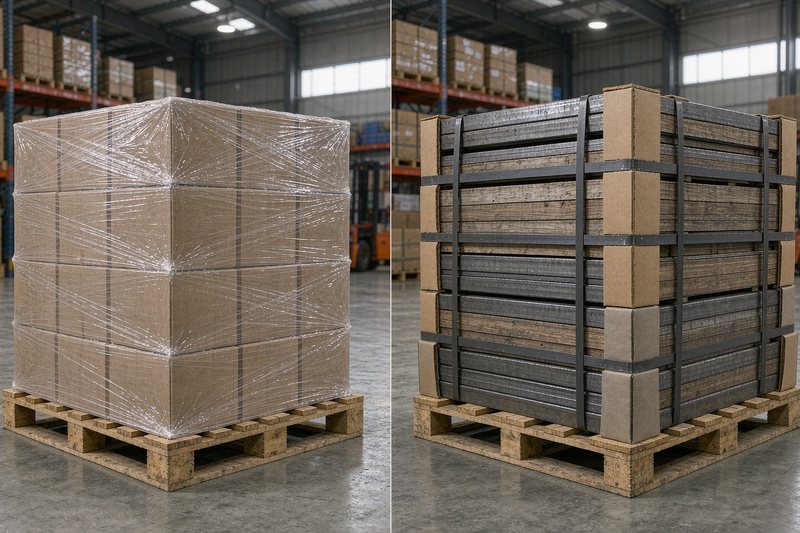
Standardizing on a single heavy-duty film specification across an entire warehouse often leads to over-spending on light loads, while standardizing on a light-duty film causes breakage on heavy loads. Segmenting inventory by load profile ensures each pallet receives only the material strength it requires.
| Load Profile Category | Typical Freight Characteristics | Primary Film Requirement | Recommended Specification Direction |
|---|---|---|---|
| Type A: Uniform Light-to-Medium Loads | Stacked corrugated cartons flush with pallet edges; minimal sharp corners | Consistent holding force and easy unwind | Down-gauged cast film or pre-stretched hand film to maximize footage per roll |
| Type B: High-Density Heavy Loads | Beverage cases, bagged materials, or dense industrial components | High load retention and minimal film relaxation over time | Mid-to-heavy gauge film with strong elastic recovery; confirm gauge with supplier |
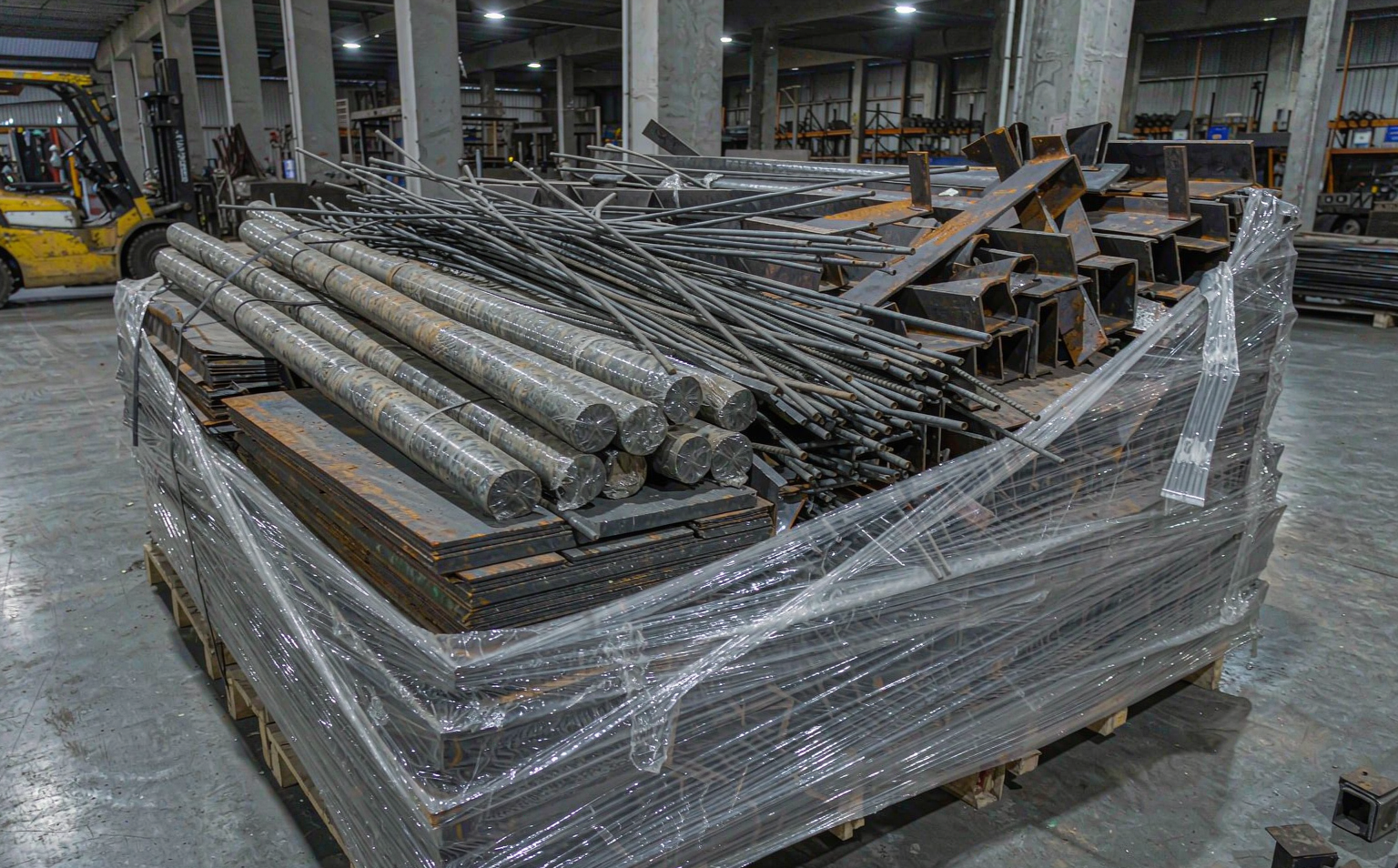
| Type C: Irregular or Sharp-Cornered Loads | Machinery parts, building materials, protruding edges, or mixed-SKU pallets | High puncture and tear resistance to prevent snapping | Blown film or multi-layer puncture-resistant heavy-duty hand stretch film |

A Step-by-Step Manual Wrapping SOP to Cut Film Waste
Implementing a standardized manual wrapping procedure ensures that different shifts achieve comparable pallet counts per roll.
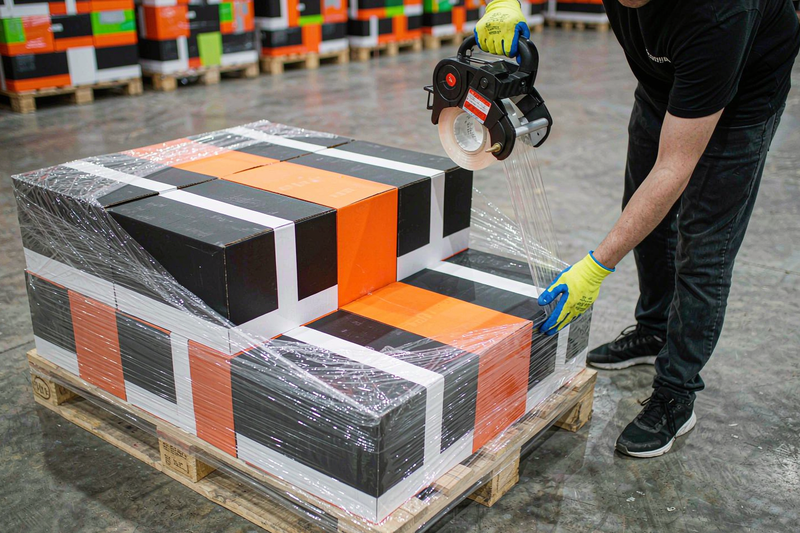
- Inspect the Roll and Load a Tension Dispenser: Check the roll edges for nicks before starting. Mount the roll onto an ergonomic hand dispenser with adjustable tension control rather than holding the core bare-handed, which causes uneven tension and hand friction.
- Anchor the Film Tail to the Pallet Base: Tie or tuck the film tail securely around a corner post of the pallet. Begin wrapping at the very bottom so the film captures both the wooden pallet deck and the bottom tier of cartons.
- Apply Base Revolutions: Wrap the base layer with controlled tension (typically 2 to 3 revolutions depending on load weight) to lock the freight to the pallet and prevent sliding during forklift transport.
- Spiral Upward with Controlled Overlap: Walk steadily around the pallet while moving the dispenser upward, maintaining a consistent 30% to 50% overlap per pass. Keep the dispenser angled slightly to maintain continuous tension across the corners.
- Reinforce the Top Tier and Seal the Tail: Apply 2 to 3 revolutions around the top edge of the load to prevent top-layer shifting. Tear the film cleanly and press the tail firmly flat against the wrapped surface so it does not snag on warehouse racking or adjacent pallets.

Procurement Checklist: Testing Hand Stretch Film Before Bulk Ordering
Before approving a new supplier or switching to a down-gauged specification, run a controlled side-by-side floor trial using identical pallet loads.
- Verify Net Film Weight vs. Gross Roll Weight: Always compare suppliers based on net film weight and guaranteed roll length rather than gross weight, as overly heavy cardboard cores inflate shipping weight without adding usable film.
- Measure Actual Film Consumed per Pallet: Weigh a fresh roll before wrapping, wrap a set batch of standardized pallets (e.g., 5 or 10 pallets), and weigh the roll afterward to calculate exact grams or ounces used per pallet.
- Log Film Breaks and Edge Splits: Track how many times the film snaps or splits across sharp corners during the trial batch. A cheaper film that snaps twice per 10 pallets rarely saves money once labor downtime is included.
- Perform a Tilt or Transit Stability Check: Verify that the wrapped pallet maintains load containment after standard forklift handling and staging, ensuring down-gauging has not compromised freight safety.
- Collect Operator Feedback: Confirm that warehouse staff can maintain wrapping speed without excessive pulling strain.

Key Takeaways
- Measure Cost per Pallet, Not Price per Roll: A roll with a higher purchase price often yields a lower cost per pallet when higher elastic recovery and tear resistance eliminate extra wrapping passes.
- Audit Floor Habits First: Controlling overlap (30%–50%), using tension dispensers, and preventing dropped-roll edge damage immediately increase pallets per roll without changing suppliers.
- Match Film Construction to Load Geometry: Use pre-stretched or down-gauged cast films for uniform cartons, and reserve blown or puncture-resistant formulations for irregular, heavy, or sharp-cornered loads.
- Validate via Net Weight Trials: Always benchmark candidate films by weighing net film consumed per wrapped pallet rather than relying on nominal gauge claims alone.
FAQ
How many pallets should one roll of hand stretch film wrap?
There is no single fixed pallet count per roll because yield depends on roll length, pallet dimensions, load height, number of revolutions, and applied stretch percentage. Facilities can establish their baseline by dividing a roll’s usable linear footage by the perimeter of their standard pallet multiplied by the required number of wraps, then validating that number through a weighed floor trial.
Is thinner hand stretch film always cheaper to use?
No. While thinner film provides more linear footage per pound of resin, dropping to a gauge that lacks sufficient puncture resistance or holding force for your load weight forces operators to apply extra layers or deal with frequent film breaks. Thinner film only lowers cost when modern resin strength maintains load containment with the same or fewer revolutions.
When should a warehouse switch from hand stretch film to machine stretch film?
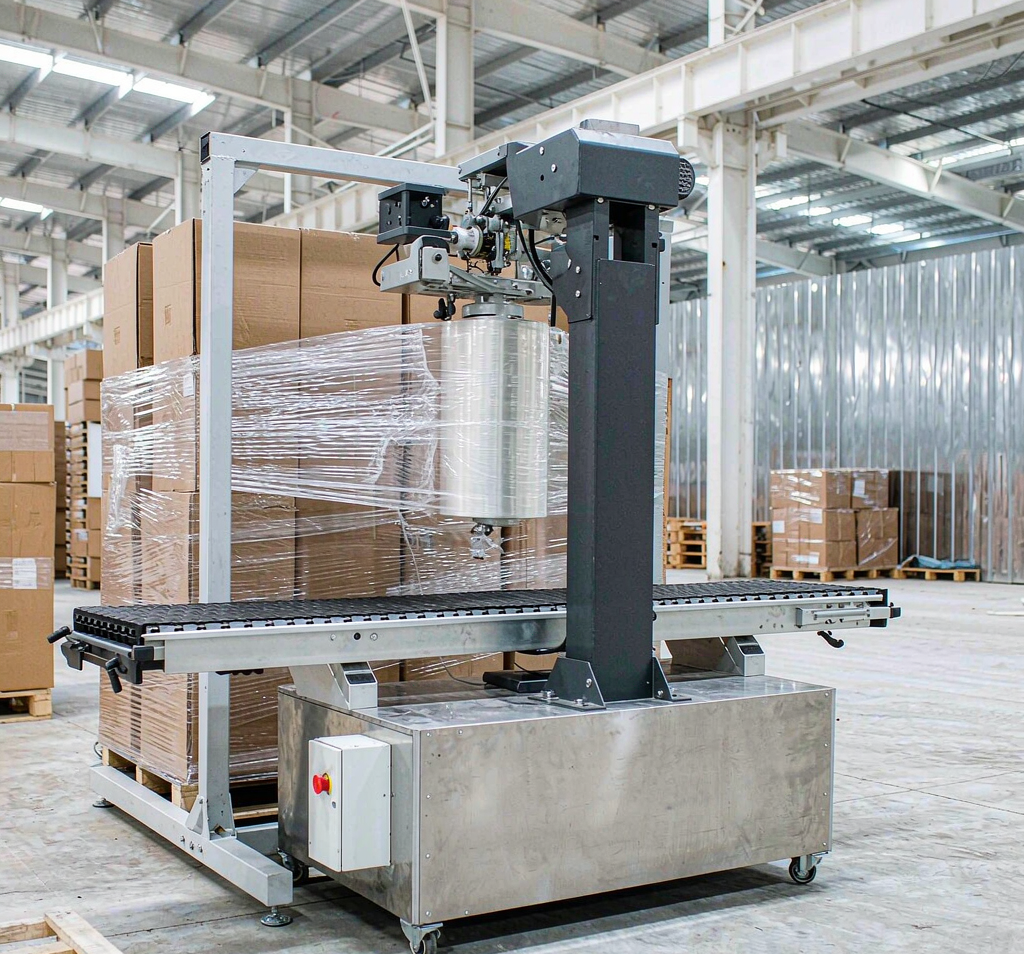
Warehouses typically evaluate semi-automatic or automatic stretch wrappers when daily manual wrapping volume increases to the point where labor hours, inconsistent wrap tension, and material waste outweigh equipment capital costs. Facilities wrapping consistently high daily pallet volumes generally achieve greater film pre-stretch ratios (often 200% or higher) with machine stretch film than is physically possible by hand.
How do I check if a supplier is overcharging via heavy cardboard cores?
Request the technical data sheet specifying both Net Film Weight and Gross Roll Weight, along with exact roll width, thickness, and length. Subtracting net film weight from gross weight reveals the core weight, allowing you to calculate the true price per pound or kilogram of usable stretch film.