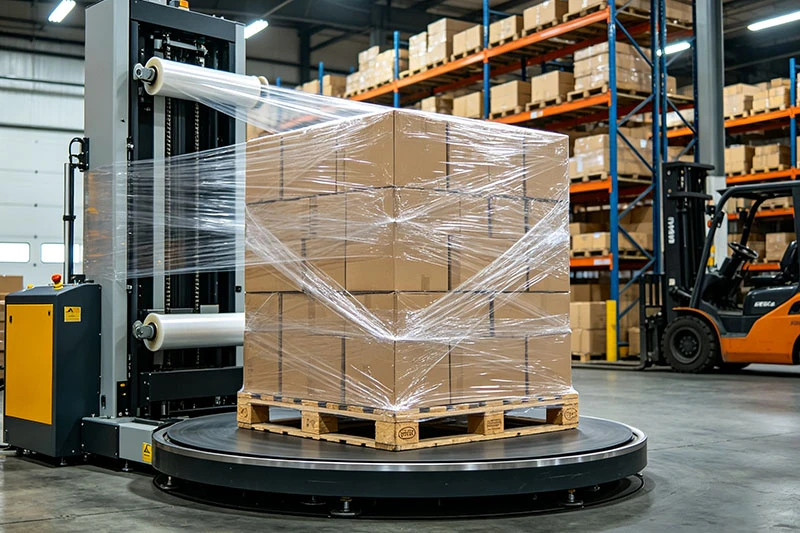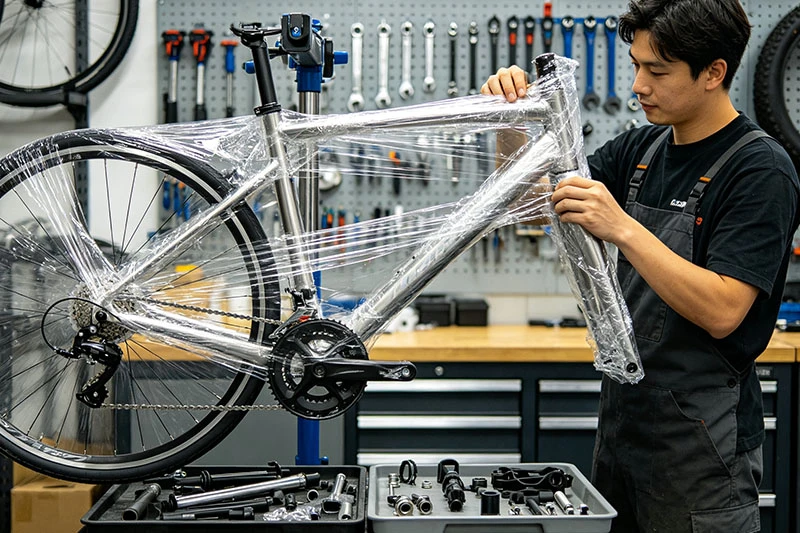


In the industrial packaging sector, the mainstream materials used for stretch film are primarily based on Linear Low-Density Polyethylene (LLDPE). Through the use of different comonomers, additives, and multi-layer co-extrusion technologies, various sub-material classifications are derived.
Below are the mainstream material classifications currently on the market and their core differences:

1. Mainstream Material Classifications
Based on the core raw materials (comonomers) en special functional modifications, mainstream stretch films on the market are divided into four primary categories:
C4-LLDPE (Butene Copolymer Film)
- Material Features: Uses Butene as the comonomer. This is the most traditional, widely used, en most cost-effective conventional stretch film material on the market.
- Applications: Suitable for conventional, general cargo wrapping and lightweight packaging that does not require high stretch ratios or puncture resistance.
C6 / C8-LLDPE (Hexene / Octene Copolymer Film)
- Material Features: Incorporates longer carbon-chain monomers—Hexene or Octene. The long-chain branching structure gives the molecular chains much better entanglement capabilities.
- Performance Upgrades: Compared to C4, it delivers a massive step up in stretch ratio, tear strength, and puncture resistance.
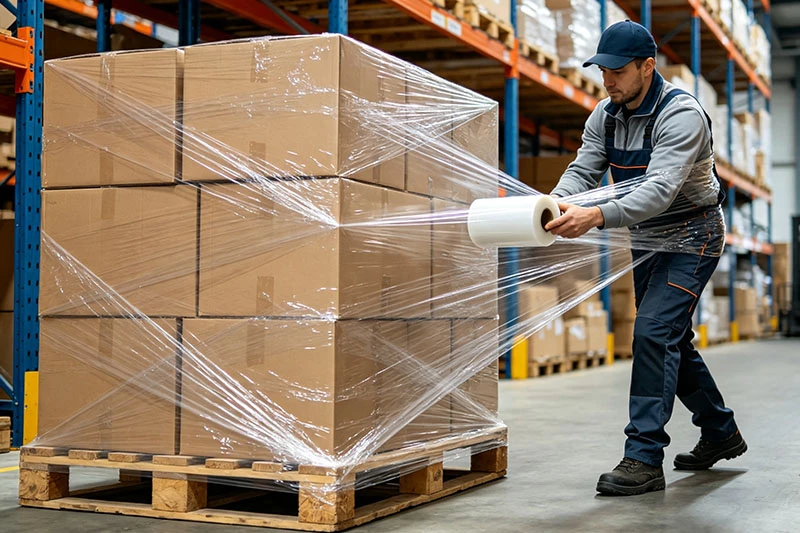
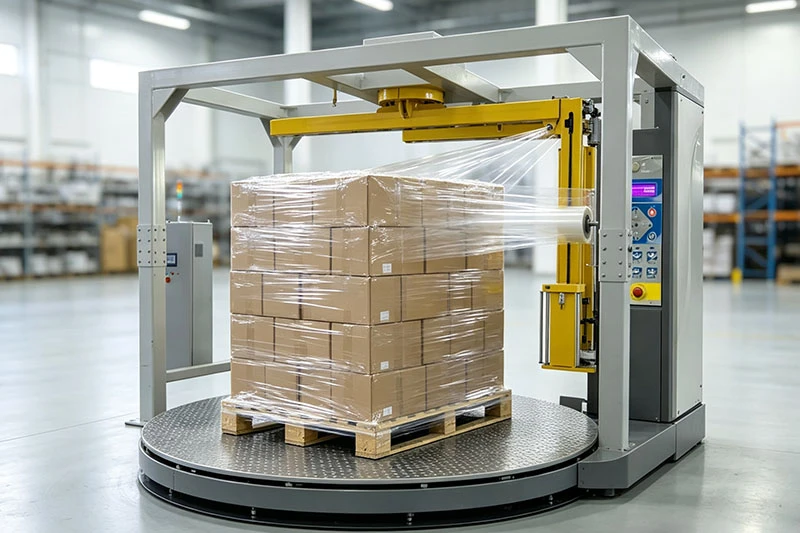
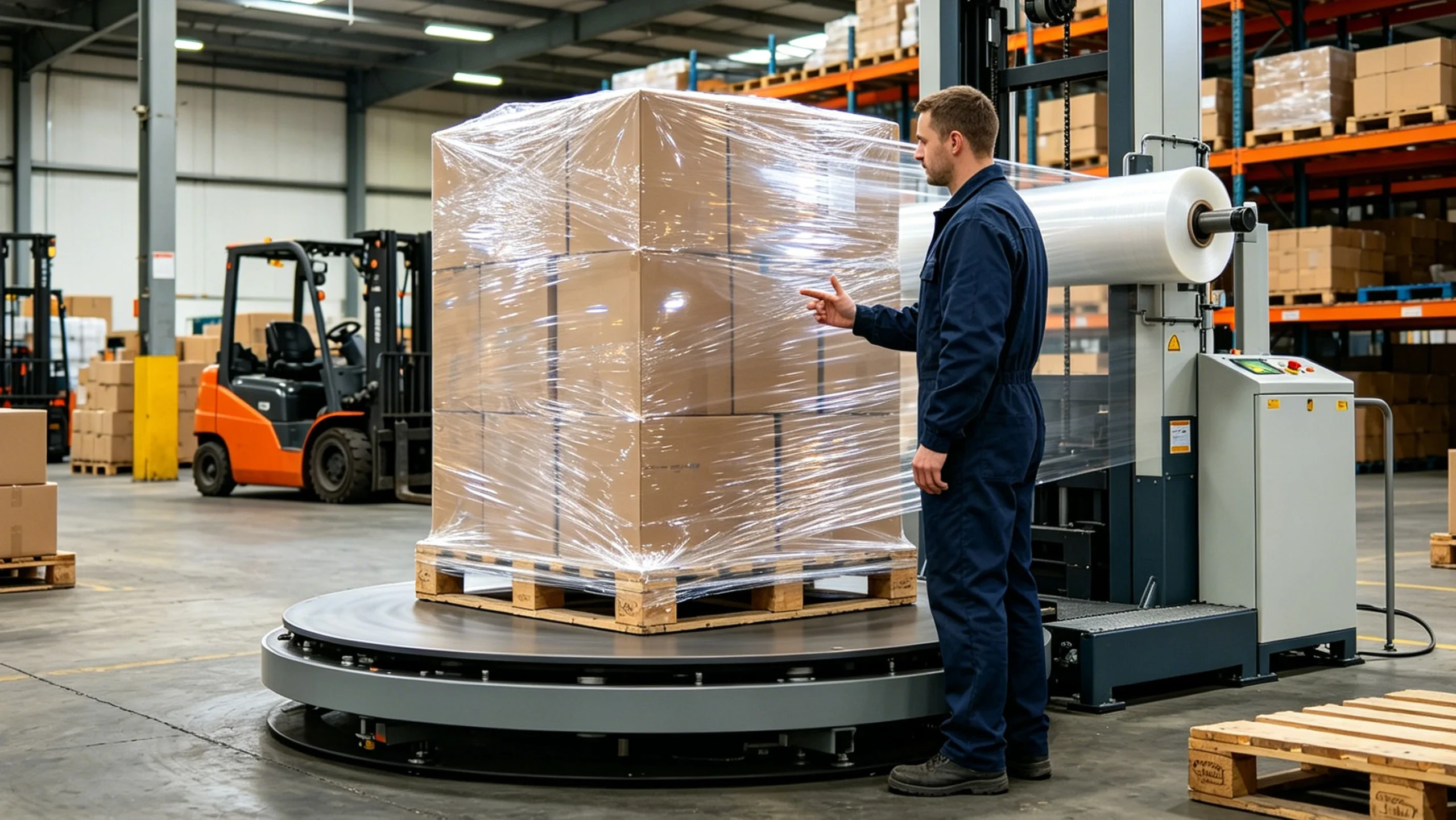
- Applications: Ideal for heavy-duty pallet wrapping, cargo with sharp corners or edges, and high-speed pre-stretch automatic wrapping machines.
mLLDPE (Metallocene Stretch Film)
- Material Features: Produced using metallocene catalysts. It features a narrow molecular weight distribution and a highly regular chemical structure.
- Performance Upgrades: The absolute “gold standard” of stretch film. It boasts extreme toughness, superior puncture resistance, excellent optical clarity (transparency), and outstanding holding force—allowing it to be downgauged (made thinner) without sacrificing strength.
- Applications: High-end packaging requirements, high-speed fully automated wrapper lines, and export products targeting source-reduction and ultra-thin packaging specifications.
PCR / Biodegradable Eco-Friendly Film (Emerging Mainstream)
- Material Features:
- PCR (Post-Consumer Recycled): Reclaimed plastic is repelletized and blended with virgin resins at specific ratios (e.g., 30% to 50%).
- Bioafbreekbaar: Biodegradable masterbatches are added to traditional LLDPE, or bio-based materials are used to comply with stringent environmental and low-carbon import regulations in European and North American markets.
- Applications: Perfect for multinational supply chains with strict compliance targets for sustainability, carbon reduction, and green initiatives.
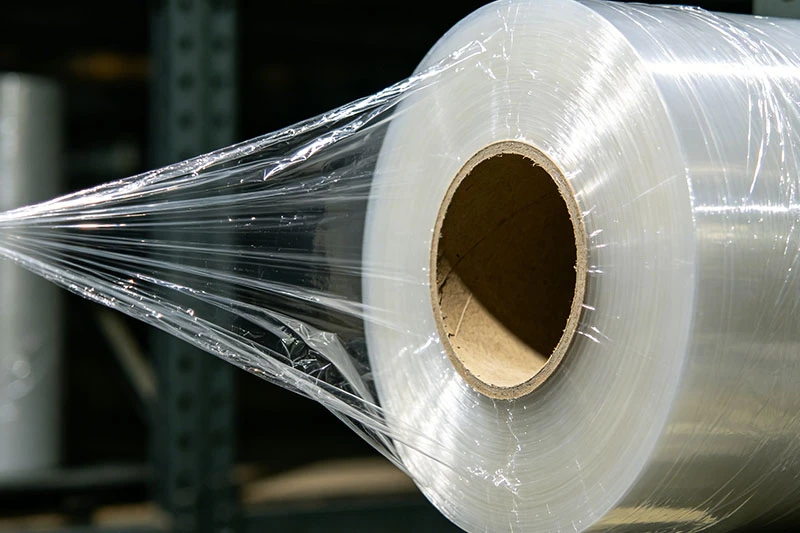
2. Core Performance Comparison
For a direct comparison, we can evaluate these four materials across five key dimensions—stretch ratio, puncture resistance, cling property, clarity, and cost:
| Key Metric | C4 Conventional Film | C6 / C8 High-Performance Film | mLLDPE Metallocene Film | PCR Recycled Eco-Film |
| Theoretical Pre-Stretch Ratio | 100% – 150% | 200% – 300% | 300% – 400%+ | Varies by blend (slightly lower than virgin material) |
| Puncture & Tear Resistance | Standard (prone to sharp-edge piercing) | Excellent (highly resistant to tearing) | Superior (extremely difficult to puncture) | Moderate (slightly reduced due to recycled impurities) |
| Clarity & Gloss | Average | Good | Outstanding (crystal clear) | Slight haze or minor yellowish tint |
| Load-Holding Force | Moderate (prone to loosening) | High | Superb (retains tight tension long-term) | High |
| Comprehensive Cost | Highly Economical (Lowest) | Moderate | Higher (but offset by downgauging potential) | Involves technology or certification premiums |
3. Manufacturing Process Dimension: Cast vs. Blown Film
Beyond raw materials, the manufacturing process also fundamentally dictates film performance and application scenarios:
- Cast Stretch Film:
- Features: Dominates the market, accounting for over 80% of total production. It typically utilizes 3-layer, 5-layer, or even 7-layer co-extrusion technology.
- Pros: Exceptional clarity, highly uniform thickness gauge, extremely low unwind noise (silent film), and excellent double-sided cling.
- Cons: Excellent longitudinal (machine direction) stretch, but transverse (cross-direction) tear resistance is slightly inferior to blown film.
- Geblaasde rekfilm:
- Features: Produced via a blown film die, where the resin is inflated into a bubble and cooled by an air ring.
- Pros: Molecules are oriented in both machine and cross directions, yielding unmatched puncture and tear resistance in all directions.
- Cons: Lower clarity compared to cast film, less uniform thickness, and due to the nature of the tackifier additives, it produces high noise levels during unwind.

💡 Sourcing & Application Recommendations
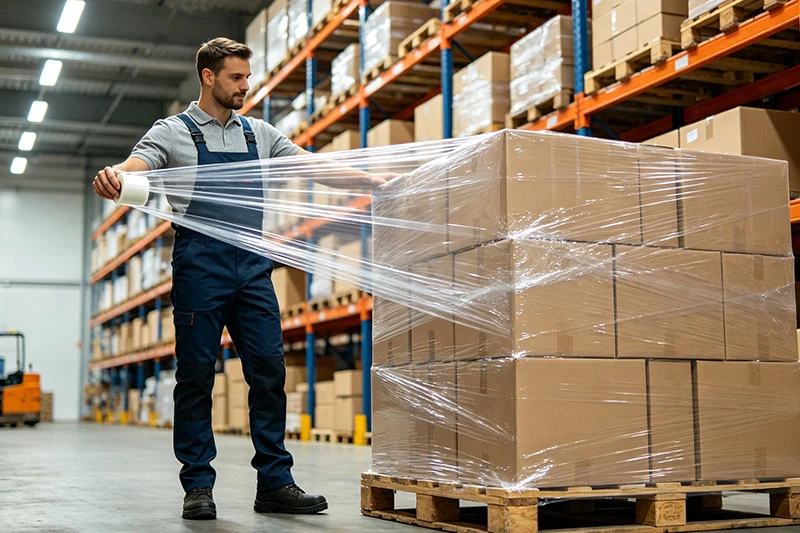
- Manual Wrapping / Light Loads: Opt for C4 Cast Film to achieve the best cost efficiency.
- Semi-Automatic / Standard Machine Wrapping (Stretch Ratio < 250%): Choose C6/C8 Cast Film to perfectly balance strength and cost-effectiveness.
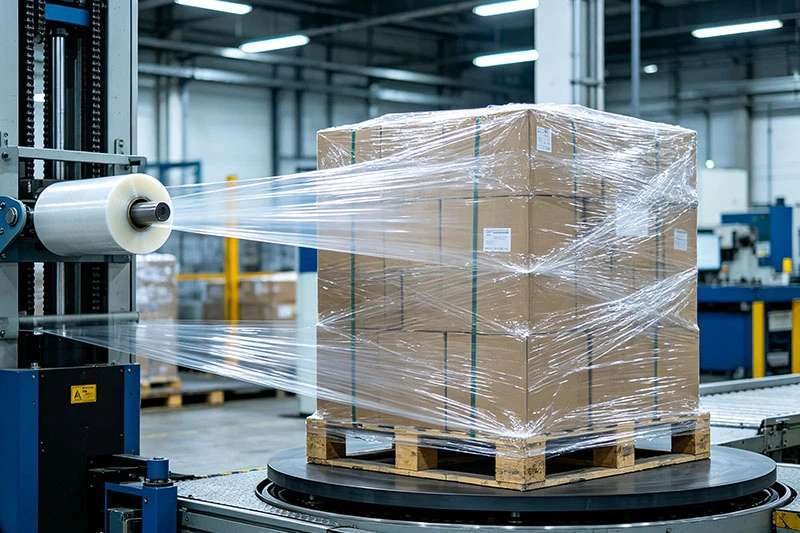
- High-Speed, Fully Automated Unmanned Lines (Pre-Stretch > 300%): High-spec composite films rich in mLLDPE (Metallocene) are mandatory to ensure smooth operations without film breaks, optimizing overall throughput.
- Exporting to North American / European Markets with Green Barriers: Prioritize PCR Recycled Stretch Films with proper certifications to meet local plastic tax exemptions and environmental compliance requirements.