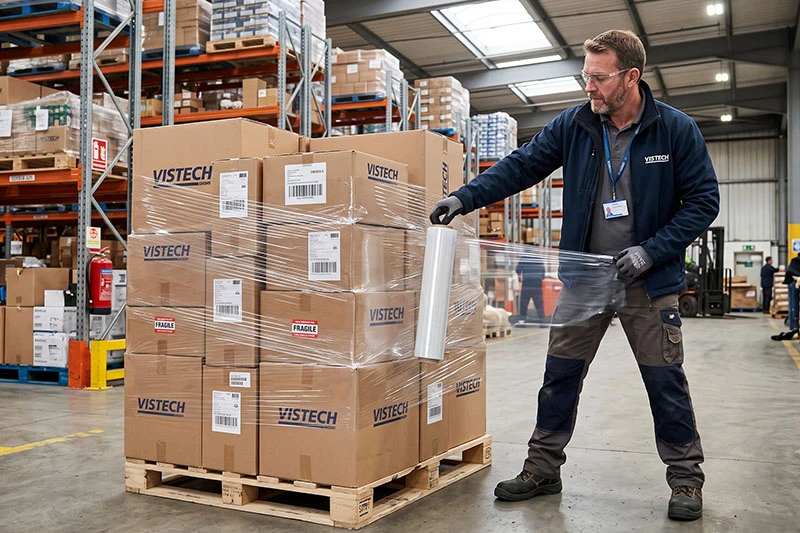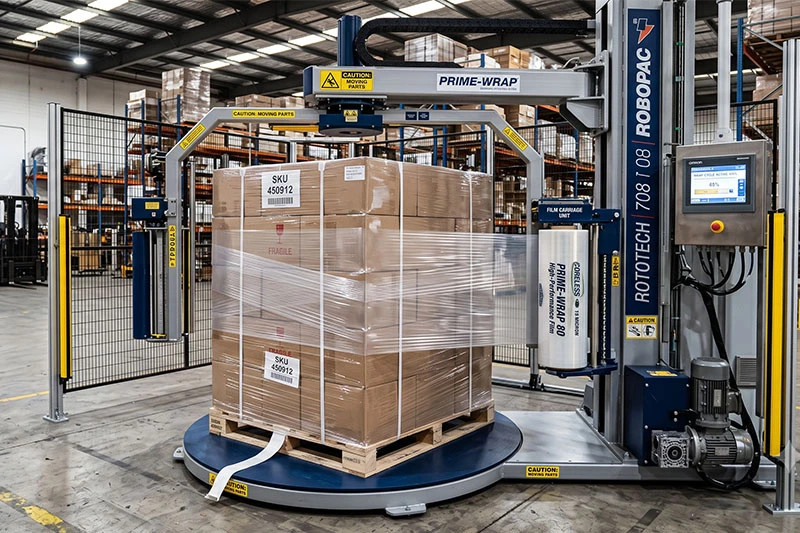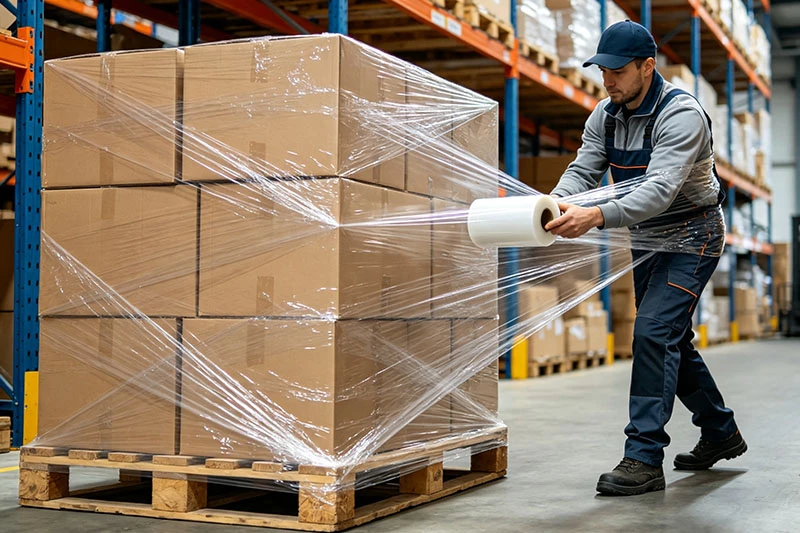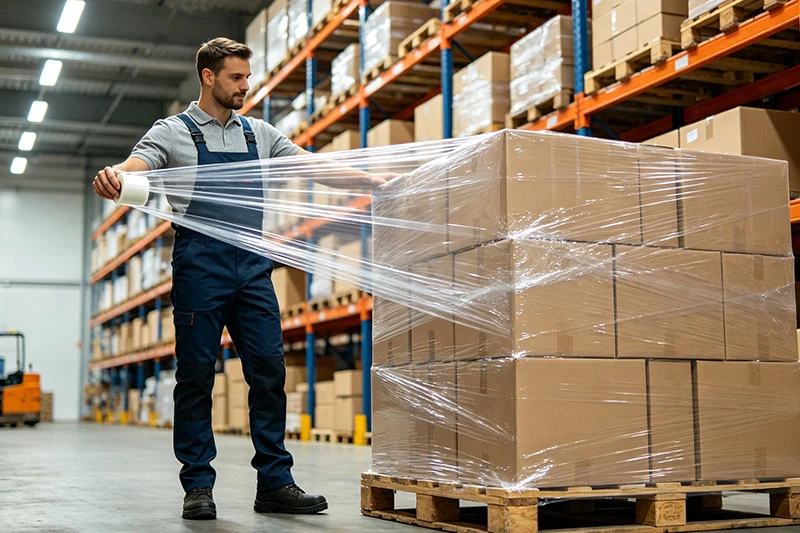


進んでいくと 2026, 世界の物流および倉庫部門は前例のない転換点に直面しています. 欧州連合の最新の包装および包装廃棄物規制などの厳しい環境規制に基づくもの (PPWR) 拡大生産者責任の拡大 (EPR) 料金 — 持続可能性はもはや企業の選択ではありません; それは法的および財政上の義務です.
For supply chain managers, the biggest challenge lies in the transit packaging sector. Traditional heavy-gauge plastics are facing heavy penalties. To avoid carbon taxes and maintain eco-compliance, forward-thinking enterprises are rapidly transitioning to sustainable stretch film solutions, specifically targeting PCR stretch film そして bio-based stretch film.
1. The Carbon Tax Impact on Conventional Pallet Wrapping
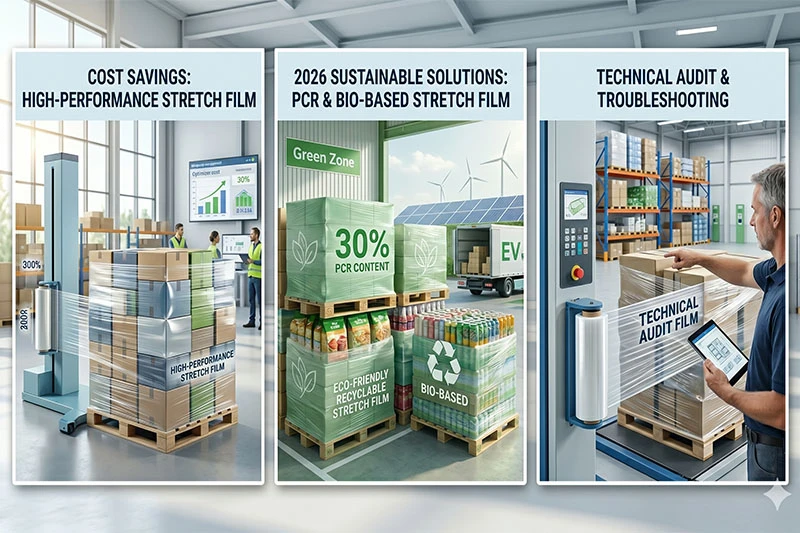
For years, the formula for securing industrial pallets was simple: use more plastic to ensure maximum load containment. しかし, in 2026, this approach triggers massive financial penalties in international trade. Countries worldwide are enforcing high taxes on single-use plastics that contain less than 30% recycled material.
This is where the demand for a certified eco-friendly stretch film skyrockets. Companies shipping goods to international hubs must now present data-verified, circular packaging. The goal is to reduce carbon footprints without risking product damage during multi-modal transit.
2. Demystifying PCR Stretch Film: Balancing Circularity with Performance
Post-Consumer Recycled (PCR) resins are the cornerstone of the circular packaging economy. A premium PCR stretch film incorporates recycled plastic waste—such as used agricultural films and household plastics—back into the production loop.
しかし, historical technical barriers made many procurement managers hesitant. Does incorporating recycled content sacrifice the film’s mechanical properties? In the past, high-percentage PCR loops suffered from gels, reduced stretchability, and frequent snapping on high-speed automated wrappers.
The 2026 Nanotechnology Breakthrough
To solve this, advanced manufacturers have introduced nano eco stretch film. By utilizing 55-layer or even 67-layer micro-layer co-extrusion technology, engineers can sandwich the PCR content into the inner layers while keeping virgin or metallocene-blend resins on the outer skins.
The Result: Modern high-performance eco stretch film containing 30% to 50% PCR can now achieve a pre-stretch rate of up to 250%–300%, matching the puncture resistance and holding force of 100% virgin materials.
3. Bio-based Stretch Film vs. Biodegradable Options: The Reality Check
Another major trend dominating the 2026 market is the adoption of bio-based stretch film. Sourced from renewable biological resources such as sugar cane, cornstarch, or vegetable oils, these films decouple packaging from fossil fuels right at the origin.
When optimizing your website for Google, it’s vital to clarify a common industry confusion that search algorithms closely monitor for greenwashing signals: bio-based does not always mean compostable.
| Film Type | Material Origin | End-of-Life Pathway | Best Application |
| Bio-based Stretch Film | Renewable plant-based ethanol | 100% Recyclable in standard LDPE streams | High-volume industrial pallets, closed-loop logistics |
| 生分解性ストレッチフィルム | Compostable polymers (PLA/PBAT) | Requires industrial composting facilities | Niche agricultural wraps, specific organics logistics |
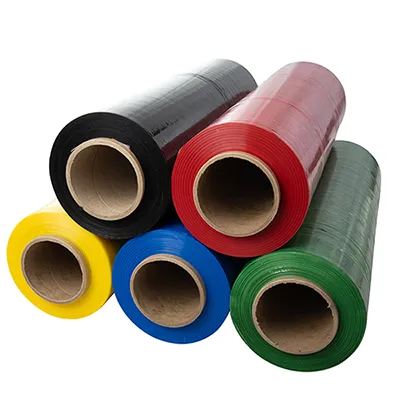
In 2026, global infrastructure heavily favors recyclable stretch film. Because industrial composting facilities for flexible plastics remain scarce, global brands prefer bio-based green stretch film that drops seamlessly into existing polyethylene recycling systems without contaminating the stream.
4. Downgauging: The Silent Champion of Sustainable Packaging
True sustainability is not just about changing the raw material; it’s about reduction. Film downgauging—the process of reducing the thickness of the film while maintaining or increasing its structural strength—is a key trend.
By switching from a traditional 23-micron conventional wrap to an 11-micron to 15-micron ultra-thin high-performance stretch film, a warehouse can immediately cut its overall plastic consumption by up to 50% by weight. This directly reduces EPR compliance costs and slashes scope 3 emissions across the supply chain.
Conclusion: How to Future-Proof Your Supply Chain
As international buyers audit their vendors for carbon compliance, upgrading your transit packaging is the lowest-hanging fruit. Transitioning to a verified machine eco stretch film or a high-tensile green stretch film guarantees that your shipments will pass customs without eco-tax penalties while protecting your goods across global trade lanes.