

Während wir durchgehen 2026, Die globale Logistik- und Lagerbranche steht vor einem beispiellosen Wendepunkt. Angetrieben durch strenge Umweltauflagen – wie die aktualisierte Verpackungs- und Verpackungsabfallverordnung der Europäischen Union (PPWR) und eskalierende erweiterte Herstellerverantwortung (EPR) Gebühren – Nachhaltigkeit ist keine Unternehmensentscheidung mehr; Es handelt sich um eine rechtliche und finanzielle Notwendigkeit.
Für Supply-Chain-Manager, Die größte Herausforderung liegt im Bereich der Transportverpackungen. Herkömmliche dicke Kunststoffe müssen mit hohen Strafen rechnen. Um CO2-Steuern zu vermeiden und die Einhaltung der Umweltvorschriften aufrechtzuerhalten, zukunftsorientierte Unternehmen verändern sich rasch nachhaltige Stretchfolie Lösungen, gezielt gezielt einsetzen PCR-Stretchfolie Und biobasierte Stretchfolie.
1. Die Auswirkungen der CO2-Steuer auf die konventionelle Palettenverpackung
Jahrelang, Die Formel zur Sicherung von Industriepaletten war einfach: Verwenden Sie mehr Kunststoff, um eine maximale Ladungssicherung zu gewährleisten. Jedoch, In 2026, Dieses Vorgehen führt zu massiven finanziellen Strafen im internationalen Handel. Weltweit erheben Länder hohe Steuern auf Einwegkunststoffe, die weniger als enthalten 30% recyceltes Material.
Hier besteht die Nachfrage nach einem zertifizierten umweltfreundliche Stretchfolie explodiert. Unternehmen, die Waren an internationale Hubs liefern, müssen nun datengeprüft vorlegen, Kreislaufverpackung. Ziel ist es, den CO2-Fußabdruck zu reduzieren, ohne das Risiko einer Produktschädigung beim multimodalen Transport einzugehen.
2. PCR-Stretchfolie entmystifizieren: Zirkularität mit Leistung in Einklang bringen
Post-Consumer-Recycling (PCR) Harze sind der Grundstein der Kreislaufwirtschaft für Verpackungen. Eine Prämie PCR-Stretchfolie bezieht recycelte Kunststoffabfälle – wie gebrauchte Agrarfolien und Haushaltskunststoffe – wieder in den Produktionskreislauf ein.
Jedoch, Historische technische Barrieren ließen viele Einkaufsmanager zögern. Beeinträchtigt die Einbeziehung von Recyclinganteilen die mechanischen Eigenschaften der Folie?? In der Vergangenheit, Hochprozentige PCR-Schleifen litten unter Gelen, verminderte Dehnbarkeit, und häufiges Einrasten bei automatisierten Hochgeschwindigkeitswicklern.
Der 2026 Durchbruch in der Nanotechnologie
Um das zu lösen, fortgeschrittene Hersteller eingeführt haben Nano-Öko-Stretchfolie. Durch den Einsatz der 55-schichtigen oder sogar 67-schichtigen Mikroschicht-Coextrusionstechnologie, Ingenieure können den PCR-Inhalt in die Innenschichten einbauen, während auf den Außenhäuten reine Harze oder Harze aus Metallocenmischungen verbleiben.
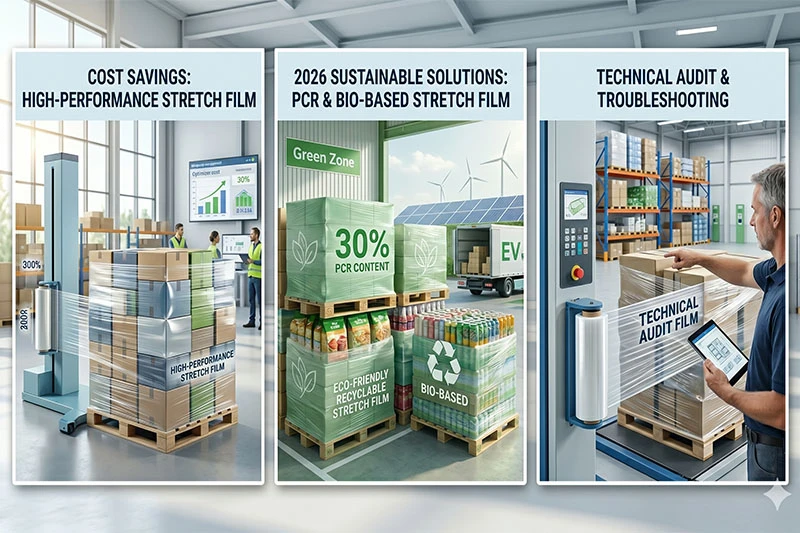
Das Ergebnis: Modern Hochleistungs-Öko-Stretchfolie enthaltend 30% Zu 50% PCR kann jetzt eine Pre-Stretch-Rate von bis zu 250–300 % erreichen, passend zur Durchstoßfestigkeit und Haltekraft von 100% Neuware.
3. Biobasierte Stretchfolie vs. Biologisch abbaubare Optionen: Der Realitätscheck
Ein weiterer wichtiger Trend dominiert die 2026 Markt ist die Einführung von biobasierte Stretchfolie. Hergestellt aus erneuerbaren biologischen Ressourcen wie Zuckerrohr, Maisstärke, oder Pflanzenöle, Diese Folien entkoppeln Verpackungen direkt am Ursprungsort von fossilen Brennstoffen.
Bei der Optimierung Ihrer Website für Google, Es ist wichtig, eine weit verbreitete Verwirrung in der Branche zu klären, dass Suchalgorithmen genau auf Greenwashing-Signale achten: Biobasiert bedeutet nicht immer kompostierbar.
| Filmtyp | Materieller Ursprung | End-of-Life-Pfad | Beste Anwendung |
| Biobasierte Stretchfolie | Erneuerbares pflanzliches Ethanol | 100% Recycelbar in Standard-LDPE-Strömen | Großvolumige Industriepaletten, Closed-Loop-Logistik |
| Biologisch abbaubare Stretchfolie | Kompostierbare Polymere (PLA/PBAT) | Erfordert industrielle Kompostieranlagen | Nischenverpackungen für die Landwirtschaft, Spezifische Bio-Logistik |
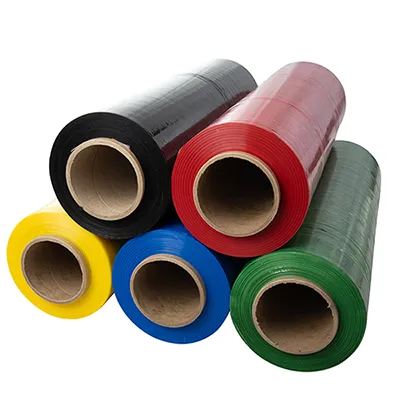
In 2026, Die globale Infrastruktur ist stark begünstigt recycelbare Stretchfolie. Denn industrielle Kompostieranlagen für flexible Kunststoffe bleiben rar, globale Marken bevorzugen biobasierte grüne Stretchfolie das nahtlos in bestehende Polyethylen-Recyclingsysteme gelangt, ohne den Strom zu verunreinigen.
4. Verkleinerung: Der stille Verfechter nachhaltiger Verpackungen
Bei echter Nachhaltigkeit geht es nicht nur darum, den Rohstoff zu verändern; es geht um Reduktion. Die Reduzierung der Foliendicke – der Prozess der Reduzierung der Foliendicke bei gleichzeitiger Beibehaltung oder Erhöhung ihrer strukturellen Festigkeit – ist ein wichtiger Trend.
Durch den Wechsel von einer herkömmlichen 23-Mikron-Folie zu einer 11- bis 15-Mikron-Folie ultradünne Hochleistungs-Stretchfolie, Ein Lager kann seinen gesamten Kunststoffverbrauch sofort um bis zu reduzieren 50% nach Gewicht. Dies reduziert direkt die EPR-Compliance-Kosten und verringert den Umfang 3 Emissionen in der gesamten Lieferkette.
Abschluss: So machen Sie Ihre Lieferkette zukunftssicher
Da internationale Käufer ihre Lieferanten auf die Einhaltung der CO2-Emissionen prüfen, Die Modernisierung Ihrer Transportverpackung ist die am wenigsten hängende Frucht. Übergang zu einem verifizierten Maschinelle Öko-Stretchfolie oder ein hochfestes grüne Stretchfolie garantiert, dass Ihre Sendungen den Zoll ohne Umweltsteuerstrafen passieren und gleichzeitig Ihre Waren über globale Handelsrouten hinweg geschützt sind.