

Als Einkaufsleiter oder Lagerleiter, Sicherung des niedrigsten Preis für Stretchfolie scheint ein schneller Gewinn für Ihr Supply-Chain-Budget zu sein. Jedoch, Der Markt für Industrieverpackungen ist mit versteckten Kosten überschwemmt, die Ihre Gewinne stillschweigend schmälern können.
Wenn sich Ihre Paletten während des Transports verschieben, oder wenn Sie feststellen, dass Ihr Team die Rollen schneller durchläuft als erwartet, Sie tappen wahrscheinlich in die üblichen Verpackungsfallen. Dieser Leitfaden deckt das auf 5 Die häufigsten Fallstricke in großen Mengen Palettenstretchfolie Kaufabwicklung und stellt die genauen Formeln bereit, um sicherzustellen, dass Sie genau das bekommen, wofür Sie bezahlen.
Fangen 1: Der “Bruttogewicht” Illusion (Der Papierhülsen-Betrug)
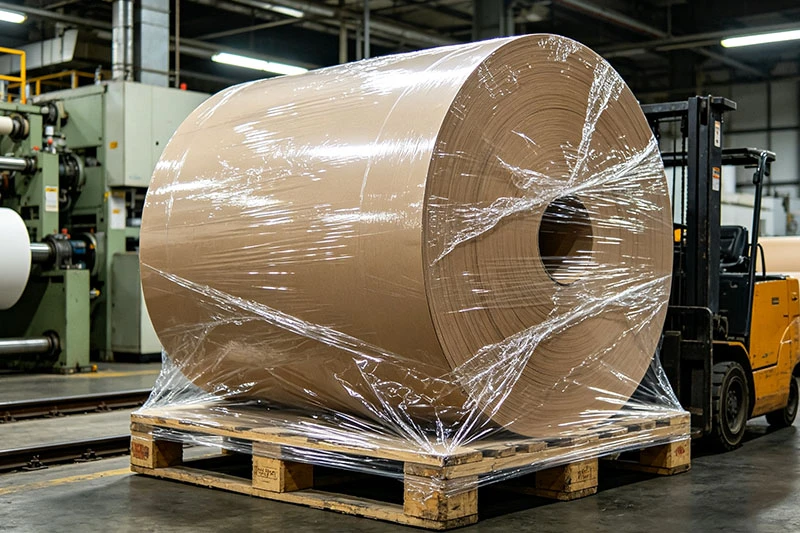
Die häufigste Falle in Handstretchfolie im Großhandel kauft nach Bruttogewicht statt nach Nettogewicht. Unseriös Hersteller von Stretchfolien geben oft einen unglaublich niedrigen Preis pro Rolle an, erhöhen aber heimlich die Dicke und das Gewicht des Kartonpapierkerns.
Die Realität: Man könnte meinen, dass man 5 kg funktionelles Produkt kauft PE-Kunststoff-Stretchfolie, aber 1,5 kg dieses Gesamtgewichts könnten einfach billig sein, schwerer Karton, der direkt in den Müll wandert.
💡 Die Formel des klugen Käufers: So berechnen Sie das tatsächliche Nettogewicht
Zum Vergleich von Zitaten verschiedener Anbieter von Stretchfolien genau, Berechnen Sie das tatsächliche Nettogewicht des Kunststoffs immer mit dieser Formel:
$$\Text{Nettogewicht} = \text{Bruttogewicht der Rolle} – \Text{Gewicht des Papierkerns}$$
$$\Text{Theoretisches Filmgewicht (kg)} = \text{Länge (M)} \times \text{Breite (M)} \times \text{Dicke (mm)} \times \text{Dichte (0.92 für LLDPE)} \mal 1000$$
Wenn das vom Lieferanten gelieferte Gewicht deutlich unter dem theoretischen Gewicht liegt, Sie kürzen Sie entweder in der Länge oder verlangen zu viel für die Pappe.
Fangen 2: Verpasst Nano-Mehrschicht-Stretchfolie Technologie
Viele Käufer bleiben beim traditionellen 20-Mikron-Material (80 Messgerät) Verpackungsstretchfolie Weil “Das ist es, was wir immer verwendet haben.” Jedoch, Sich auf veraltete einschichtige oder dreischichtige Folien zu verlassen, kostet Sie Geld.
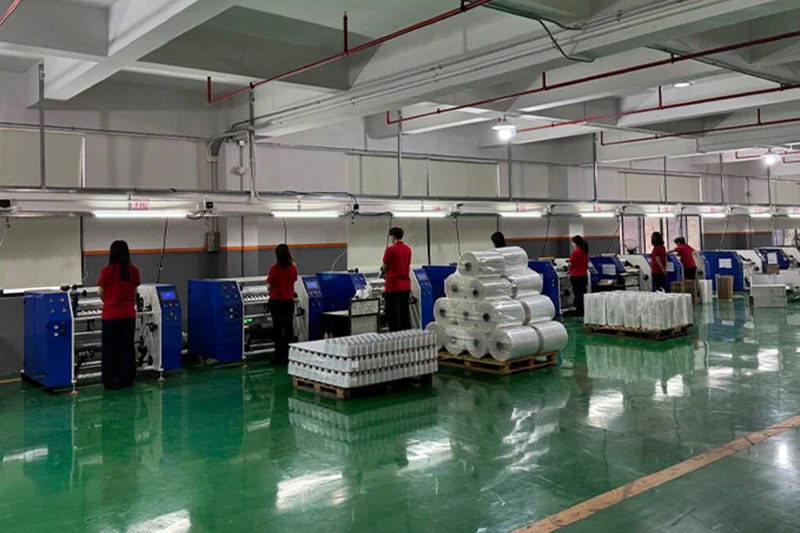
Modern Produktionslinien für Stretchfolie Verwenden Sie 9 Schichten, 33-Schicht, oder sogar Nanoschicht-Coextrusionstechnologie.
- Der Nano-Vorteil: Ein 12-Mikrometer Nano-Stretchfolie kann eine höhere Rückhaltekraft und Durchstoßfestigkeit bieten als ein herkömmliches, dickere 20-Mikron-Folie.
- Die Ersparnisse: Upgrade auf eine Hochleistungsversion, verkleinert Polyethylen-Stretchfolie kann Ihren physischen Materialverbrauch um bis zu reduzieren 30% Zu 50% ohne Einbußen bei der Ladungsstabilität.
Fangen 3: Ignorieren der “Vordehnungsverhältnis” von Maschinenstretchfolie
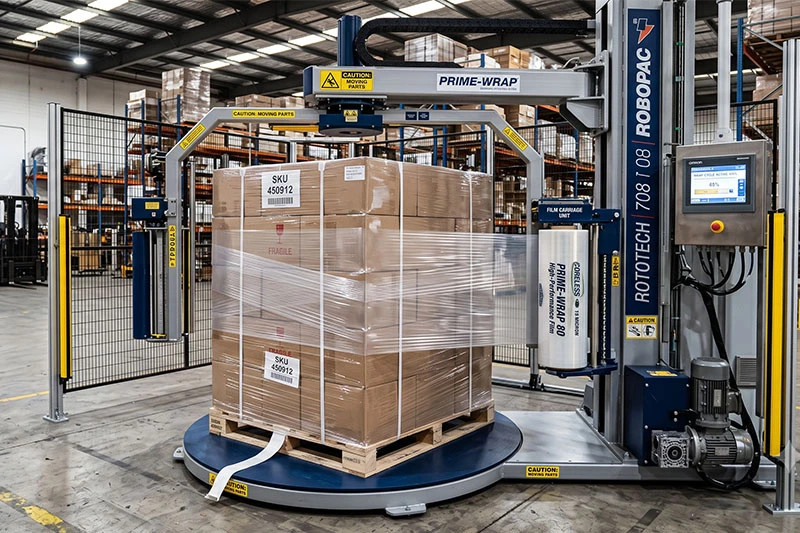
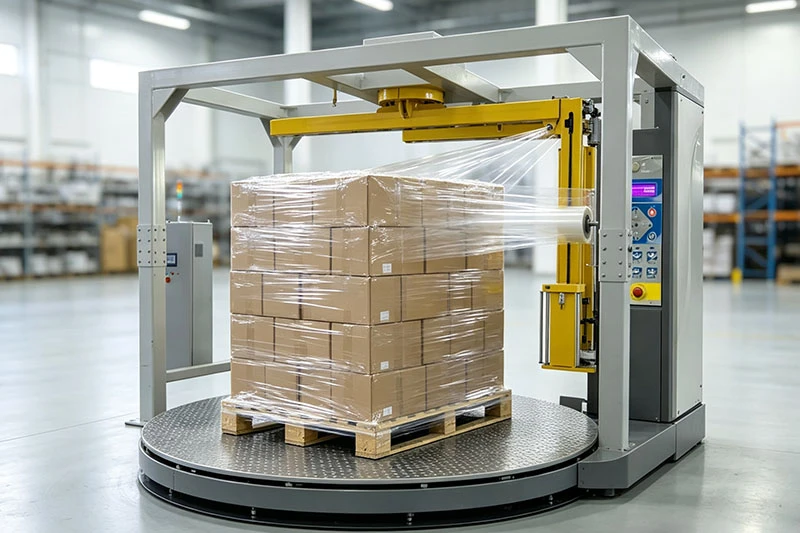
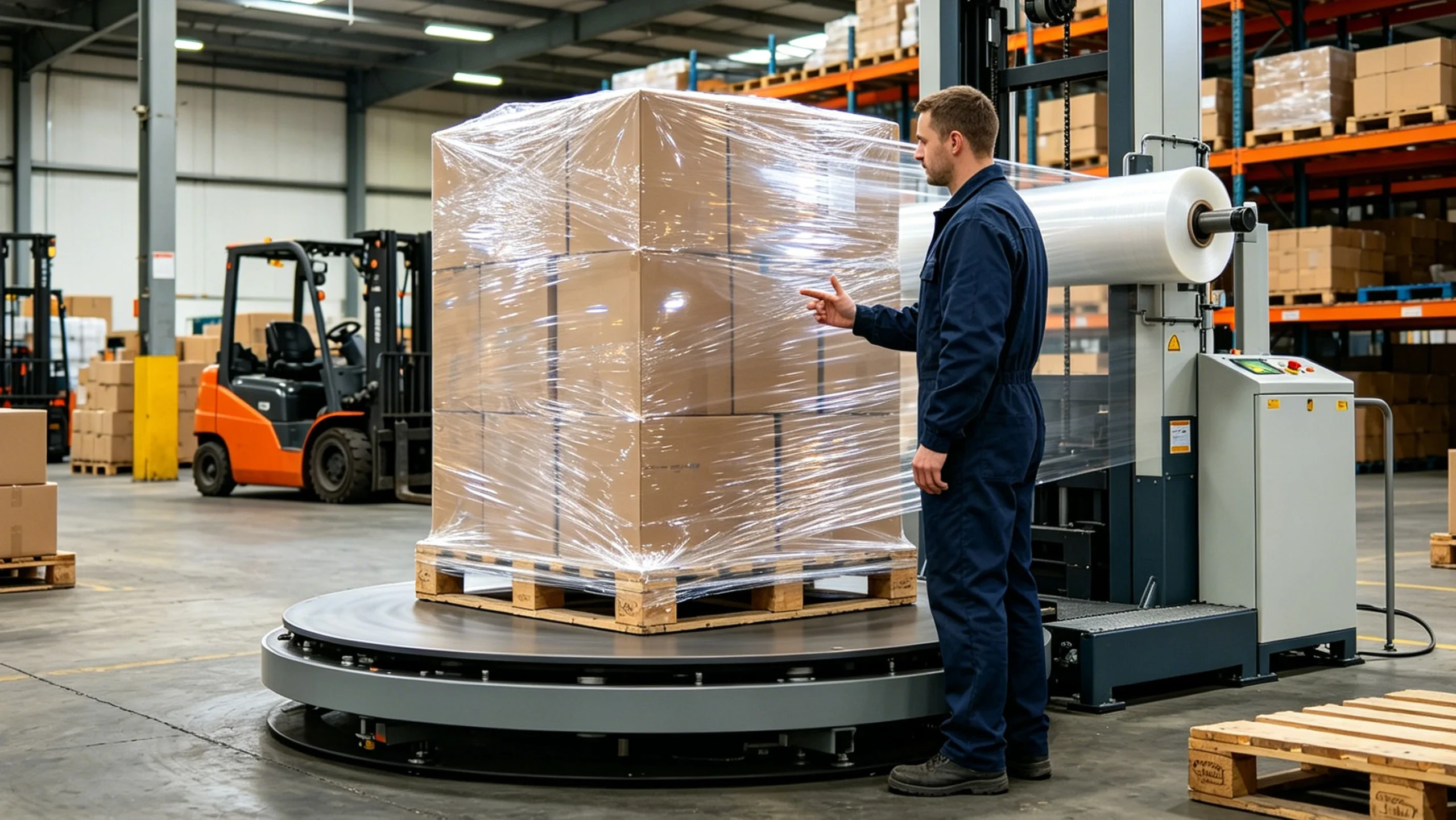
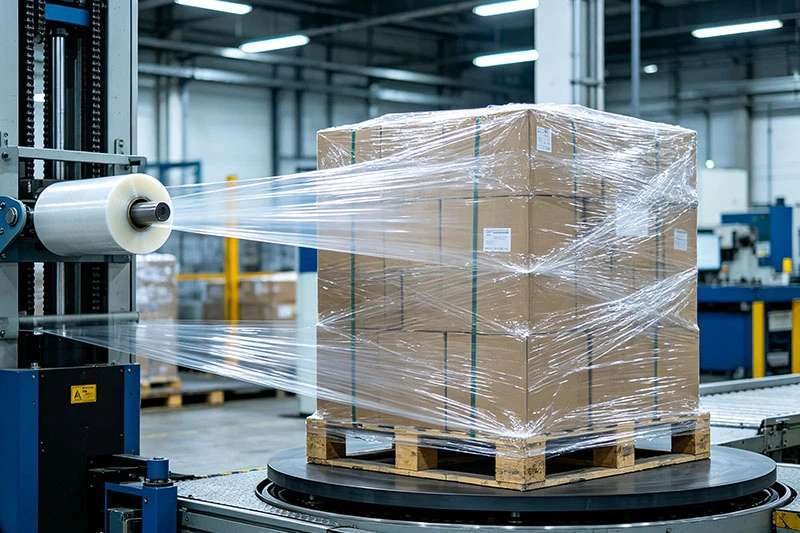
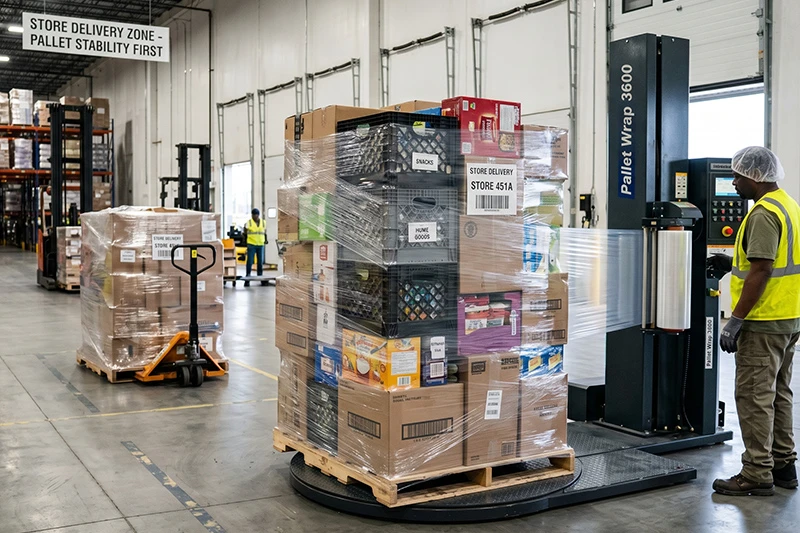
Wenn Sie eine automatisierte Funktion verwenden Palettenwickelmaschine aber minderwertigen Film kaufen, Sie verschwenden riesige Mengen an Material.
Standard, billiger Film reißt, wenn er überstreckt wird 100%. Umgekehrt, Prämie Stretchfolie in Maschinenqualität ist mit einem konstruiert hohes Vordehnungsverhältnis von 250% Zu 350%.
| Filmqualität | Pre-Stretch-Potenzial | Leistung in der Praxis |
| Standardklasse | 100% – 150% | Spröde, bricht leicht, erfordert mehr Verpackungen pro Palette. |
| Hochleistungs-Maschinenfolie | 250% – 350%+ | Außergewöhnliche Durchstoßfestigkeit, optimale Haltekraft, senkt die Kosten pro Palette erheblich. |
Durch die Investition in hochwertige Maschinelle Stretchfolie, Aus einem Meter Rohfolie auf der Rolle entsteht 3.5 Meter Schutzfolie auf Ihrer Palette.
Fangen 4: Verwechslung von Gussfolie mit Blasfolie
Nicht alle Industrie-Stretchfolien sind gleich geschaffen. Der Kauf des falschen Folientyps für Ihre spezifische Ladung führt zu fehlerhaften Sendungen.
- Gegossene Stretchfolie: Extrem klar, leise im abgewickelten Zustand, und zeichnet sich durch eine hervorragende Glanzästhetik aus. Es ist perfekt für Uniform, Doppelt gestapelte Paletten ohne scharfe Kanten.
- Geblasene Stretchfolie: Hat ein verschwommenes Aussehen und ist laut, wenn es abgewickelt wird, besitzt aber eine unübertroffene Reißfestigkeit und Anti-Pannen-Eigenschaften. Wenn Sie schwere Ziegel einwickeln, unregelmäßige Maschinen, oder Kisten mit scharfen Ecken, Sie müssen ein Hochleistungsmodell besorgen geblasene industrielle Stretchfolie.
Fangen 5: Konzentrieren Sie sich auf “Preis pro Rolle” Anstatt “Preis pro Palette verpackt”
Die ultimative Kennzahl für jeden Beschaffungsprofi sollte nicht sein, wie viel eine einzelne Filmrolle kostet. Der wahre KPI ist die Gesamtkosten für die sichere Verpackung einer Palette.
Ein günstiger, Eine Rolle mit geringer Ergiebigkeit, die ständig reißt, zwingt Ihr Lagerpersonal dazu, die Palette mehrmals einzuwickeln, nur um genügend Rückhaltekraft zu erhalten. Daraus ergibt sich:
- Erhöhte Arbeitsausfallzeiten.
- Höhere Materialverschwendung.
- Erhöhtes Risiko einer Produktbeschädigung während des Transports.
Fordern Sie immer eine Musterrolle von einem potenziellen Kunden an Hersteller von Stretchfolien um einen Live-Test in Ihrer Lagerhalle durchzuführen. Messen Sie, wie viele Paletten eine Rolle erfolgreich sichern kann, bevor Sie sich die Rechnung ansehen.
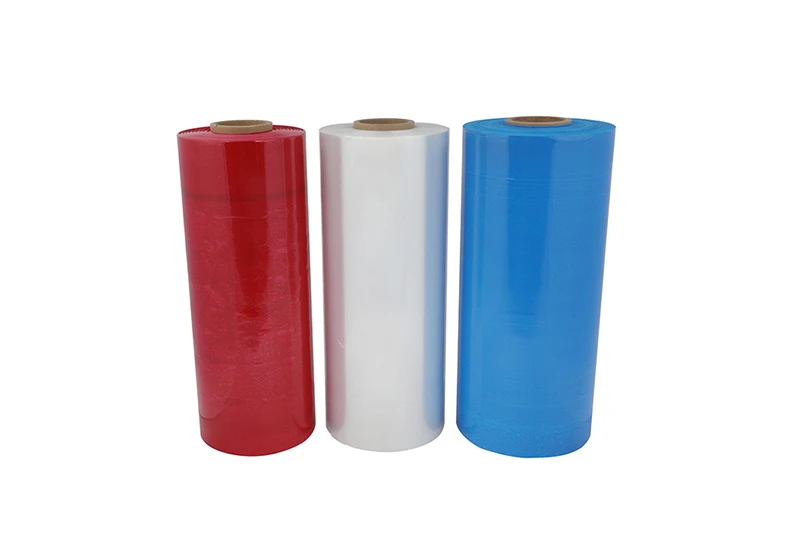
Wichtige Erkenntnisse für die globale Beschaffung
Bei der Beschaffung von einem internationalen Unternehmen Stretchfolienfabrik, Unterzeichnen Sie nicht einfach die günstigste Rechnung. Geben Sie das genaue an Spezifikationen für Stretchfolien Du brauchst: Fordern Sie das genaue Nettogewicht an, das genaue Kerngewicht, die genaue Polymerzusammensetzung (LLDPE-Harz), und die garantierte Vordehnungsfähigkeit.
Die Partnerschaft mit einem transparenten Hersteller, der das Nettogewicht und die fortschrittliche Technologie zur Reduzierung der Dicke in den Vordergrund stellt, ist Ihr schnellster Weg zu echter Lagerkosteneffizienz.