

Selecting the right machine stretch film requires matching the film’s mechanical properties with your automatic pallet wrapping machine’s pre-stretch system, rotation speed, and load profile. Using an incompatible film leads to frequent film breakage, machine downtime, insufficient containment force, and higher packaging costs per pallet.
To achieve optimal performance on high-throughput packaging lines, packaging engineers and procurement managers must evaluate three core variables: the equipment mechanism (turntable, rotary arm, or orbital), the powered pre-stretch ratio (typically ranging from 150% to 300%+), and the required film thickness (gauge or microns). This guide explains how to align these factors to maximize yield, prevent line stoppages, and optimize unitization costs.
Optimizing Automated Packaging: Why Machine Stretch Film Compatibility Matters
High-speed automated wrapping lines require consistent film performance to maintain continuous operation. Standard utility films or improperly specified machine wrap cannot withstand the high mechanical strain imposed by powered pre-stretch carriages operating at elevated speeds.
+-----------------------------------------------------------------------------------+
|                        FILM & MACHINE MISMATCH CONSEQUENCES                       |
+-----------------------------------------------------------------------------------+
| • High-Frequency Film Snapping   --> Unplanned Line Downtime & Manual Interventions |
| • Excessive Neckdown (Width Loss)--> Poor Top/Bottom Pallet Containment           |
| • Insufficient Retractive Force  --> Cargo Shifting & Transit Damage Claims       |
+-----------------------------------------------------------------------------------+
When film properties fail to match machine parameters, three immediate problems occur:
- Frequent Snapping: Film tearing forces operators to halt the conveyor line, re-thread the carriage, and restart the cycle, directly lowering hourly output.
- Poor Load Retention: Inadequate film stretch recovery allows pallets to loosen during transit, leading to product damage and safety hazards.
- Material Waste: Using thick, low-performance film on high-stretch machines results in incomplete elongation, forcing the operation to consume more plastic resin per pallet than necessary.
Transitioning to fully compatible machine stretch wrap products ensures predictable film elongation, maximum yield from every roll, and consistent load containment force across every shift.
Matching Film Properties with Pallet Wrapping Machine Types
Different pallet wrapping machines apply distinct physical forces to the stretch film during unwinding and wrapping. Understanding how your machinery operates helps determine the required tensile strength, puncture resistance, and cling profile.
Equipment Compatibility Matrix
| Machine Type | Typical Wrapping Speed (RPM) | Mechanical Strain Level | Key Film Requirements | Recommended Film Characteristics |
| Turntable Wrappers | 10 – 15 RPM | Moderate | Consistent unwind tension, tear propagation resistance | Standard to high-performance cast machine film |
| Rotary Arm Wrappers | 20 – 35 RPM | High | Exceptional puncture resistance, rapid cling tack, high strength | Multi-layer cast or blown machine stretch film |
| Orbital / Horizontal Wrappers | 30 – 80+ RPM | Very High | Superior tensile strength along edges, minimal neckdown | High-stiffness, high-gauge uniformity film |
Turntable Wrapping Machines
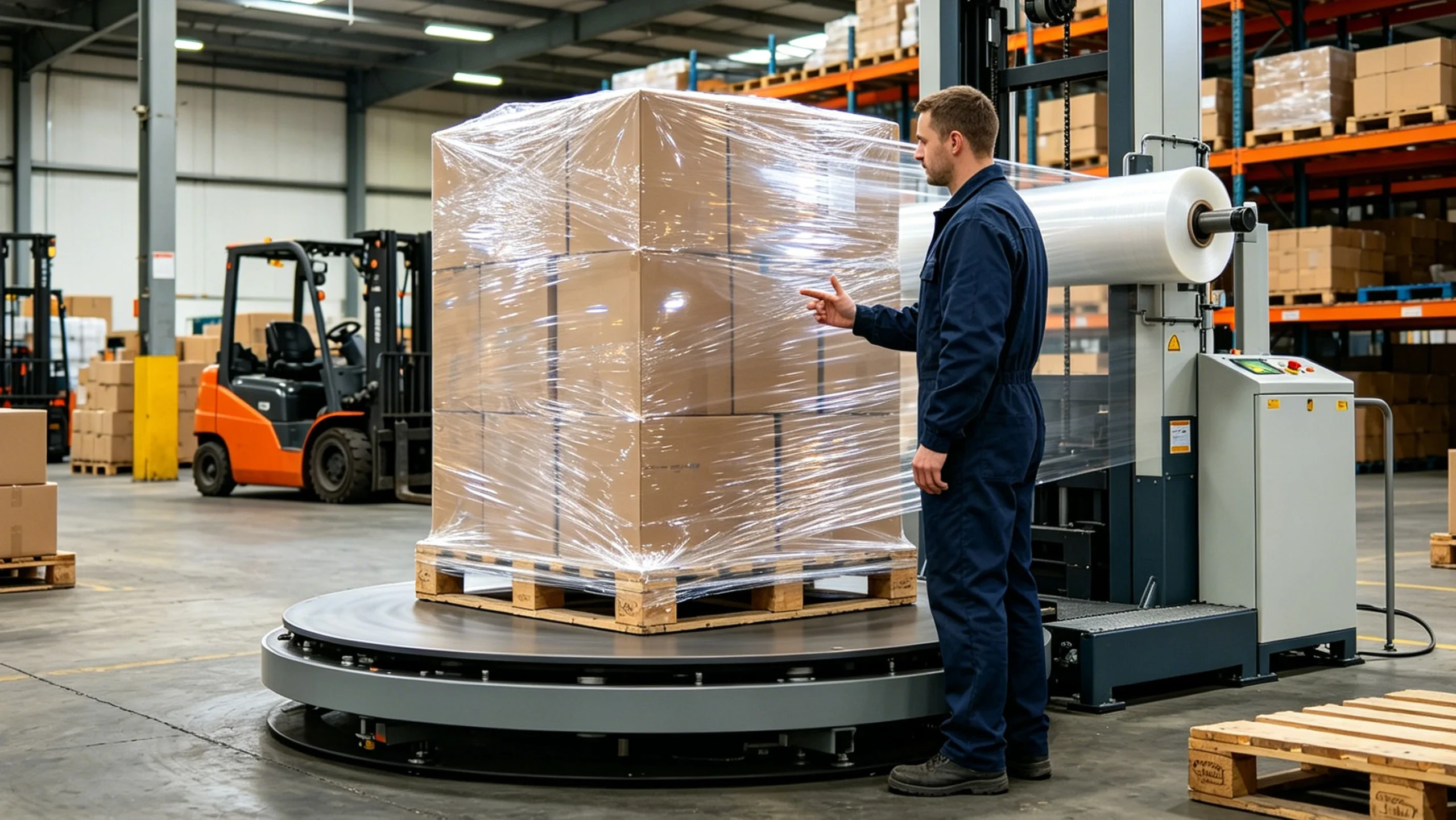
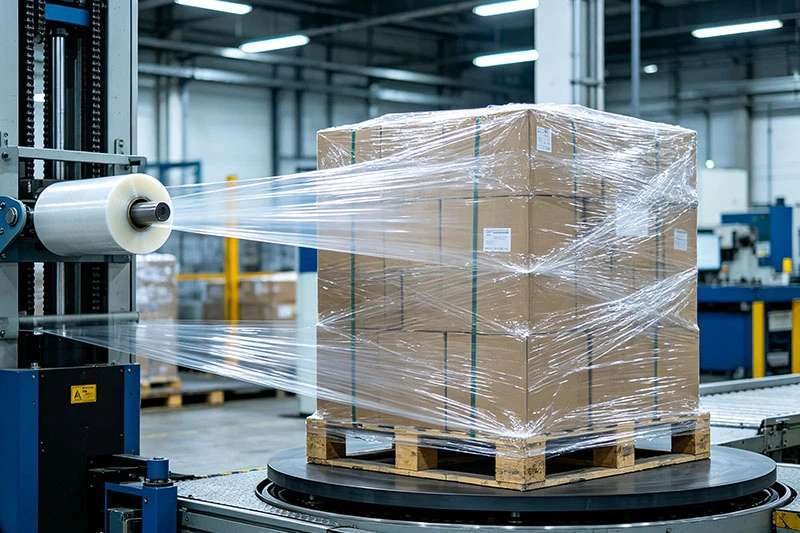
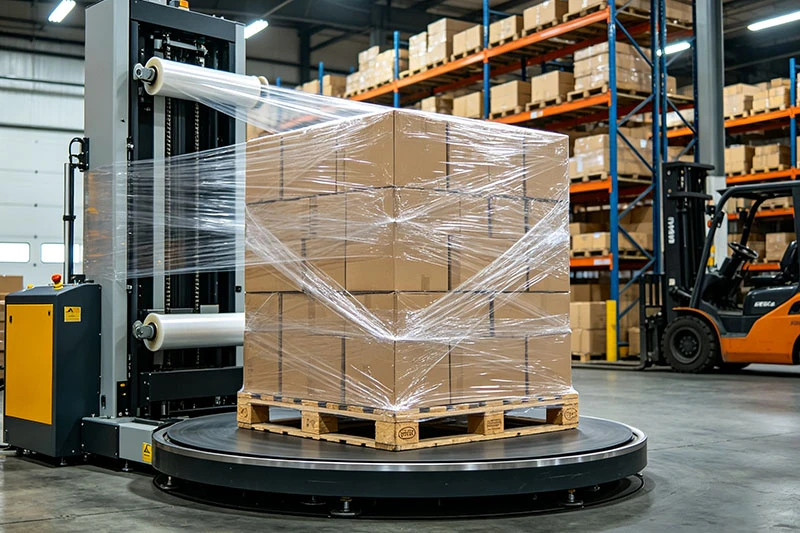
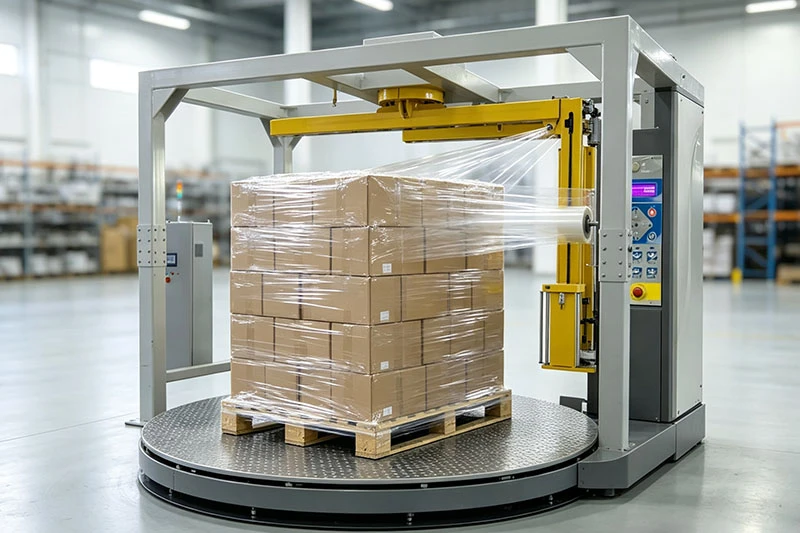
On turntable wrappers, the pallet rotates on a powered platform while the film carriage moves vertically on a fixed mast. Because the load itself spins, centrifugal force can disrupt unstable or lightweight goods. The film must deliver smooth unwind behavior with predictable tension control to prevent pulling light loads off the turntable.
Rotary Arm Wrappers
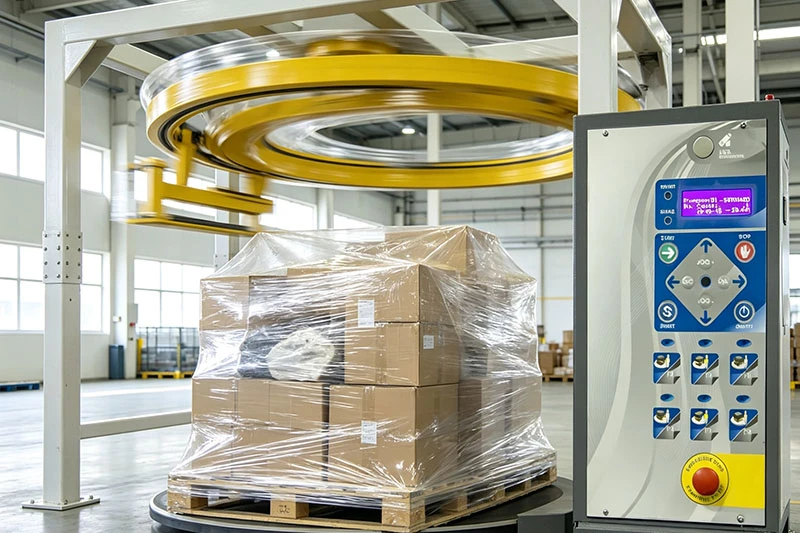
Rotary arm systems keep the pallet stationary while an overhead arm rotates around the load. These machines operate at higher RPMs, generating sudden tension spikes as the film passes over sharp pallet corners. High-performance machine stretch film used on rotary arms requires high corner-puncture resistance and fast-acting cling to lock the film tail securely at high line speeds.
Orbital (Horizontal) Wrappers
Orbital machines feed long products—such as carpet rolls, lumber, extruded aluminum, or piping—horizontally through a rotating ring. The film experiences intense edge stress during high-speed rotation. Film formulations for orbital wrapping require exceptional gauge uniformity to prevent edge tears as the film wraps tightly around continuous product profiles.
The Mechanics of Pre-Stretch Ratios: 150% to 300%+ Yield Engineering
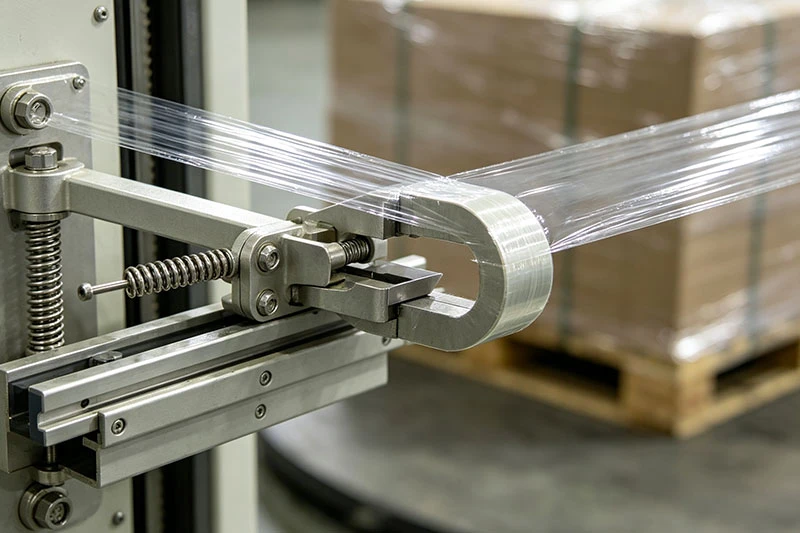
Powered pre-stretch carriages use two rollers turning at different speeds to stretch the film inside the carriage before applying it to the pallet. This process aligns the polyolefin polymer chains, increasing the film’s tensile strength while multiplying the usable length from each roll.
                            POWERED PRE-STRETCH CARRIAGE

       Roll Roller 1 (Slower)           Roller 2 (Faster)             Pallet
      +---+      +---+                    +---+                       +------+
      |   | ---> | A | -----------------> | B | --------------------> |      |
      +---+      +---+                    +---+                       +------+
                   |<--- Pre-Stretch Zone --->|
                   (e.g., 1m film becomes 3m at 200%)
Pre-Stretch Yield and Material Consumption Comparison
| Pre-Stretch Setting | Original Film Length | Final Yielded Length | Material Multiplication Factor | Primary Operational Benefit |
| 150% Pre-Stretch | 1.0 Meter | 2.5 Meters | 2.5x Yield | Entry-level semi-automatic machines |
| 200% Pre-Stretch | 1.0 Meter | 3.0 Meters | 3.0x Yield | Standard commercial automatic wrapping |
| 250% Pre-Stretch | 1.0 Meter | 3.5 Meters | 3.5x Yield | High-throughput distribution centers |
| 300%+ Pre-Stretch | 1.0 Meter | 4.0+ Meters | 4.0x Yield | Ultra-high performance, high-speed lines |
Managing Neckdown Dynamics
As a film is pulled lengthwise, it naturally narrows in width—a phenomenon known as neckdown. Excessive neckdown reduces top-to-bottom pallet coverage, requiring additional wrapping revolutions to secure the load. Premium high pre-stretch ratio machine film is engineered with specialized resin blends that limit width reduction under high elongation, preserving broad coverage while maximizing linear yield.
Selecting the Right Machine Film Gauge and Thickness Profile
Choosing the correct micron rating or gauge depends on cargo weight, load stability, and edge sharpness. Matching film thickness to the load profile prevents over-wrapping and material waste.
Load Profile Definitions
- Profile A (Uniform Loads): Smooth, square pallet loads with no sharp projections (e.g., standard boxed goods).
- Profile B (Irregular Loads): Pallets with uneven stacking, minor protrusions, or mixed carton sizes.
- Profile C (Severe Loads): Pallets with sharp, rigid corners, protruding metal edges, wooden splinters, or severe asymmetry.
Gauge, Load Weight, and Pre-Stretch Matching Matrix
| Cargo Weight | Load Profile | Recommended Film Thickness | Typical Pre-Stretch Range | Recommended Application |
| Under 500 kg | Profile A | 12 – 15 µm (47 – 60 Gauge) | 150% – 200% | Uniform, lightweight corrugated boxes |
| 500 – 900 kg | Profile A / B | 17 – 20 µm (67 – 80 Gauge) | 200% – 250% | Medium-weight industrial goods, bottled liquids |
| 900 – 1,300 kg | Profile B / C | 23 – 25 µm (90 – 100 Gauge) | 250% – 300% | Heavy bagged goods, construction supplies, metal cans |
| Over 1,300 kg | Profile C | 28+ µm (110+ Gauge) | 300%+ | Heavy-duty machine stretch film options for machinery parts |
Selecting a thinner, high-performance nano-layer film allows operations to replace conventional thick gauges without sacrificing puncture resistance or containment force.
Troubleshooting On-Machine Film Failures: Snapping, Tear Propagation, and Slippage
When machine stretch film fails during wrapping cycles, the root cause usually involves a combination of incorrect roller tension, improper film gauge selection, or damaged roll edges.
(Troubleshooting Checklist)
| Symptom | Possible Equipment Cause | Possible Film Cause | Recommended Corrective Action |
| Frequent Film Snapping | Pre-stretch speed ratio set too high for the installed film; worn or nicked carriage rollers. | Film rating below machine pre-stretch ratio; nicked roll edges from improper handling. | Lower force-to-load tension setting; inspect rollers for burrs; upgrade to durable machine stretch film roll specifications. |
| Tear Propagation (Small Holes Expanding) | Excessive primary pull tension between carriage and pallet corners. | Low puncture resistance for Profile B/C sharp load corners. | Adjust corner speed reduction settings on the wrapper; switch from cast to high-toughness film. |
| Tail Flagging (Unraveling After Wrapping) | Wipe-down brush or heat sealer arm worn, out of alignment, or improperly timed. | Insufficient cling layer tackiness; dust build-up on film surface in warehouse. | Clean carriage wipe-down assembly; ensure film cling side faces inward toward the cargo. |
| Severe Film Neckdown | Primary tension set too high relative to pre-stretch ratio setting. | Lower cross-direction tensile strength in film polymer structure. | Decrease force-to-load tension while maintaining pre-stretch roller ratio. |
Summary of Key Findings
- Equipment Compatibility is Essential: Turntable, rotary arm, and orbital wrappers apply different physical strains. Match the film’s tear resistance, cling, and tensile properties to your specific machine architecture.
- Optimize Pre-Stretch Ratios: Operating at 200% to 300%+ pre-stretch significantly increases usable film yield from every roll, reducing material consumption and cost per pallet.
- Select Gauge Based on Load Profile: Use load profiles (A, B, or C) and cargo weight to choose the appropriate micron thickness. Avoid using thick utility films where engineered thin-gauge options can deliver equivalent load retention.
- Address Root Causes During Failure: Troubleshoot film breaks by checking carriage roller condition, edge integrity, and force-to-load tension before altering line speeds.
Frequently Asked Questions
What is the difference between pre-stretch and force-to-load tension in machine wrapping?
Pre-stretch refers to the mechanical elongation of the film inside the powered carriage before it exits toward the load. Force-to-load tension is the pull force applied to the film between the carriage and the pallet. Pre-stretch multiplies film yield, while force-to-load provides the final containment pressure holding the cargo secure.
Can high-performance thin gauge machine stretch film run on older turntable wrappers?
Yes, provided the turntable wrapper’s pre-stretch carriage rollers are in good condition and calibrated correctly. Thin-gauge, high-performance films can operate on older machines, provided the carriage pre-stretch ratio matches the film’s engineered elasticity limit.
How do I verify if my wrapping machine achieves its rated pre-stretch percentage?
To test actual pre-stretch, draw a 10 cm horizontal mark on the un-stretched film roll before starting the machine. After the film passes through the pre-stretch carriage and onto the pallet, measure the distance between the two marks. If the 10 cm mark now measures 30 cm, the machine operates at a 200% pre-stretch ratio (10 cm original + 20 cm stretch = 30 cm total length).