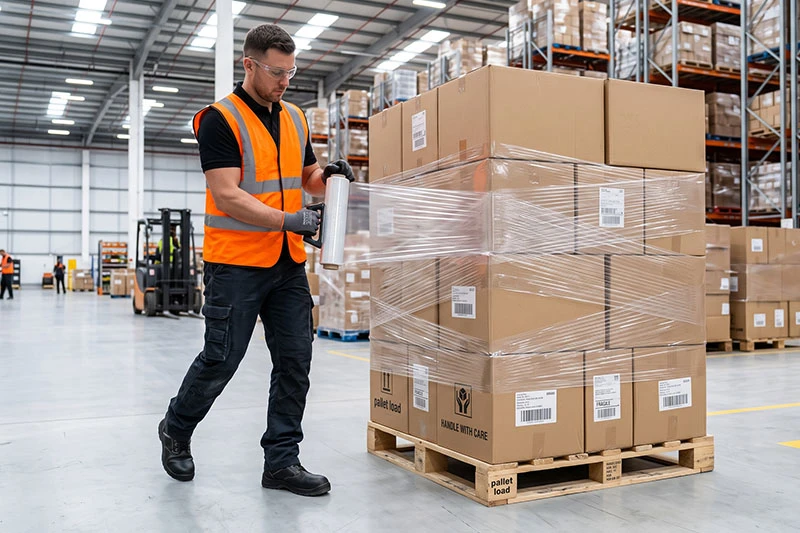


The difference between 5-layer and 7-layer machine stretch film comes down to control: a 7-layer co-extrusion line gives the formulator two additional layer positions, which enables asymmetric skins, dedicated specialty layers, and more downgauging headroom — while a quality 5-layer film fully covers most cartoned-goods, moderate pre-stretch applications at a lower cost. Layer count is a manufacturing architecture, not a quality grade; the resins and process control behind the layers decide how the film actually performs.
This article explains what co-extrusion does, how a 5-layer film is structured, what a 7-layer line adds, when each architecture is the smarter specification, and how to verify multi-layer claims with test data and wrapped-pallet trials before committing. It is written for packaging engineers, procurement teams, and converters evaluating machine stretch film specifications.
What Co-Extrusion Actually Does in Stretch Film Manufacturing
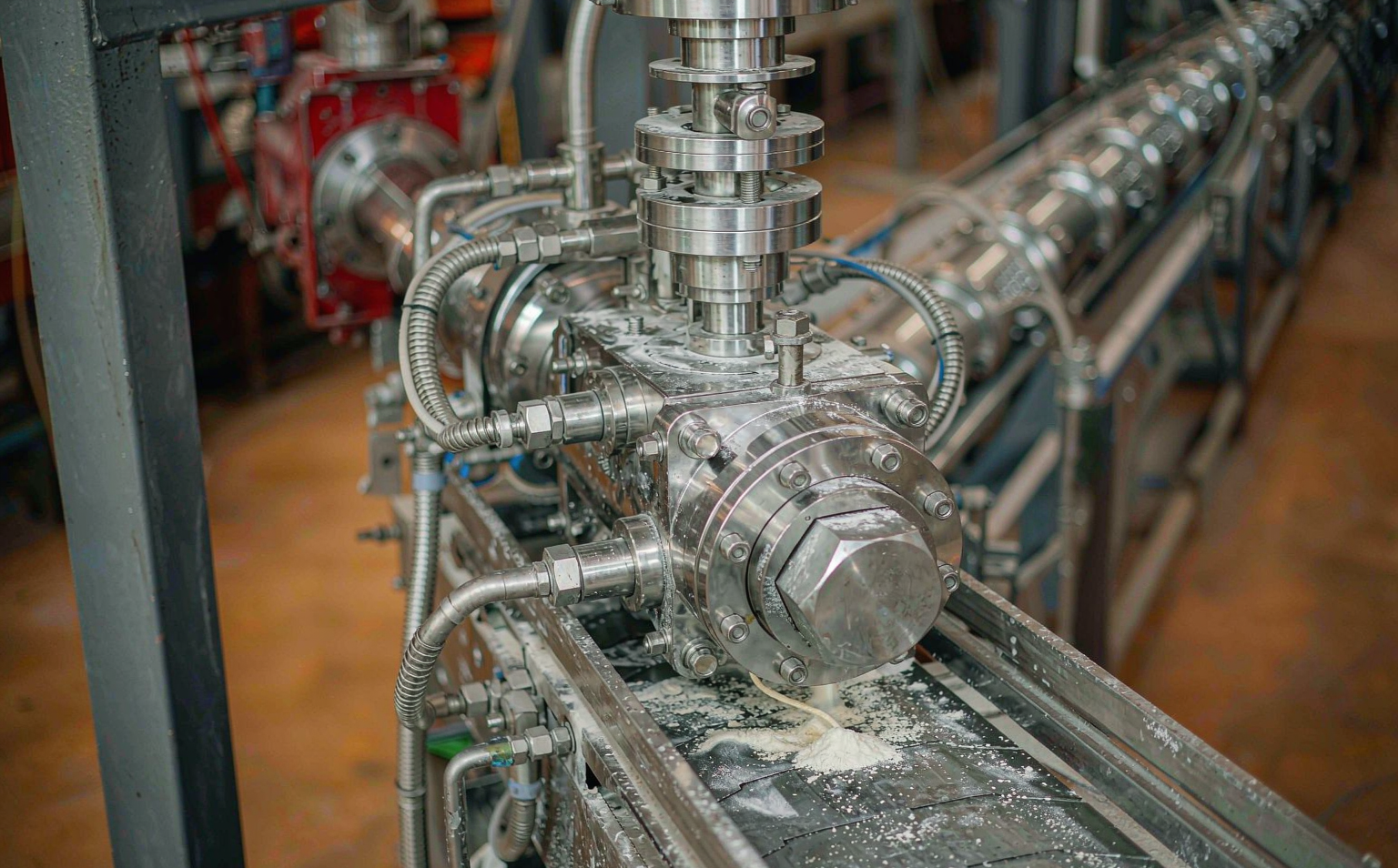
Multi-layer co-extrusion is the process of combining several molten polymer streams into a single film in one pass through a multi-manifold die, so that each layer is extruded simultaneously and fused before the film is quenched. Instead of laminating layers after the fact, the line builds the film from the inside out: an outer skin, one or more functional core layers, and an opposite outer skin, each tuned to a different job. No adhesives are involved, and the layers cannot delaminate in normal handling because they are bonded at the molecular level while molten.
The reason this matters for pilem manteng mesin specifically is that no single polyethylene resin delivers everything a pallet load demands. A resin that resists puncture tends to stretch less before yielding; a resin with excellent elastic recovery is often softer and more vulnerable to tearing. Co-extrusion lets a manufacturer assign puncture resistance to the layers that face the load, cling to the outside layer that faces itself, and strength and recovery to the core — so the film behaves better than any of its individual components could.
The layer count is set by the die and feedblock design: a 5-layer line has five extruders feeding five layer positions, a 7-layer line has seven. When buyers compare the two, they are really comparing how many distinct jobs the film can be engineered to do at once, and how precisely each job can be isolated to the layer where it works best.
The Anatomy of a 5-Layer Machine Stretch Film
A conventional 5-layer machine film is laid out as skin / core / skin with intermediate tie or split-core layers between them. A typical functional split looks like this:
- Outer layers (both sides): a cling-containing or slip-tuned skin. One side carries the cling package so the film bonds to itself on the pallet; the other can be engineered for unwind behavior and abrasion resistance.
- Split core: the strength-bearing middle of the film. This is where higher-strength LLDPE — typically octene or metallocene-catalyzed grades on modern lines — delivers tensile strength, résistansi tusukan, and elastic recovery.
- Intermediate layers: transition layers that let the skins and core bond cleanly and let the manufacturer fine-tune stiffness and elongation without disturbing the functional layers.
In practice, a well-designed 5-layer film covers the majority of machine-wrapping applications: general palletizing of cartoned goods, moderate pre-stretch ratios, and standard warehouse handling. It is the workhorse architecture of the industry, and for most buyers it is the correct one — more on that below.
What a 7-Layer Line Adds
A 7-layer architecture does not simply mean “more of the same plastic.” The additional layer positions give the formulator room to separate functions that a 5-layer film has to compromise on:
- Asymmetric layer design: with more positions, the outer layer that faces the pallet (the puncture side) and the outer layer that faces outward (the abrasion and cling side) can be built differently, each optimized for its own job rather than averaged between two.
- Dedicated barrier or specialty layers: a thin specialty layer — a high-tack resin, a strength layer, or a recycled-content layer in sustainable formulations — can be placed exactly where it is needed without diluting the strength core. This is also how post-consumer recycled content is incorporated while keeping food-contact or clean outer skins, which matters if your sustainability targets require PCR without performance loss.
- Downgauging headroom: more layers mean the strength distribution across the film cross-section can be modeled and balanced more precisely, which is what allows high-performance 7-layer films to be produced at lower gauges while holding puncture and tear targets. Whether a specific downgauge is achievable for your load profile should be confirmed with the supplier, because it depends on the line, the resins, and the application.
Think of it this way: 5 layers give the formulator five control knobs; 7 layers give seven. If your application only needs three knobs turned, the extra two are cost without benefit. If your application pushes the film hard — high pre-stretch, sharp-edged products, long storage, demanding sustainability specs — the extra control is exactly what you are buying.
5-Lapisan vs. 7-Lapisan: What Actually Changes for the Buyer
Layer count is a manufacturing architecture, not a quality grade. A first-class 5-layer film from a modern line will outperform a mediocre 7-layer film every time. The honest comparison is about what each architecture enables:
| Property | 5-Layer Film | 7-Layer Film |
|---|---|---|
| Puncture & tear resistance | Very good with quality resins; split core carries the load | Higher ceiling — strength layers can be placed and asymmetrically distributed for aggressive applications |
| Dart drop / impact | Good to very good depending on gauge and resin | Potentially higher at equal gauge, or equal performance at lower gauge |
| Layer customization | Skin/core/skin + intermediates | Asymmetric skins, dedicated specialty or PCR layers |
| Downgauging potential | Moderate | Higher — finer control of strength distribution across the cross-section |
| Typical cost position | Lower — simpler die, fewer extruders | Higher — more complex line and formulation |
| Best-fit applications | Cartoned goods, standard handling, moderate pre-stretch | Sharp/irregular loads, high pre-stretch, long storage, sustainability-driven specs |
Note what the table does not say: that 7-layer is always better, or that a specific puncture or tensile figure follows from layer count. Performance is set by the resin selection and process control behind the layers. When a supplier quotes layer count as if it were a performance guarantee, that is a signal to ask for the actual test data.
Where 7-Layer Architecture Pays For Itself
There are four situations where the 7-layer premium is usually money well spent:
- Sharp-edged and irregular loads. Unboxed product, cornered cartons, trays, and hardware punish film locally. A 7-layer film can place extra puncture resistance exactly where the film meets the load.
- High pre-stretch applications. Lines running 250–300% pre-stretch need film whose core survives that elongation without thinning into failure. The finer layer control of a 7-layer structure supports that. The exact pre-stretch ceiling for a given film should be confirmed with the supplier and validated on your machine before rollout.
- Downgauging and sustainability programs. If your target is fewer grams of film per pallet — or a defined percentage of PCR content without losing strength — 7-layer is the architecture that makes that a controlled engineering exercise rather than a gamble. Buyers procuring stretch film jumbo rolls for downstream converting should pay particular attention here, since the converting process adds its own demands on film consistency.
- Long dwell-time storage. Loads that sit in racking for months need elastic recovery that does not relax. Layer architecture that separates the recovery function from the cling function helps hold containment force over time.
When 5-Layer Film Is the Smarter Specification
For the other situations — and they are the majority — 5-layer is the rational choice. If your loads are stable cartoned goods, your pre-stretch is moderate, your storage windows are weeks rather than seasons, and your cost-per-pallet target is aggressive, the extra layers are architecture you will never use. Paying for seven knobs when three are turned is specification inflation.
There is also a procurement trap in the opposite direction: assuming layer count alone will fix a packaging problem. If film is failing on the line, the root cause is frequently machine setup — pre-stretch, tension profile, wrap pattern — or the wrong film type, not the film’s layer count. Diagnose the failure mode first, then choose the architecture.
How to Verify Multi-Layer Claims Before You Commit
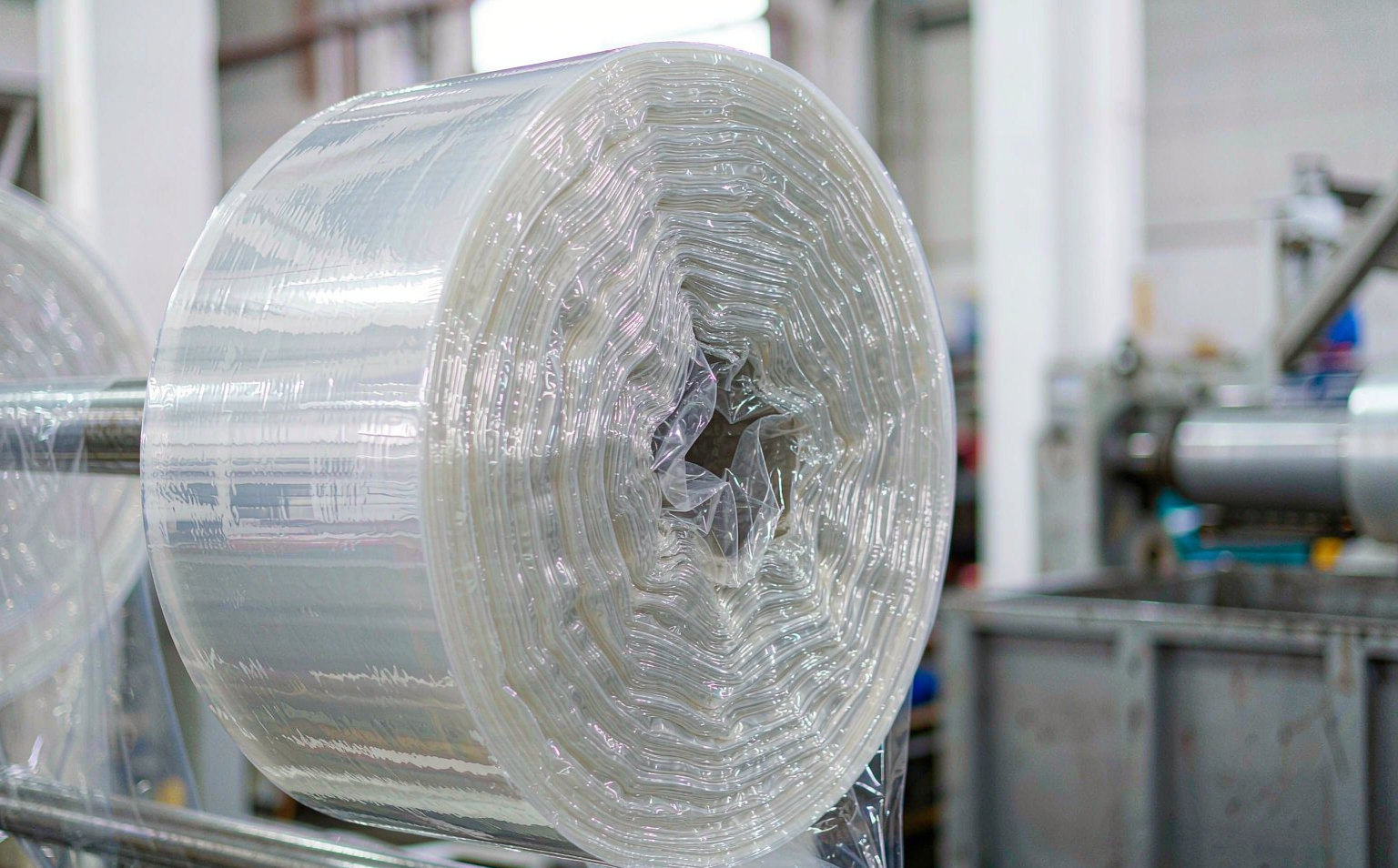
Layer count cannot be seen with the naked eye on a finished roll, so verification comes down to documentation and testing:
- Ask for the test data, not the architecture. Dart drop, kakuatan regangan, elongation at break, puncture energy, and load retention after a defined time and temperature — with methods stated (ASTM D1709 for dart impact, ASTM D882 for tensile, ASTM D5458 or equivalent for puncture, for example). A supplier who can present a consistent data sheet is telling you more than one who presents a layer diagram.
- Run a side-by-side pallet trial. Wrap identical pallets with the incumbent film and the candidate at the same machine settings, measure containment force at the same heights, and check load integrity after handling and storage. Layer architecture is invisible; wrapped-pallet performance is not.
- Confirm gauge and yield. Price-per-roll is meaningless without verified gauge; compare price per wrapped pallet or per square meter of film at your actual pre-stretch ratio.
- Ask how the film behaves on your equipment. Unwind tension requirements, pre-stretch compatibility, and cling level against your rollers should be discussed with the supplier — depending on the machine configuration, a nominally superior film can perform worse if it is mismatched to the equipment.
Procurement Checklist: Multi-Layer Machine Stretch Film
- Failure mode of current film documented (puncture, tear propagation, loss of containment force, neck-down?)
- Load profile written down: weight, height, carton or unpacked, edge sharpness, dwell time
- Machine pre-stretch ratio and achievable containment force targets stated
- Supplier asked for ASTM (or equivalent) test data with methods, not just layer count
- Candidate film quoted in price per wrapped pallet at your gauge and pre-stretch
- Side-by-side pallet trial agreed with the incumbent film, including a storage check
- If sustainability targets exist: PCR content percentage and where it sits in the layer structure
- Jumbo-roll buyers: converting compatibility and roll geometry confirmed with the supplier
Common Procurement Mistakes with Multi-Layer Film
- Buying layer count as a proxy for quality. Resin quality and process control dominate; layer count only sets the ceiling on what the formulator can do.
- Upgrading the film before checking the machine. Many “film problems” are pre-stretch or tension problems. Fix the setup, then re-evaluate.
- Comparing rolls instead of wrapped pallets. Two films at different gauges and pre-stretch ratios can have identical cost-per-roll and a 20%+ difference in cost-per-pallet.
- Skipping the storage test. A film that holds containment force on day one and relaxes by week three is a load-shifting claim waiting to happen.
- Over-specifying. If five layers fully cover the application, the sixth and seventh are margin you are donating to the supply chain.
Key Takeaways
- Co-extrusion combines multiple polymer layers into one film in a single pass; each layer is assigned a specific job such as puncture resistance, nangkeup, or elastic recovery.
- 5-layer film is the industry workhorse and the right specification for most cartoned-goods, moderate pre-stretch applications.
- 7-layer film adds asymmetric layer design, dedicated specialty layers, and more downgauging headroom — valuable for sharp loads, high pre-stretch, long storage, and PCR-content targets.
- Layer count is architecture, not a quality grade: judge film by ASTM-method test data and wrapped-pallet trials, not by the die design.
- Compare films on price per wrapped pallet at your actual gauge and pre-stretch ratio.
Frequently Asked Questions
Is 7-layer stretch film always stronger than 5-layer?
No. Strength depends on resin selection and process control. A well-formulated 5-layer film outperforms a poorly formulated 7-layer film. What 7-layer architecture provides is a higher ceiling — more positions to place strength, puncture, and specialty layers — which a good formulator can convert into performance or lower gauge.
Can the layers of co-extruded stretch film separate?
Not under normal handling. The layers are fused while molten inside the die, not glued afterward, so there is no adhesive interface to fail. Delamination indicates a serious manufacturing fault, not a property of the technology.
Which is better for downgauging, 5-layer or 7-layer?
7-layer, generally. Finer control over the strength distribution across the film cross-section is what allows gauge reduction while holding puncture and tear performance. Whether a specific downgauge works for your loads should be confirmed with the supplier and validated in a pallet trial.
How do I check a supplier’s multi-layer claims?
Ask for test data with stated methods (for example ASTM D1709 dart impact, ASTM D882 tensile), verify gauge and yield independently, and run a side-by-side wrapped-pallet comparison against your incumbent film at identical machine settings.
Does layer count affect price?
Yes — a 7-layer line has more extruders and a more complex die, so 7-layer film typically carries a higher production cost. The buyer’s job is to check whether the application actually uses the extra capability; for many pallet profiles it does not.
kacindekan
Choosing between 5-layer and 7-layer machine stretch film is not a question of which is “better” — it is a question of how many jobs your application asks the film to do at once. Stable, cartoned, moderately stretched loads are fully served by a quality 5-layer film. Sharp-edged products, high pre-stretch ratios, long rack storage, aggressive downgauging, or PCR-content targets are where 7-layer architecture earns its premium. In every case, the decision should rest on test data with stated methods and a wrapped-pallet trial, never on layer count alone.
If you are weighing a 5-layer against a 7-layer specification — or deciding whether stretch hood film fits your high-stability loads better than spiral wrap — send your load profiles, pre-stretch settings, and cost-per-pallet targets, and the film structure, gauge, and trial protocol can be built around your operation rather than around a generic spec sheet.