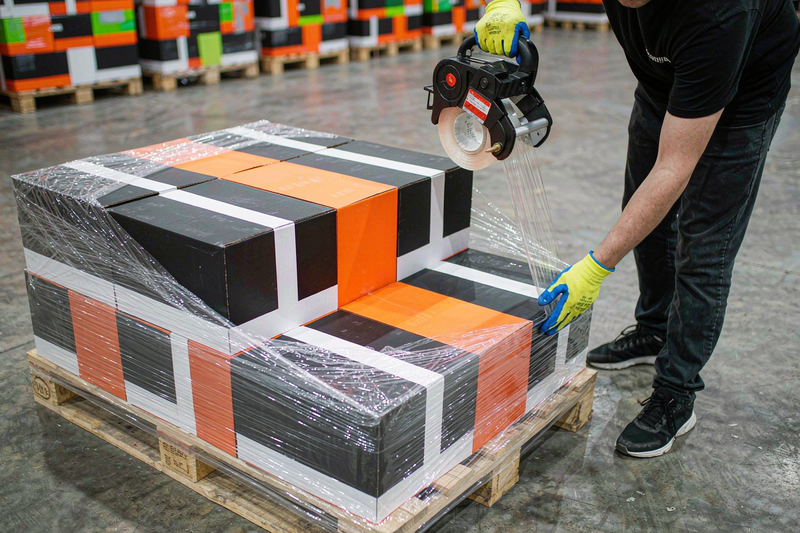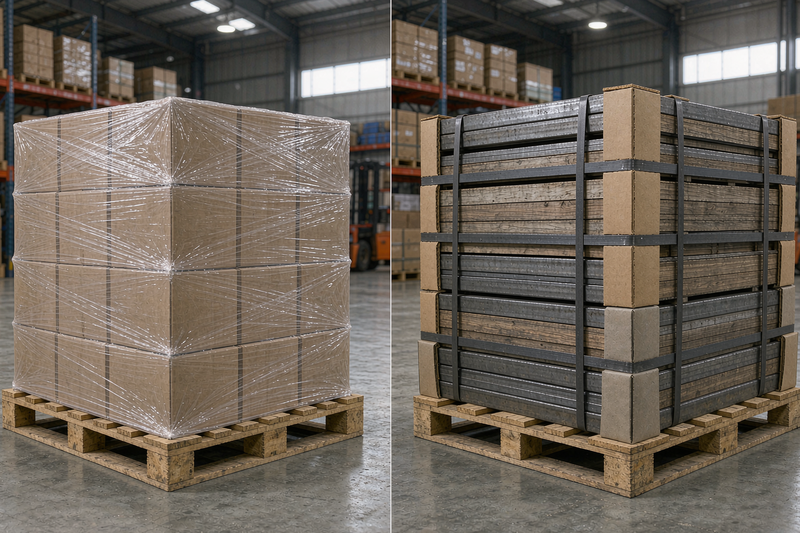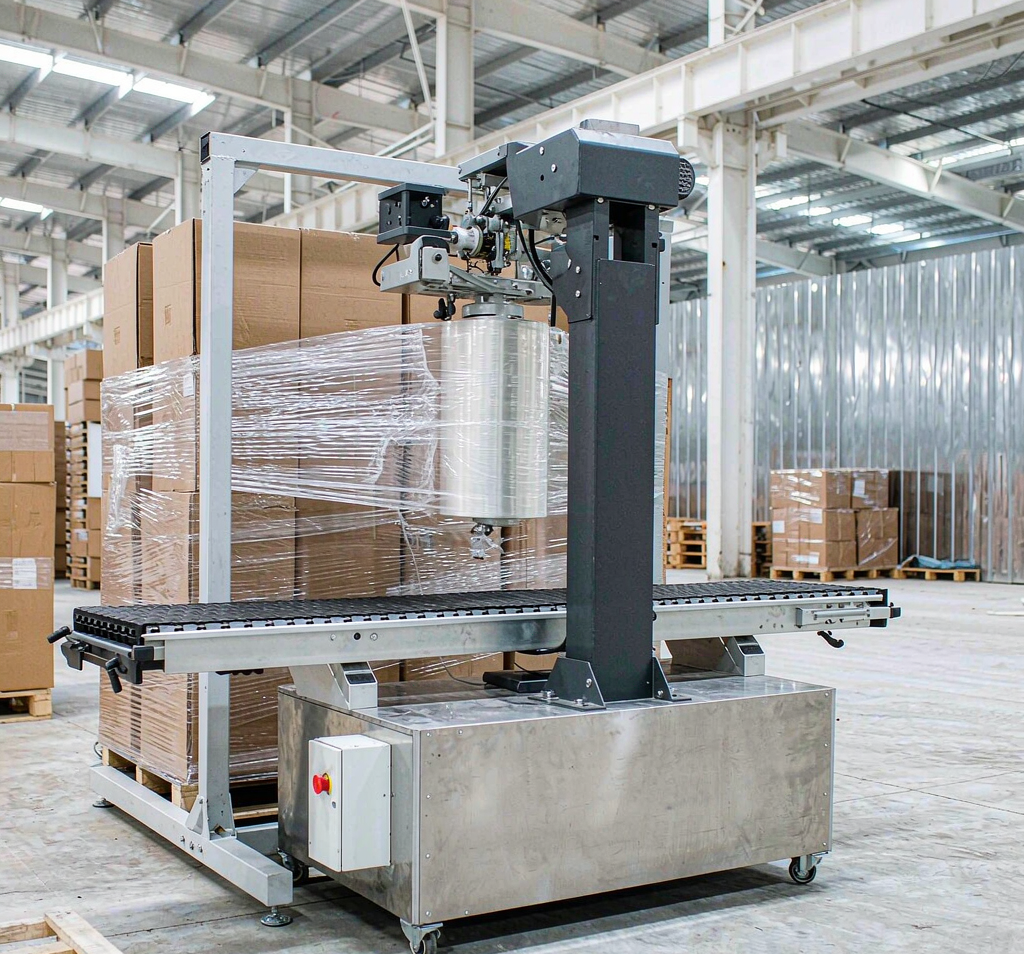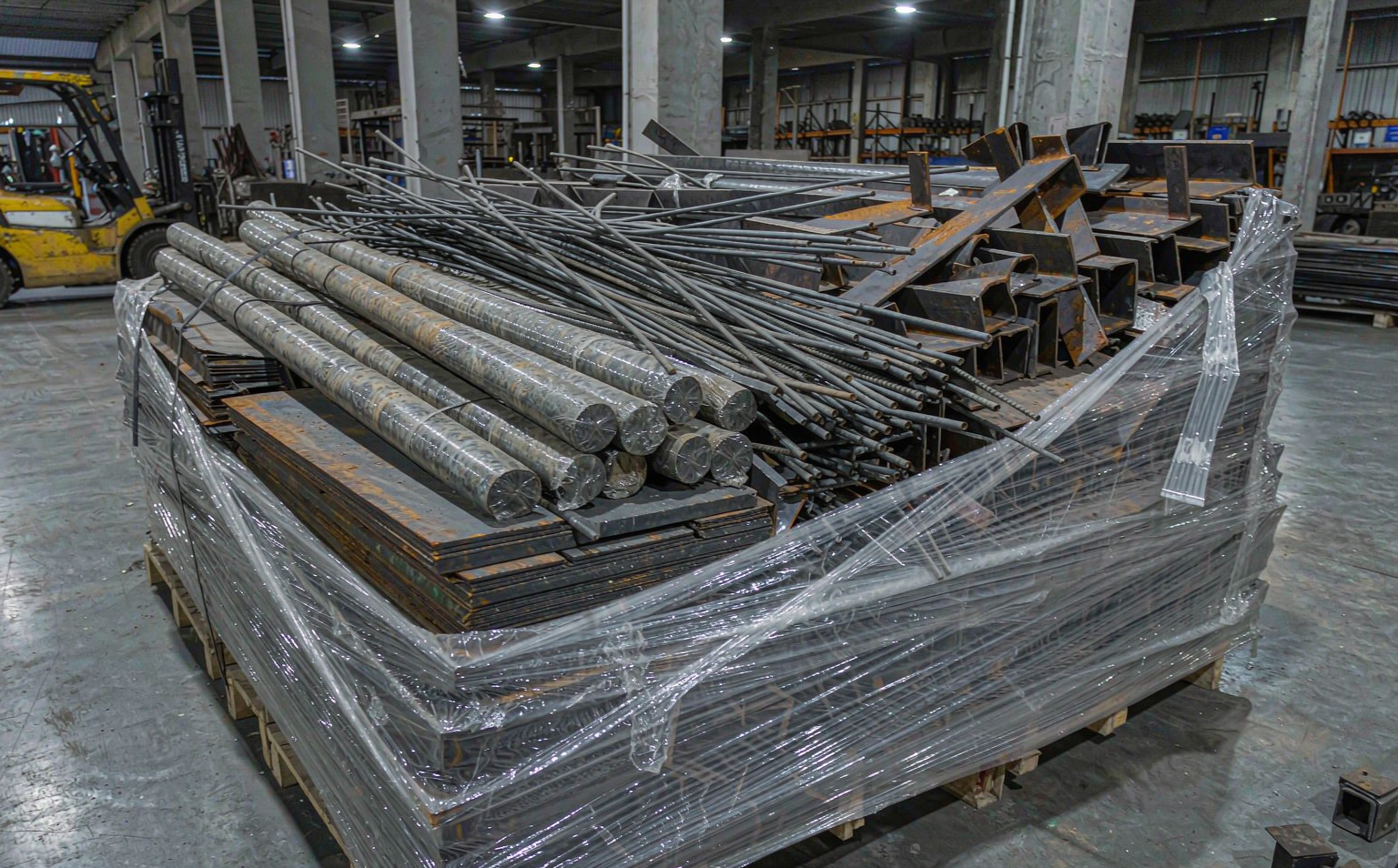


Manuell pallinslagning ställer stora fysiska krav i lagerverksamheten, leder ofta till akut muskuloskeletal påfrestning, trötthet i nedre delen av ryggen, och repetitiva rörelseskador. Att eliminera trötthet hos arbetare under manuella operationer kräver en dubbel strategi: anta biomekaniskt sund kroppsmekanik och välja högpresterande, lågspänningsfilmformat. Implementera framåtriktade gångtekniker, djup knähuk på pallbottnar, och utnyttjar ergonomic hand stretch film can drastically reduce the physical pull force required per rotation while securing loads for transit.
This operational guide details the biomechanics of manual pallet wrapping, outlines a standardized four-stage wrapping procedure, analyzes how film selection reduces physical exertion, and establishes warehouse management controls to safeguard worker health.
Biomechanical Realities of Manual Pallet Wrapping
Manual pallet wrapping forces operators into repetitive cycles of spinal flexion, asymmetric trunk rotation, and continuous grip tension. These compounding stressors primarily affect three distinct anatomical zones:
Anatomical Stress Points in Manual Pallet Wrapping:
├── Lumbar Spine: Excessive flexion (>45 degrees) during base wraps accelerates disc compression.
├── Deltoids & Trapezius: Sustained overhead reach under tension when finishing high loads.
└── Wrists & Forearms: Rotational torque and friction heat generated during manual braking.
The physical exertion required to pull and stretch conventional plastic film creates cumulative strain over an eight-hour shift. When operators experience fatigue, wrapping consistency deteriorates, leading to insufficient containment force at the base, loose top layers, and higher rates of shipping damage. Addressing these issues requires systematic adjustments to posture, movement, and material specifications.
Body Mechanics: Posture and Movement Best Practices
Eliminating hazardous habits on the shipping floor requires operators to adhere to specific movement standards.
Ergonomic Movement Standard:
├── Direction of Travel: ALWAYS walk forward facing the load path; NEVER walk backwards.
├── Base Layer Anchoring: Squat with knees bent and back straight; NEVER bend from the waist.
└── Tension Application: Engage core and shift body weight; DO NOT pull solely with the arms.
1. Forward-Facing Ambulation
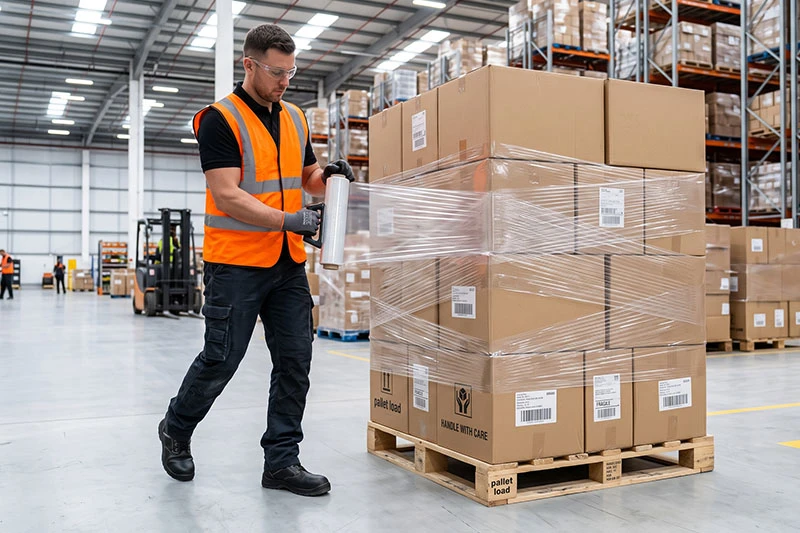
Operators frequently walk backward around a pallet to maintain eye contact with the film unwinding. This posture introduces severe slip, trip, and fall hazards, while placing the spine in continuous unnatural twisting. Operators should always walk forward in the direction of travel, pushing off with the legs and keeping the film roll held close to the torso.
2. Squatting vs. Lumbar Flexion
Securing the bottom perimeter of a wooden skid requires applying tension within 12 inches of the floor. Bending at the waist with straight legs concentrates the entire load on the lumbar vertebrae. Operators must lower their center of gravity by bending at the hips and knees into a wide-stance squat, keeping the back upright and roll tension close to the body’s midline.
3. Core-Driven Tensioning
Pulling stretch film using only wrist and bicep strength strains small upper-body muscle groups. Workers should lock their elbows near their sides, engage their abdominal core, and use their forward body momentum to pull the film taut around pallet corners.
Standard Operating Procedure: 4-Stage Ergonomic Wrapping Process
Standardizing the sequence of manual wrapping ensures structural load stability while minimizing unnecessary rotations and physical strain.
4-Stage Ergonomic Wrapping Sequence:
[Stage 1: Base Anchor & Skid Lock] ──► [Stage 2: Spiral Upward with 50% Overlap]
                                                      │
[Stage 4: Termination & Wipe-Down] ◄── [Stage 3: Top Layer Cross-Over & Lock]
Stage 1: Base Anchor and Skid Lock
- Gather the initial tail of the film into a small rope and thread it securely through a corner of the pallet base or tie it to the wooden runner.
- In a stable squatting posture, walk forward around the base, completing a minimum of 3 till 4 tight, overlapping wraps around both the bottom row of cartons and the wooden pallet structure.
- Ensure the film physically captures the pallet deck to eliminate horizontal load shifting during transit.
Stage 2: Spiral Upward Progression
- Rise smoothly from the squat using leg power, stepping forward around each corner.
- Maintain a consistent 30% till 50% film overlap as you move upward along the pallet column.
- Apply primary tension as you clear each 90-degree corner, easing off slightly along the flat faces to maintain consistent load compression without tearing the film edges.
Stage 3: Top Layer Reinforcement
- At the top tier of the load, complete 2 till 3 full horizontal wraps to lock the upper cartons together.
- If load integrity requires a top cap sheet, pull the film over the top edge by 2 till 3 inches without over-extending the arms above shoulder level.
- Keep the roll tilted slightly downward to maintain leverage without stressing the rotator cuffs.
Stage 4: Clean Termination and Smooth Wipe-Down
- Cut or tear the film cleanly at a corner post using a safety cutter or by pressing a hand flat against the tensioned film edge and pulling smoothly.
- Smooth the film tail against the pallet face using a flat-palm wipe-down motion to activate the cling properties. Never leave loose tails that can catch in conveyor systems or forklift masts.

Material Selection: How Film Architecture Reduces Physical Exertion
The physical strain experienced by warehouse operators is directly proportional to the force needed to stretch the film. Deploying optimized manual stretch wrapping solutions shifts the mechanical workload from the human body to the material properties of the film.
| Film Configuration | Required Manual Pull Force | Bending/Handling Profile | Recommended Application Context |
| Traditional Heavy Gauge (70–90+ Gauge) | High (Requires intense physical pull to achieve stretch) | High strain; prone to roll edge damage if dropped | Rigid, heavy industrial loads where mechanical braking dispensers are standard |
| Pre-Stretched Hand Film | Very Low (Film is mechanically expanded during manufacturing) | Minimal exertion; rolls are ultra-lightweight; zero tension resistance required | High-throughput hand wrapping stations, uniform carton loads, fatigue-reduction programs |
| Extended Core Hand Film | Moderate (Controlled directly via integrated core handles) | Low base-reach strain; eliminates 2–5 lb dispenser weight | Decentralized docks, route delivery trucks, flexible workstations |
| High-Performance Cast/Blown Thin Films | Low to Moderate (High cling, engineered puncture resistance) | Excellent puncture resistance on sharp pallet corners with low overall roll weight | Irregular loads with protruding edges, mixed SKU pallets |
Pre-stretched hand films offer clear ergonomic advantages for manual operations. Because the film is stretched at the factory to near its ultimate yield point, operators do not need to pull forcefully to achieve load stability. Walking the roll around the pallet naturally applies the necessary tension, reducing muscular exertion across wrists, arms, and lower back muscles.
Warehouse Management: Operational Policies to Prevent Fatigue
Engineering safe manual wrapping operations requires practical administrative and environmental controls across the facility floor:
- Task Rotation Schedules: Limit continuous manual pallet wrapping to a maximum of 30 till 45 minutes per operator before rotating them to sorting, staging, or forklift duties.
- Staging Layout and Clear Walkways: Maintain a minimum 3-foot clearance perimeter around staged pallets on the shipping floor to ensure operators walk unobstructed without awkward footwork.
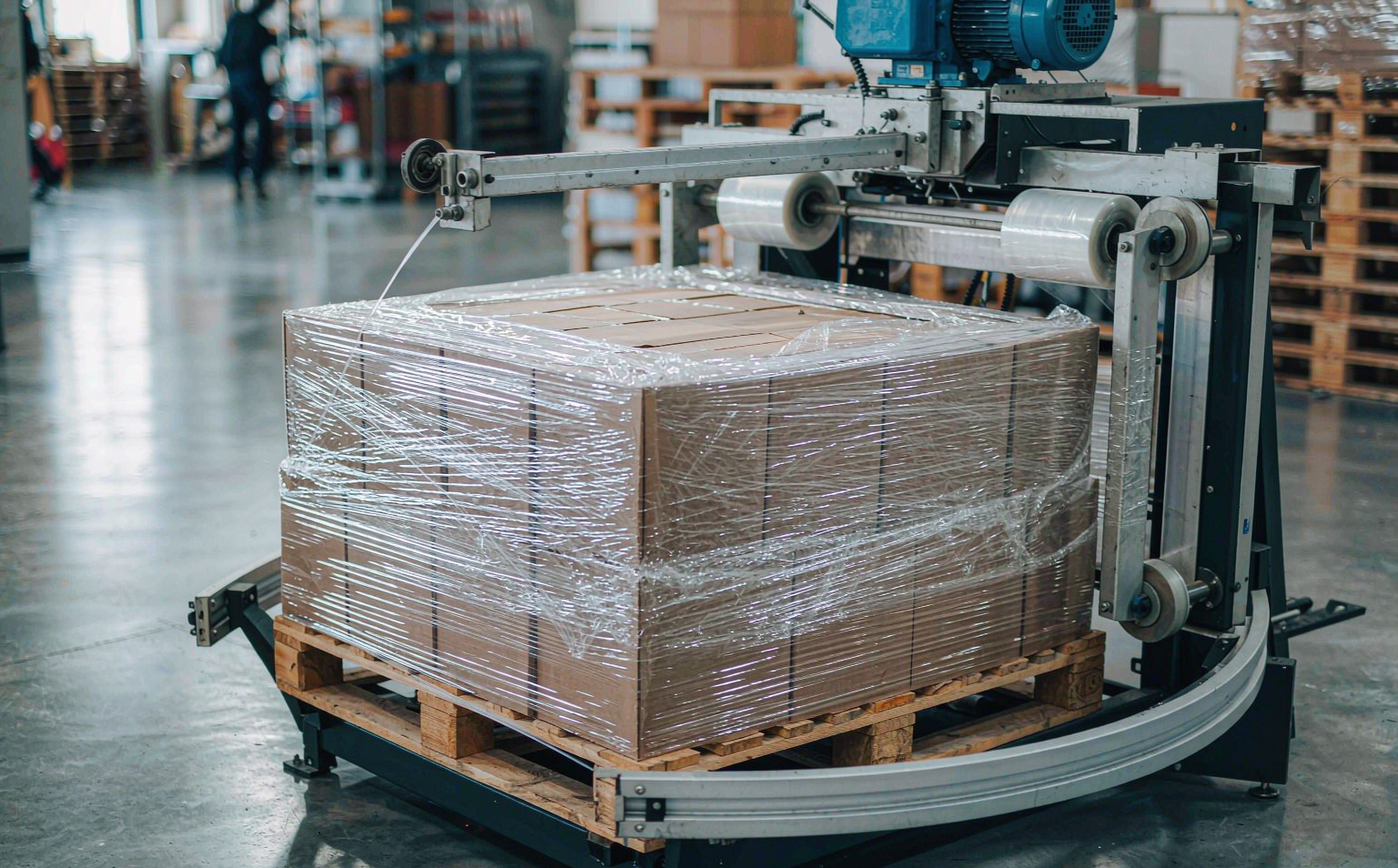
- Mechanical Assistance Aids: Integrate low-profile manual turntables or spring-loaded pallet levelers at high-volume packing stations. Turntables allow workers to stand in one ergonomic position while rotating the pallet, eliminating walking dizziness and awkward bending.
- PPE Standards: Mandate high-dexterity grip gloves that prevent friction blisters while allowing precise tactile control over spinning roll cores.
Troubleshooting Common Ergonomic and Wrapping Issues
| Operational Problem | Biomechanical / Load Risk | Corrective Action |
| Operator pulling film with jerky, bent-elbow motions | Severe biceps and rotator cuff fatigue; uneven film thickness | Instruct workers to keep arms steady and use walking momentum to tension film around corners. |
| Film tears repeatedly on pallet corners | Sudden loss of balance; physical frustration; repeated bending to re-anchor | Switch to a higher puncture-resistant film gauge or ensure workers round sharp cardboard edges before wrapping. |
| Loose wrapping at pallet base | Catastrophic load shifting during transit; requires manual re-wrapping | Enforce mandatory 3-wrap minimum around the pallet skid using a proper deep-knee squat posture. |
| Dispensers abandoned across docks | Workers revert to bare-handed wrapping, causing friction burns and poor tension | Transition to extended core hand stretch film with built-in paperboard grips to remove hardware dependency. |
Key Takeaways
- Posture Dictates Injury Risk: Workers must avoid backward walking and waist-level bending; forward-facing movement and deep-knee squats prevent critical musculoskeletal strain.
- Pre-Stretched Film Minimizes Exertion: Using pre-stretched or thin-gauge, high-yield hand wrap eliminates the intense manual pulling force required by traditional heavy-gauge films.
- Four-Stage Standardization: Following a structured Base-Spiral-Top-Terminate process ensures consistent pallet containment without redundant rotations or wasted movement.
- Operational Controls: Implementing mandatory task rotation and maintaining clear walking clearances significantly mitigates cumulative shift fatigue.
FAQ
How can operators avoid dizziness when wrapping multiple pallets manually?
Walking continuously in tight circles causes vestibular disorientation. Operators should alternate wrapping directions (clockwise on one pallet, counterclockwise on the next) or utilize a stationary manual turntable that spins the load while the operator remains in place.
How many layers of hand stretch film are needed for a standard pallet?
A standard load typically requires 3 till 4 full wraps around the pallet base and skid, followed by a 30% till 50% overlap spiral up the column, and 2 till 3 reinforcing layers across the top tier. Irregular or heavier loads may require additional passes based on application requirements.
Are pre-stretched hand films strong enough to hold heavy industrial freight?
Yes. Pre-stretched films are engineered to retain high residual holding force (elastic recovery) once applied. When applied with proper overlap and base skid anchoring, high-performance high-yield hand wrap delivers load containment comparable to traditional films without requiring extreme physical pulling effort.