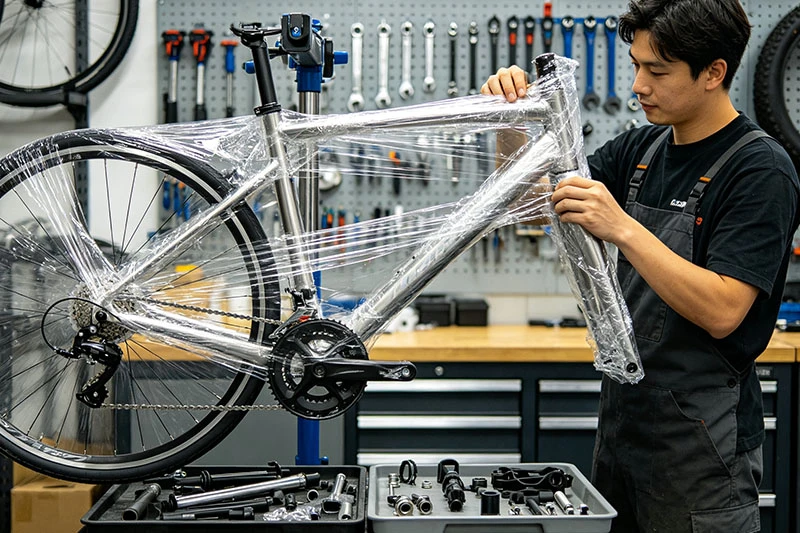


In the global logistics and packaging sectors, securing loads efficiently while minimizing material waste is a top priority. While many warehouse managers are familiar with standard pallet unitization, do you know how hand stretch film and machine-grade wrapping film are revolutionary in specialized industrial applications?
Let’s delve into the versatile applications and technical mechanics of high-quality stretch film to help you optimize your supply chain and packaging efficiency.
1. Innovative Industrial Applications of Stretch Film Packaging
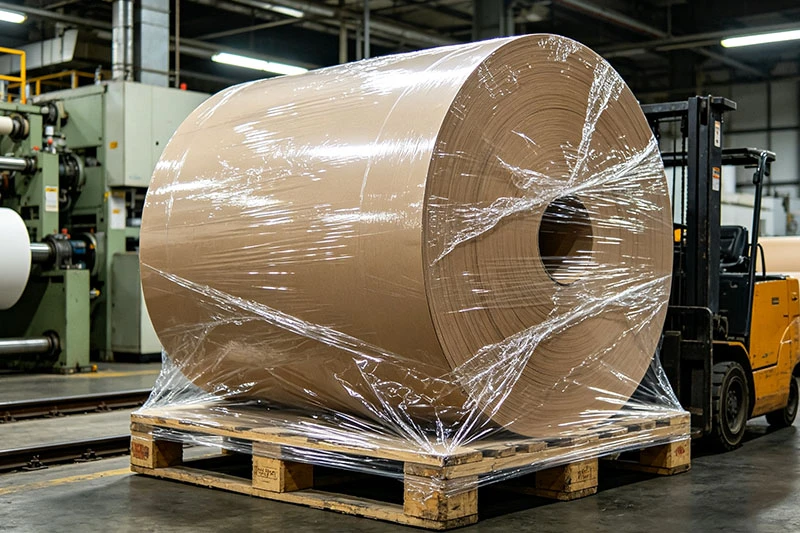
Packaging Stretch Film Around Paper Tubes and Cores
This represents one of the more modern, efficient adaptations of stretch film packaging, vastly outperforming legacy paper-tube wrapping methods. It provides a superior moisture barrier and dust protection for delicate industrial cores.
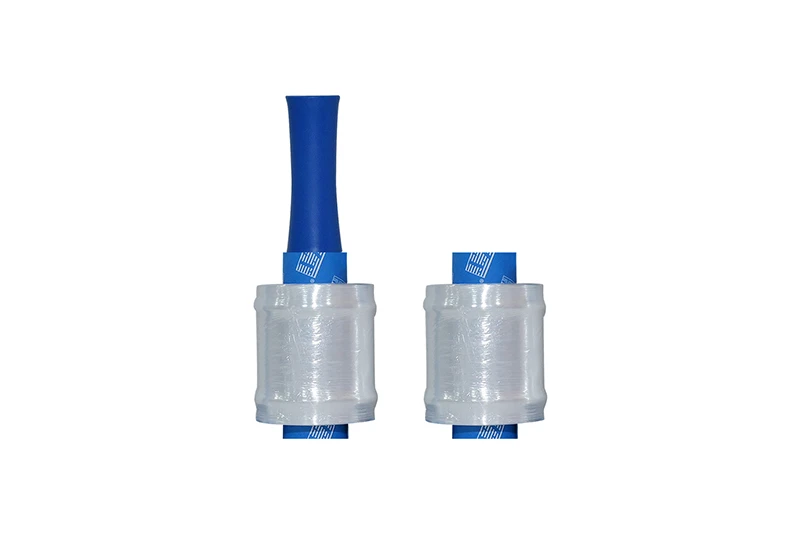
- Recommended Film Specification: A film thickness of 17–20 μm is optimal for achieving the right balance of elasticity and puncture resistance.
Bundling Small Items with Hand Stretch Film
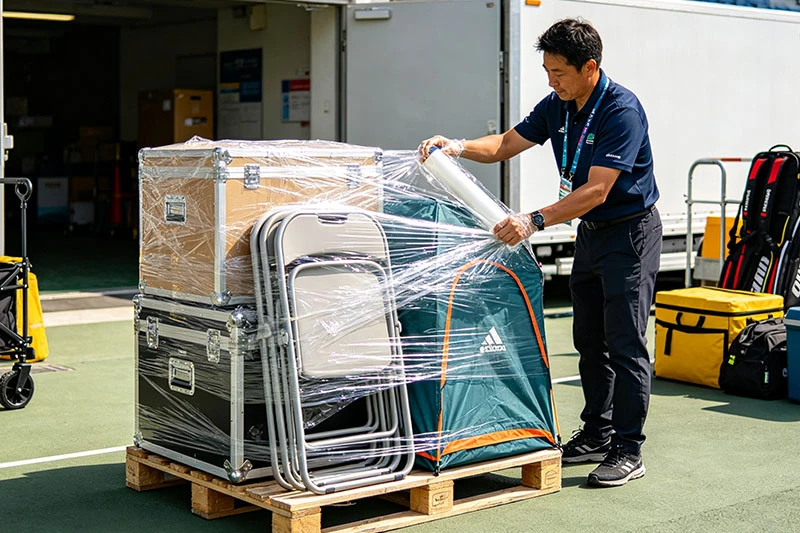
Grouping smaller, individual items together with stretch film significantly reduces secondary packaging material consumption and minimizes the physical storage footprint on pallets. This bundled packaging format offers immense market potential for e-commerce fulfillment and sorting centers.
- Recommended Film Specification: A film thickness of 15–30 μm provides excellent versatility depending on the sharp edges of the items.
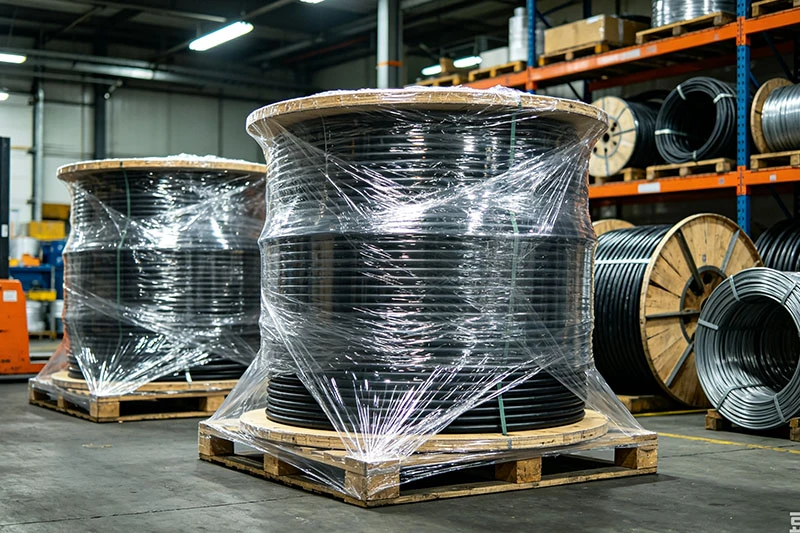
Protective Wrapping for Tubes, Pipes, and Cables
As a prime example of niche industrial applications, integrated wrapping equipment is typically installed at the end of extrusion production lines. Utilizing automated stretch film wrapping instead of traditional adhesive tapes not only binds long commodities (like PVC tubes or heavy cables) securely but also provides comprehensive surface protection without leaving sticky residues.
- Recommended Film Specification: A film thickness of 15–30 μm ensures heavy-duty binding retention force.
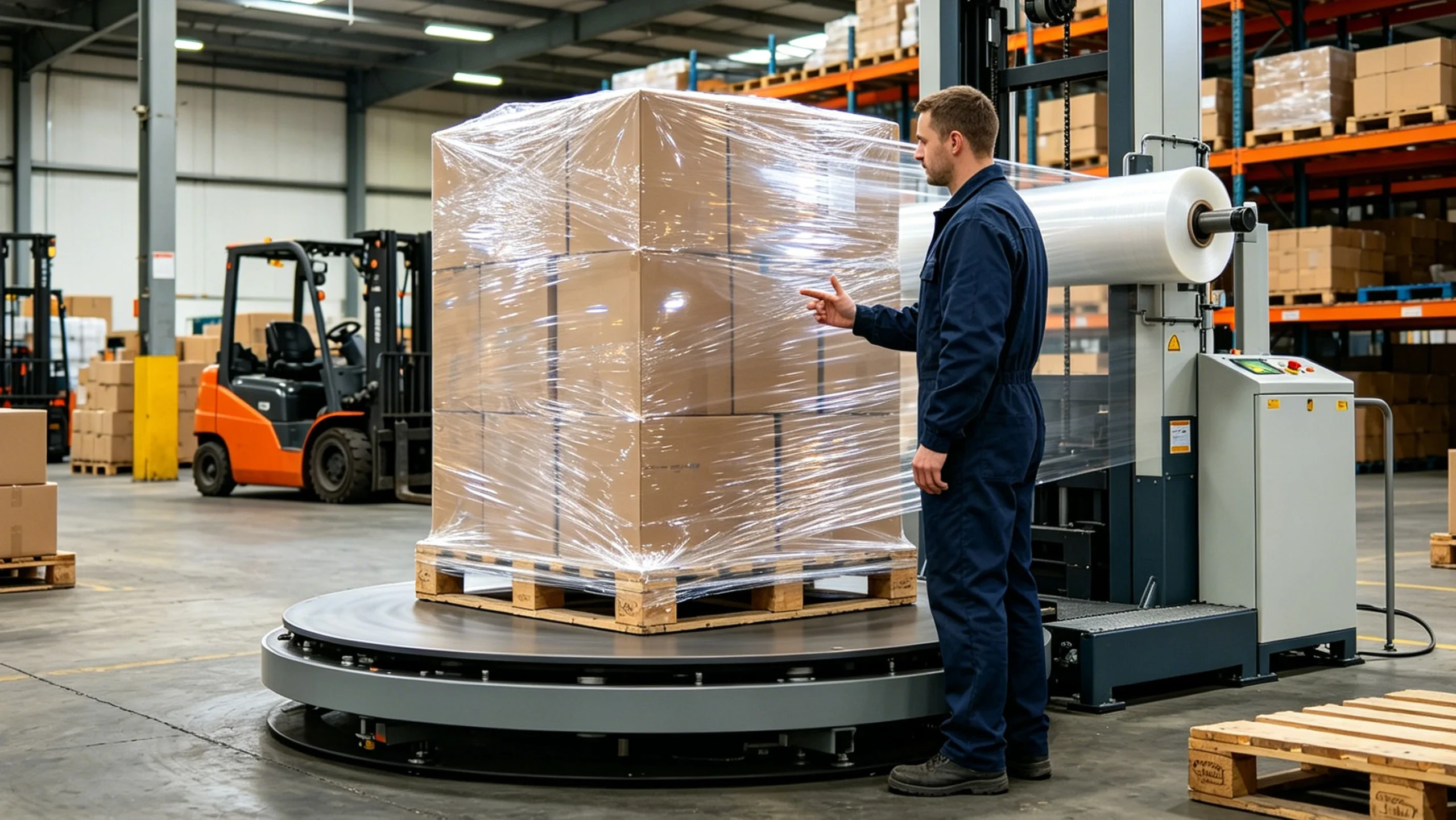
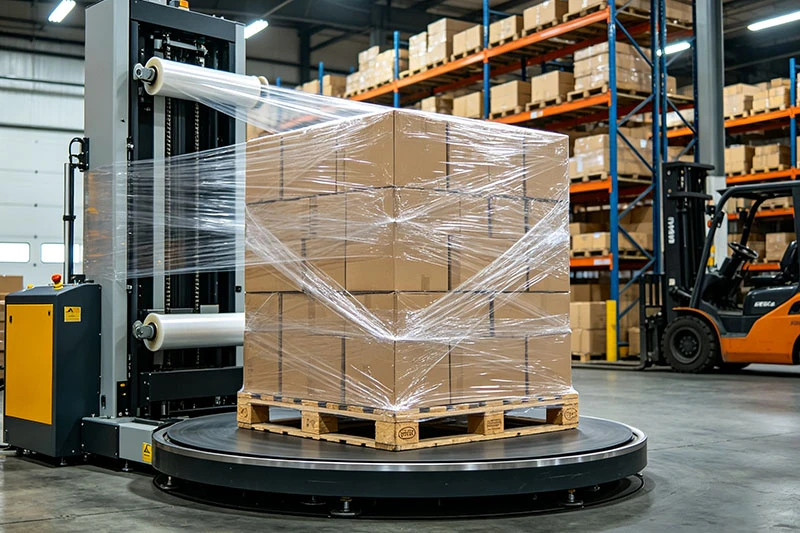
2. Advanced Technical Mechanics: Understanding Pallet Mechanical Wrapping Film Methods
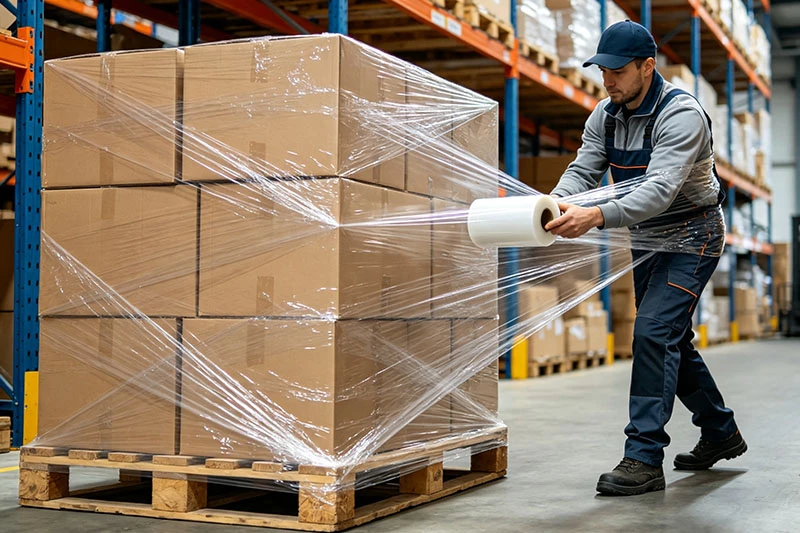
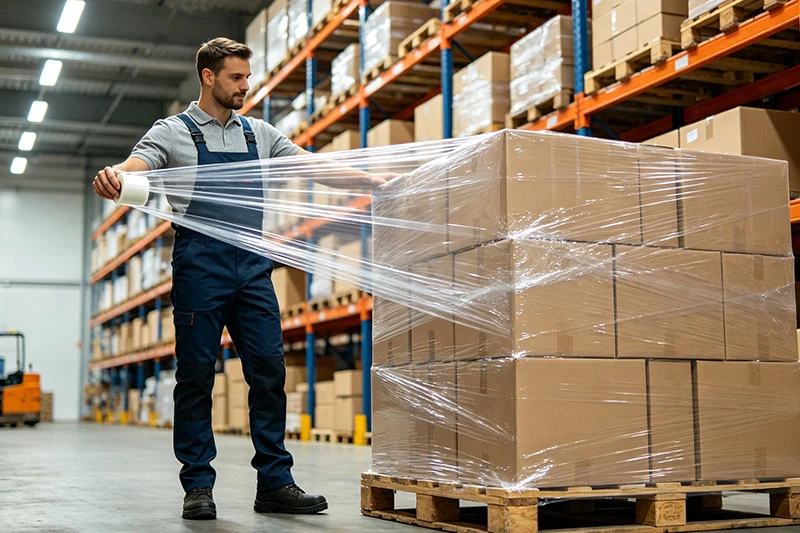
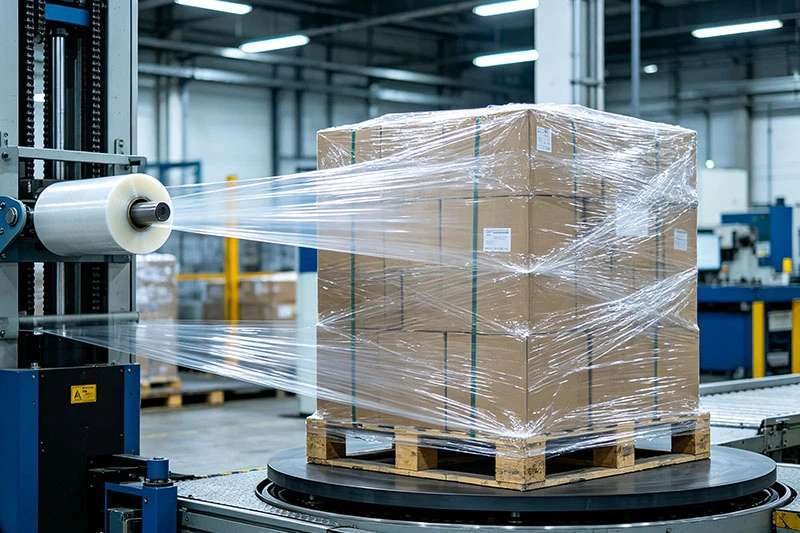
To maximize the cost-efficiency of your stretch film, it is critical to understand how the material is elongated. Pallet unitization involves two primary mechanical stretching methods: Direct Stretch and Pre-Stretch (which includes Roller Pre-Stretch and Motorized/Electric Pre-Stretch).
Method A: Direct Stretching (Tension-on-Load)
Direct stretching relies on the tension generated between the moving pallet load and the film carriage.
- The Limitations: This method offers a low stretch ratio (approximately 15% to 20%). If operators attempt to push the stretch ratio past 55% to 60%—exceeding the film’s structural yield point—the film width narrows significantly (known as neckdown), and its puncture resistance diminishes, leading to frequent film breakage.
- The Risk: At a 60% stretch rate, the residual pull-force remains highly elevated. For lightweight or fragile goods, this excessive tension can easily crush or deform the load.
Method B: Mechanical Roller Pre-Stretching
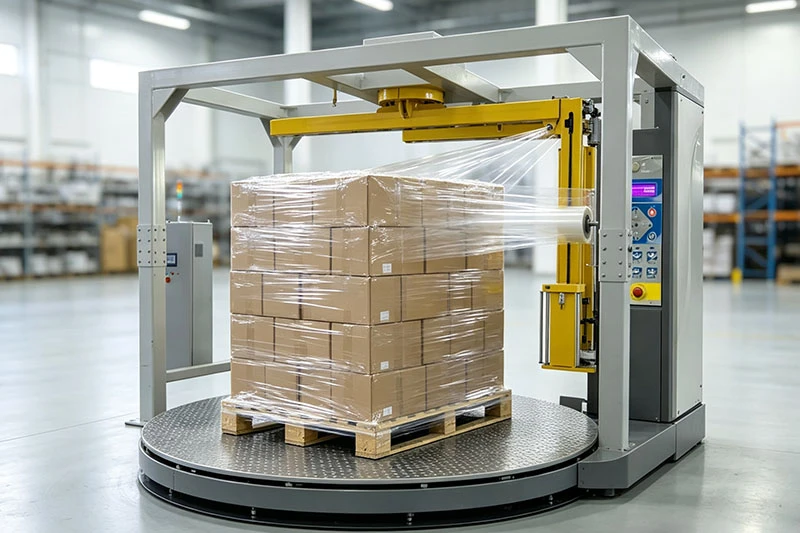
In this setup, the stretch film is elongated before it is applied to the load. The system utilizes two rollers geared together at a fixed ratio.
- The Advantages: Because stretching occurs over a minimal distance between the rollers, the high friction prevents film neckdown, successfully maintaining the film’s original width and inherent puncture resistance.
- The Benefit: No additional elongation happens during the actual winding process on the pallet. This drastically reduces film tears caused by sharp product corners or jagged pallet edges. Mechanical roller systems can safely increase the stretch ratio up to 110%.
Method C: Motorized (Electric) Pre-Stretching Technology
Motorized pre-stretching operates on a similar dual-roller principle but introduces independent electric motors to drive the rollers.
- Maximum Efficiency: The stretching process is completely decoupled from the pallet’s rotation speed. This delivers unrivaled adaptability for wrapping ultra-light, heavy, or highly irregular cargo profiles.
- Unmatched Cost Savings: Because the wrapping tension applied to the pallet remains low and perfectly controlled, this technology achieves pre-stretch ratios as high as 300%. This massive optimization drastically drops material consumption, dropping your overall cost-per-pallet.
- Recommended Film Specification: High-performance films with a thickness of 15–24 μm are ideal for high-RPM motorized pre-stretch systems.
Conclusion: Partner with a Top-Tier Stretch Film Manufacturer
Choosing the correct gauge and stretching method is vital to safeguarding your goods during transit while maintaining a healthy bottom line. As a leading manufacturer specializing in high-performance hand stretch film and machine-grade stretch wrap, we utilize state-of-the-art European production lines to engineered premium plastic films with outstanding clarity, maximum load containment force, and optimal puncture resistance.
Contact our team today to get customized stretch film quotes and elevate your packaging standards!